We begin our short leg of just under 15 kilometers in La Puebla de Arganzón, the last town in Castile and León before we enter the autonomous region of the Basque Country. During yesterday's journey, we already crossed the border but quickly entered the Treviño enclave, which is part of the municipality of Burgos and thus belongs to the region of Castile and León. However, just outside the village, we truly cross the border and leave this region behind us for good. It has been 22 stages since we crossed the border from Extremadura into Castile, just below Salamanca. The kilometers covered were splendid, transitioning from yellow and dry to wet and green, and from quiet, sometimes almost desolate and abandoned, to busier areas with more activity and life. It was the last large region; the next ones will be much smaller. The Basque Country is also a distinct area. We are eager to see what this autonomous region, our fourth so far, will be like.
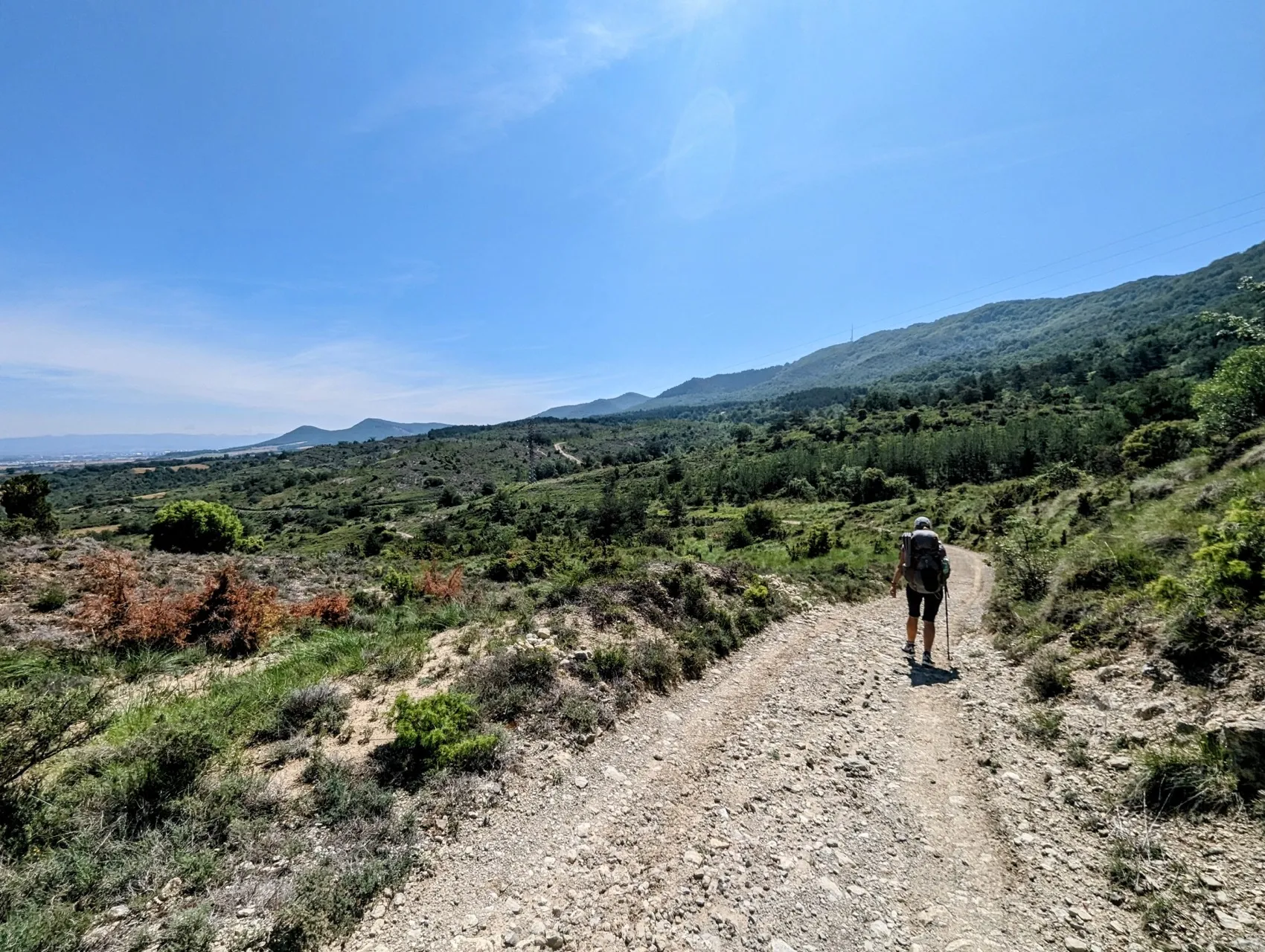
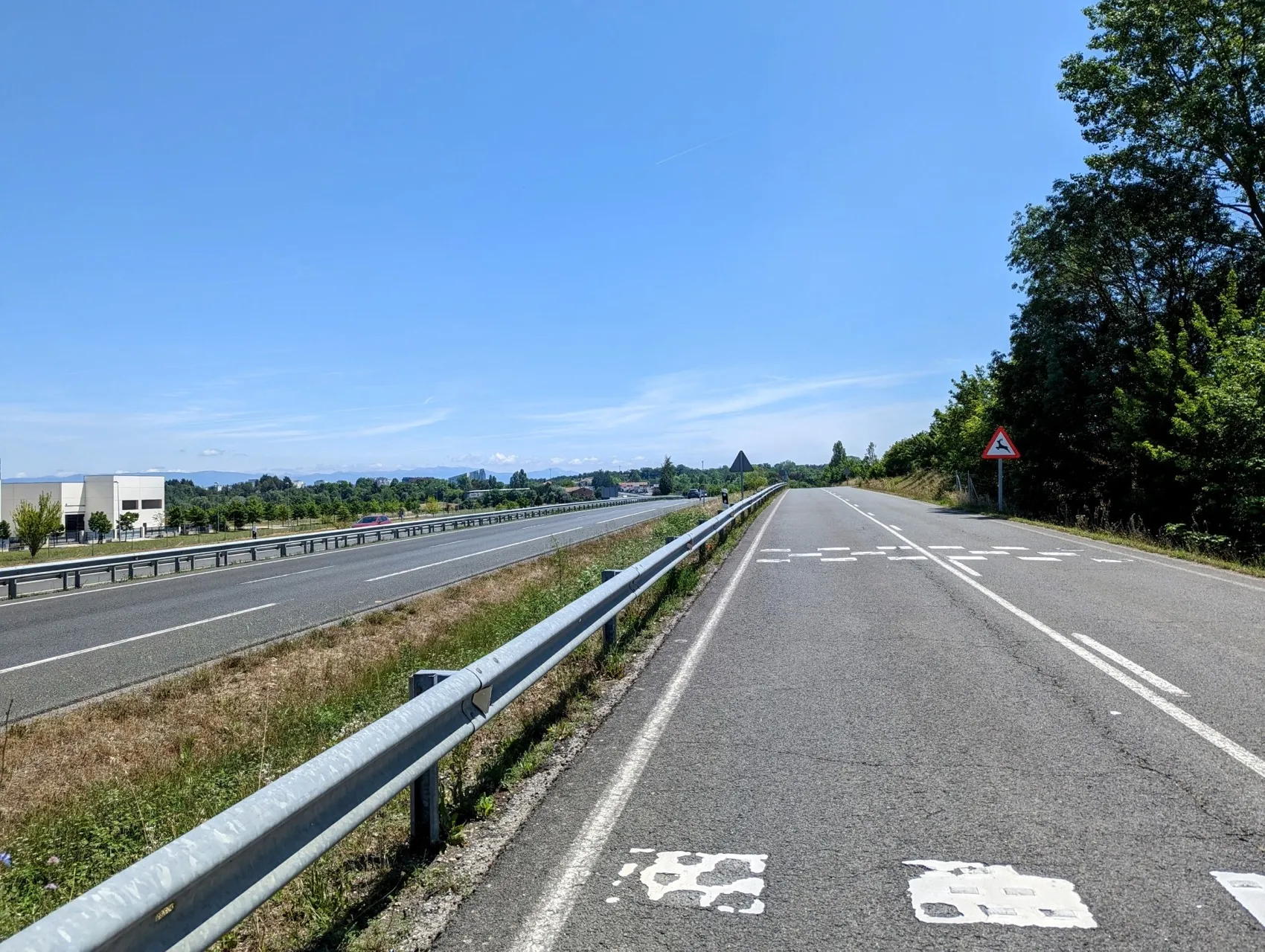
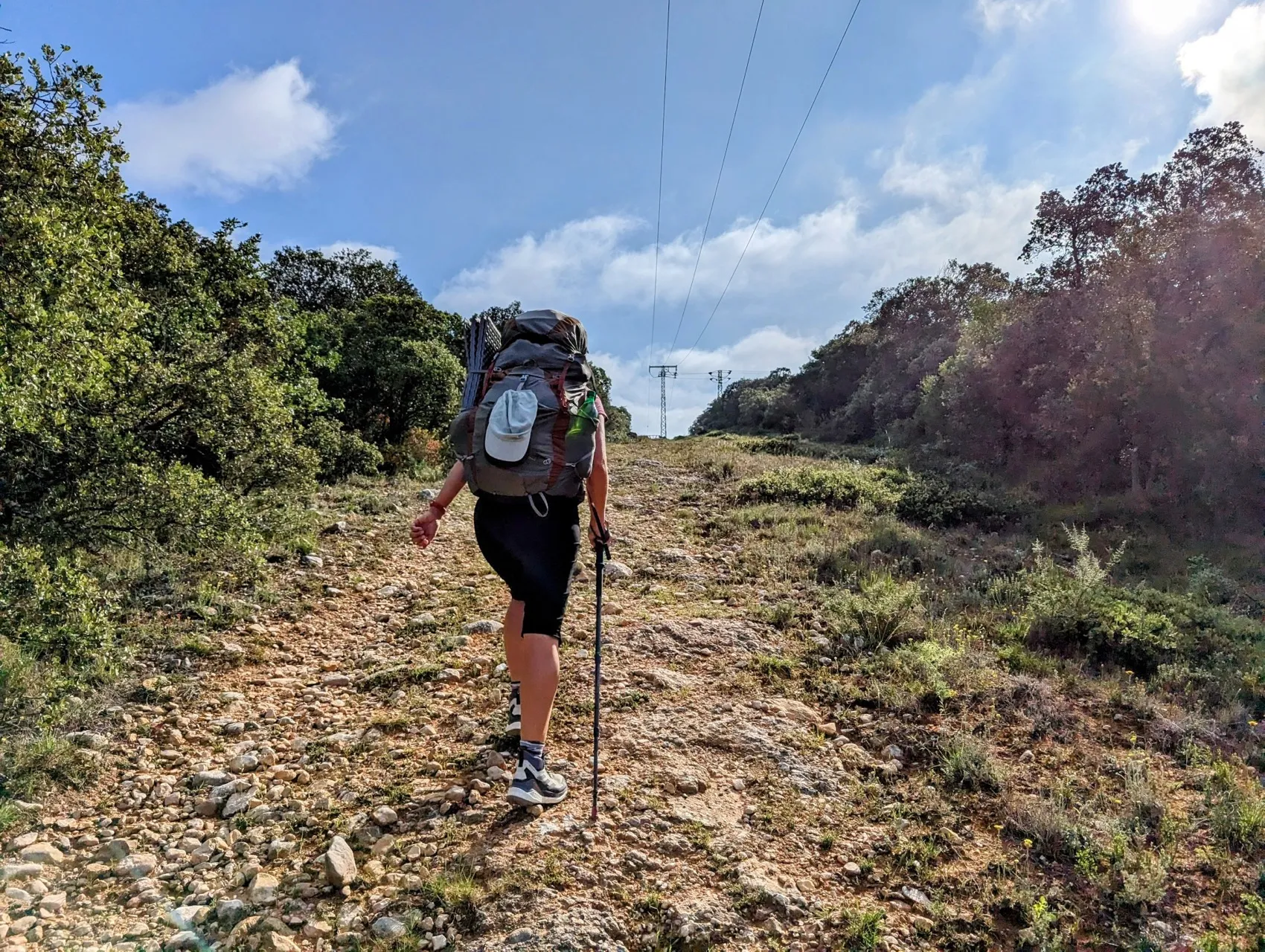
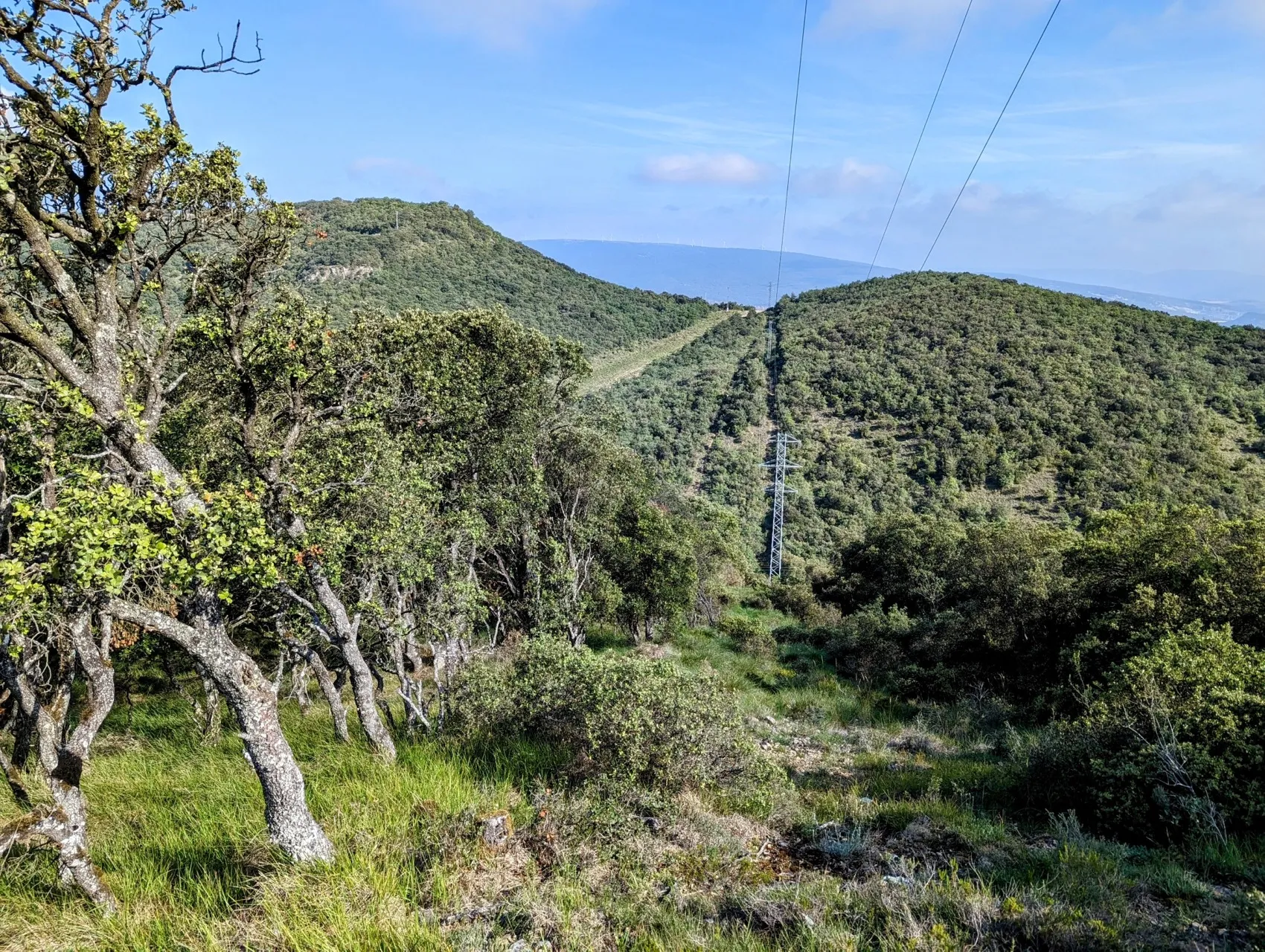
Where the previous transitions immediately marked a distinct change in nature and landscape, the transition here is less abrupt. We leave the village, cross the railway, an N-road, and the highway, and quickly turn left onto an unpaved road through the meadows. These meadows lie on a slope, and where the fields end, the slope continues but becomes forested. Soon, we're climbing steeply uphill through dense oak forests. Within 3 kilometers, we ascend nearly 300 meters. The forest thickens and the paths become harder to find. Fortunately, we spot a clearing where power lines are, and from there, we can follow a path in the right direction. We descend steeply and then climb sharply again. It’s a good workout for the muscles; it’s been a long time since we've had such steep ascents and descents. Today is not too warm, so it's manageable, and we are rewarded with a magnificent view over the vast valleys we walked through yesterday and the area we are heading to today. The valley in front of us seems filled with warehouses, industrial estates, and roads from above—a sight we haven't seen in a while. Perhaps the transition from Castile and León to the Basque Country is bigger than initially thought.
We descend on a forest path, beautiful through the woods but passing close to a prison. We often hear a shrill voice blaring through loudspeakers from the well-fenced complex—hardly the most rustic piece of our journey, but soon we are back in the fields, which are very beautiful, so we decide to take a break here. It’s a lovely spot in the sun among heather, low oak bushes, and broom, with a beautiful view, so we are satisfied. We're halfway through today's leg, with about 7 kilometers left. Tonight, we'll be staying at a campground. It's nice to camp again, and compared to a hotel, we can check in early.
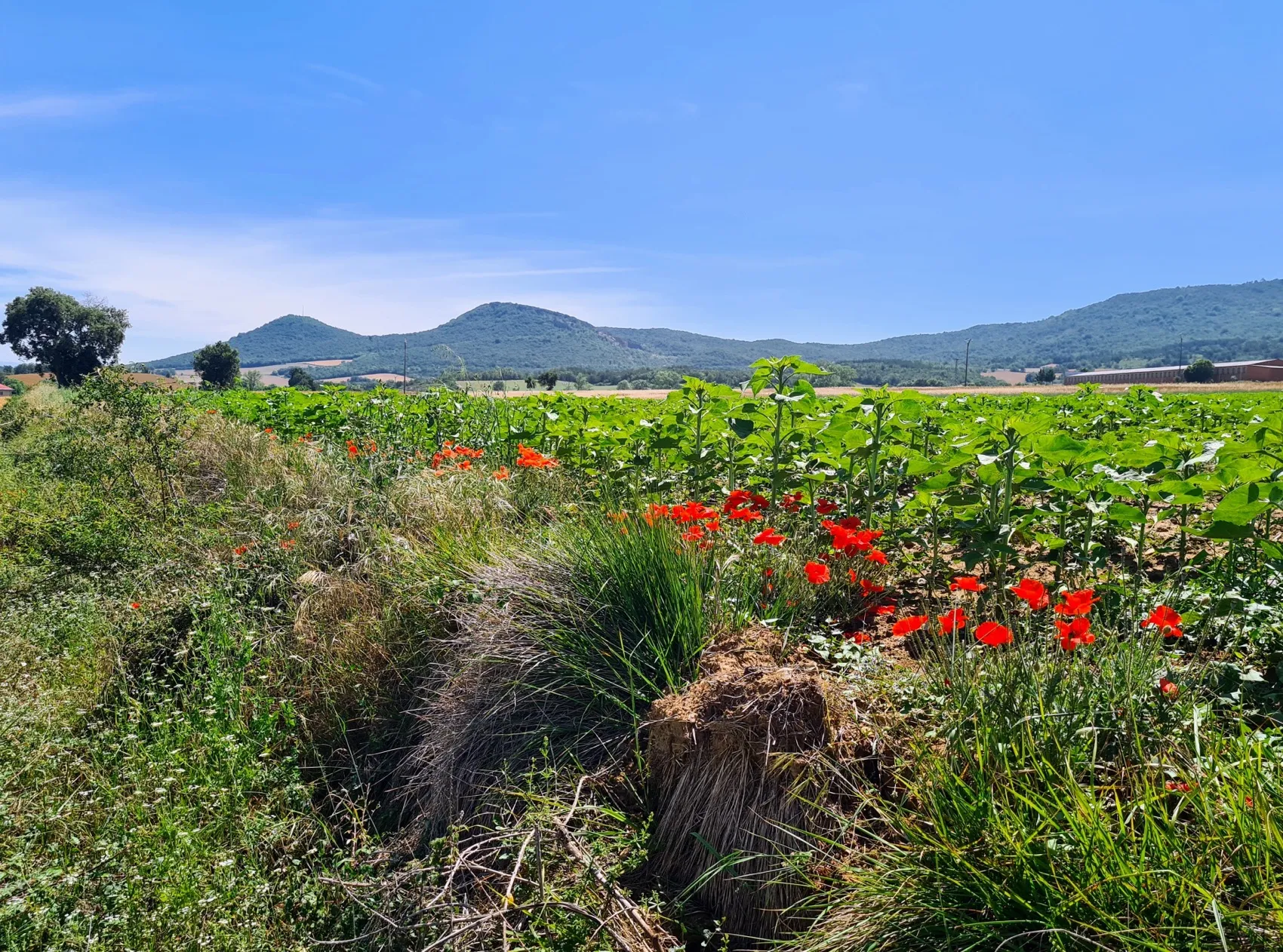
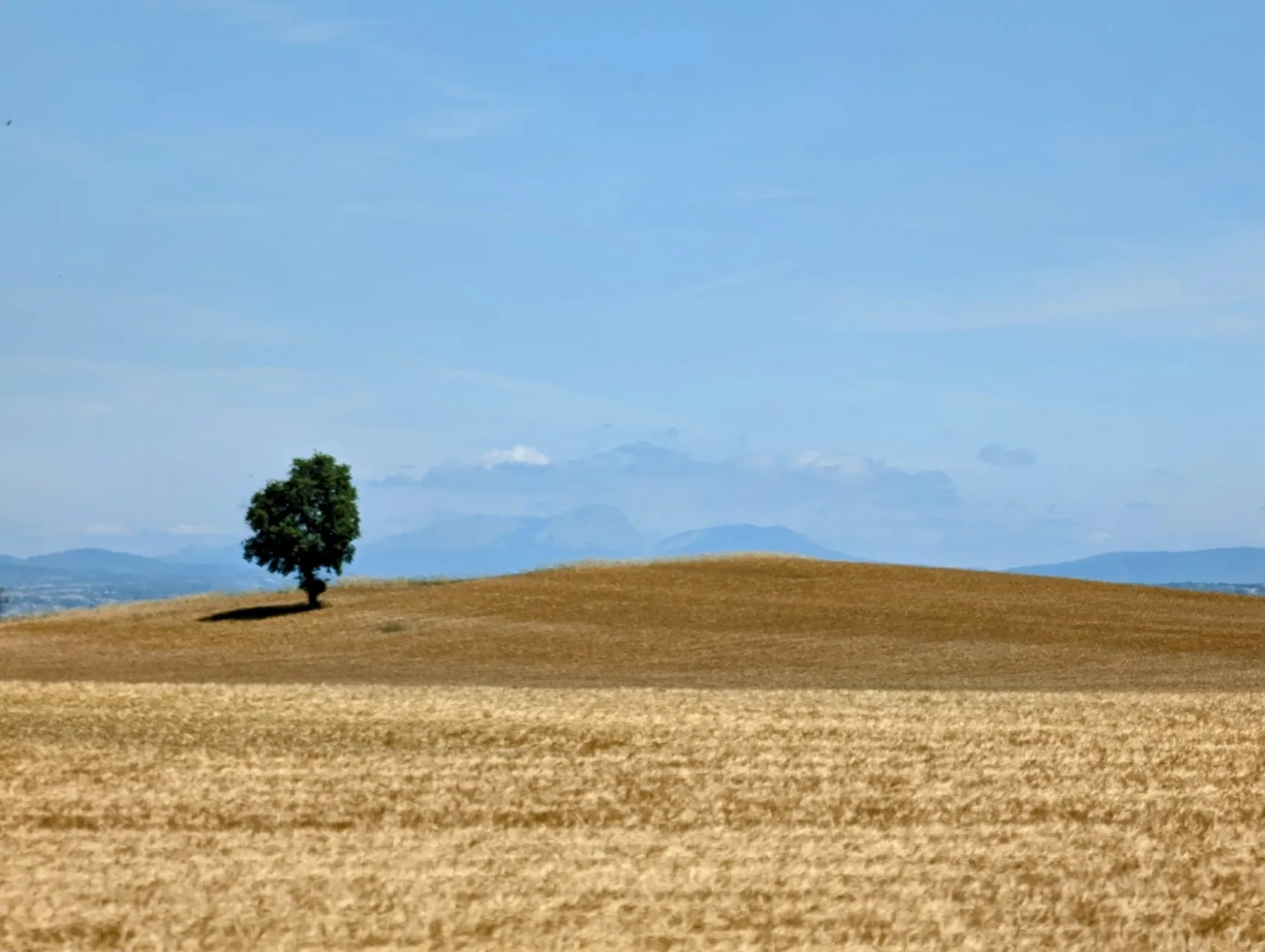
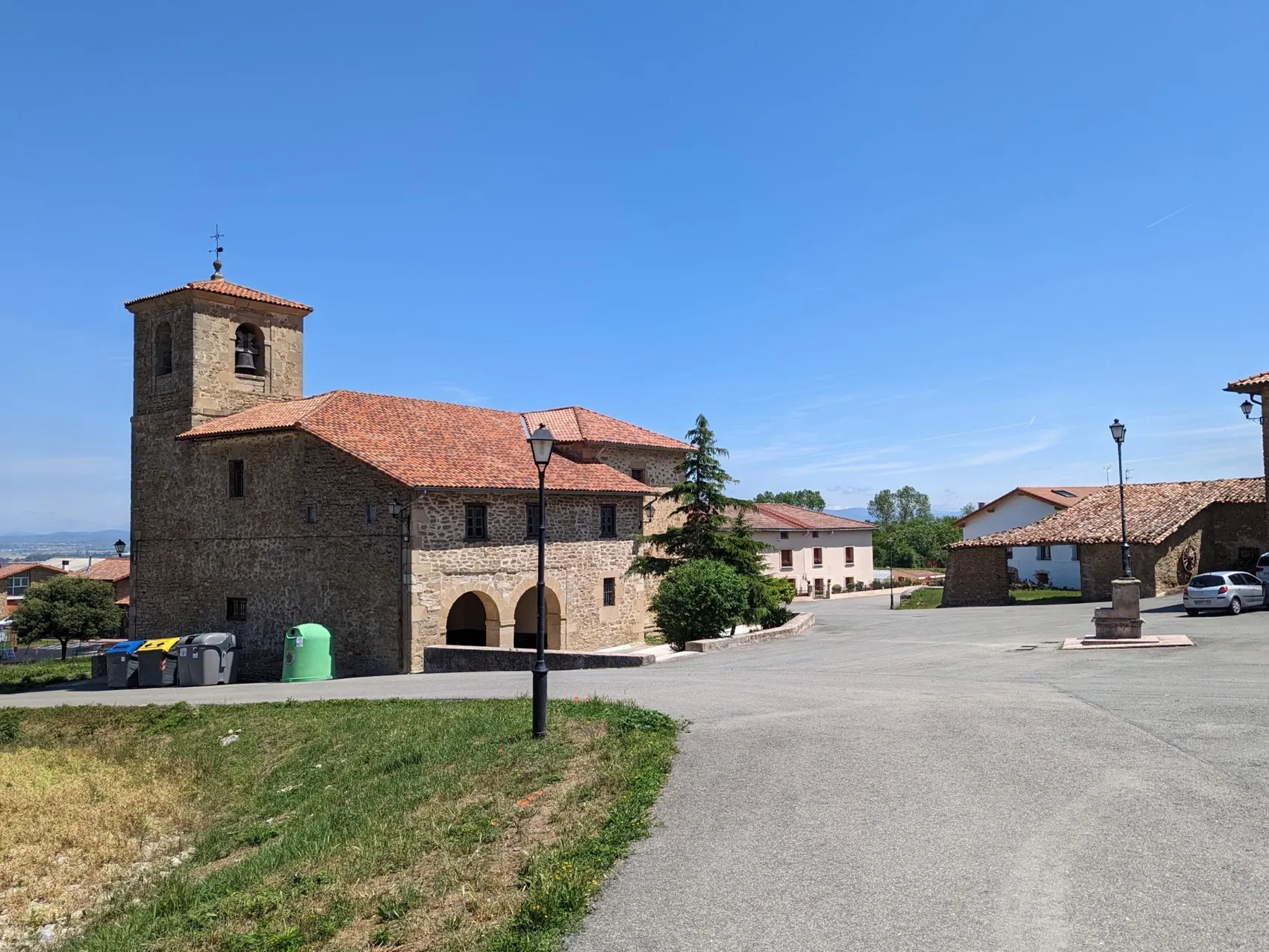
After the break, we continue downhill towards the valley. We skirt around the small village of Subijana de Álava and walk on a fairly flat path along the highway to the even smaller village of Gometxa. Both villages are unexpectedly quiet and feel authentic. From atop the hill, the entire valley seemed busy and hectic, but the route we're taking is peacefully meandering through the fields. The grain is yellow, and the sunflowers are growing taller. The season progresses steadily, though it feels like the seasons have been completely mixed up during our journey.
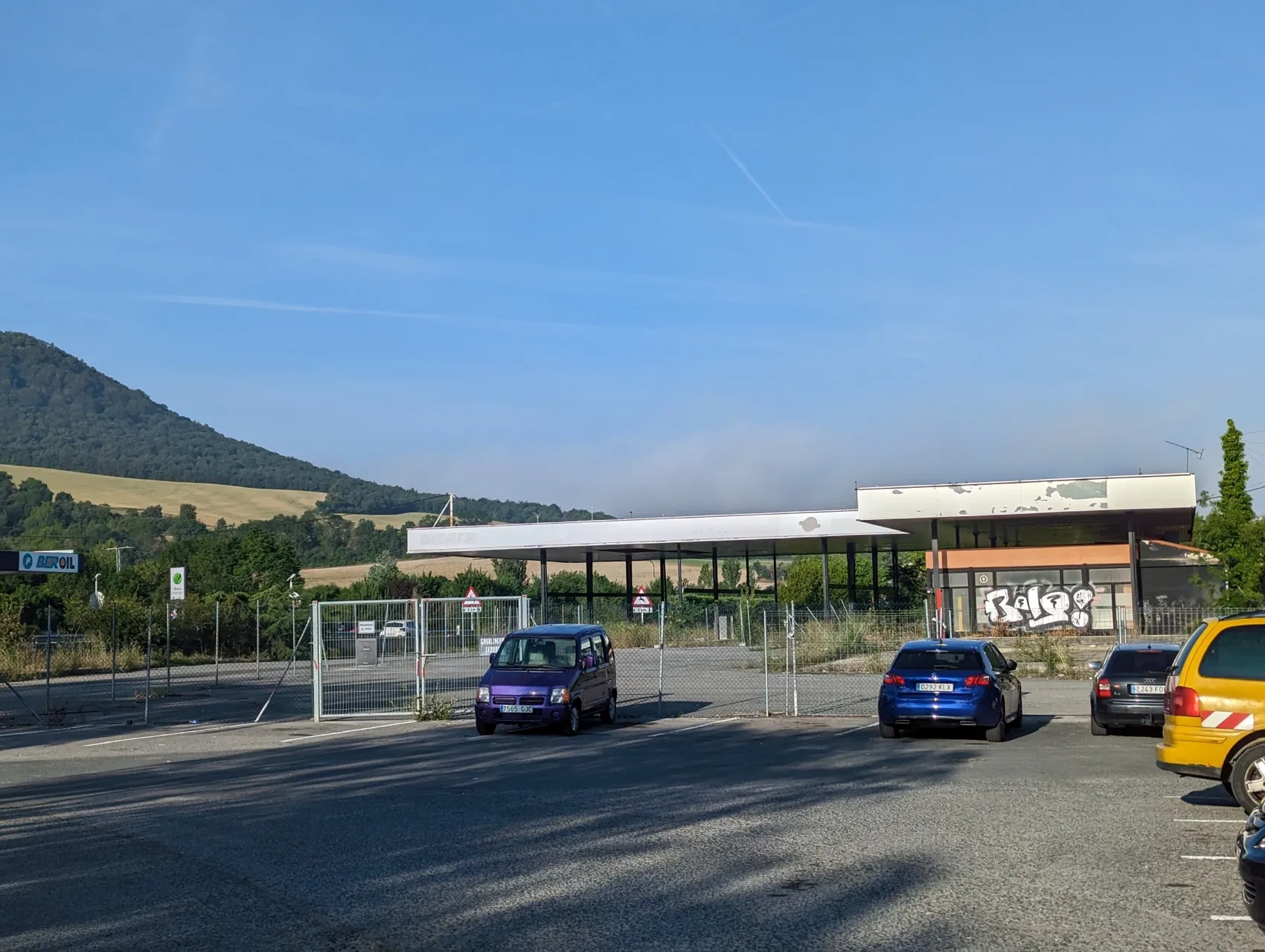
From Gometxa, we walk along a two-lane road beside the highway, which we need to cross at a large roundabout to get to the campground. We need to be careful, but we're more concerned about the campground. In front of the campground is a dilapidated house with a goat and an ostrich in the yard, and the neighboring gas station and restaurant are even more rundown and completely covered in graffiti. We worry the campground might be closed! But fortunately, on the other side, we see a barrier and a reception with the campground behind it. And we're even greeted in English! We find a spot for our tent, a fine place on a campground mostly used by people living in mobile homes and/or working at nearby companies. But it's quiet, and we get to use our camping gear that we've mostly carried unused through most stages. Our tent, air mattress, chairs, burners, and pans—it's not much, but it feels like our little home. Delightful, even at a campground like this.