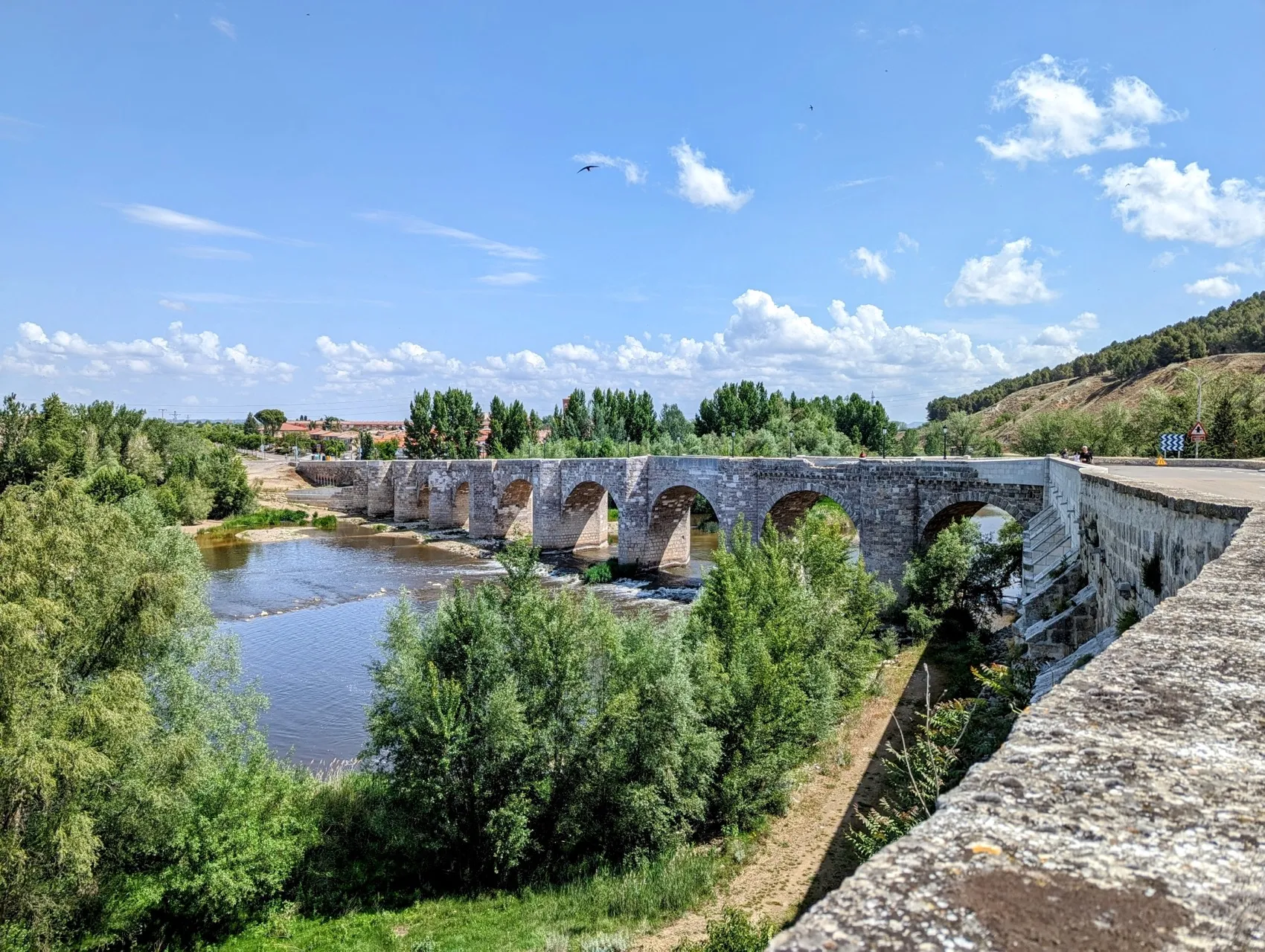
Luckily we were able to book an extra night and have a whole day in Valladolid. Even on a Monday, the city is pleasantly busy and the weather was lovely for sightseeing. It was Whit Monday, but they don't celebrate that in Spain, so the shops were open as usual. Now we're not big shoppers, and even if we were, we couldn't take anything extra with us anyway, but the open shops did make the city a bit livelier than on Sundays. Besides all the beautiful buildings, the city also has gorgeous little parks. Along the river Pisuerga is a beautiful rose park that is all in bloom at this time. Bunnies are hopping back and forth under the bushes. The larger Parque Campo Grande with squirrels, peacocks, fun artwork and big old trees is also gorgeous to wander through. We had a lovely day in Valladolid. As with most Spanish cities, we could stay there for a week, or even a month. This is another one of those cities you have to tear yourself away from to move on again. But once the hiking shoes and the backpack are on, that's quickly done again. Outside on the streets you do stand out, on an early Tuesday morning in our hiking outfits with big backpacks and hiking poles through the city streets.
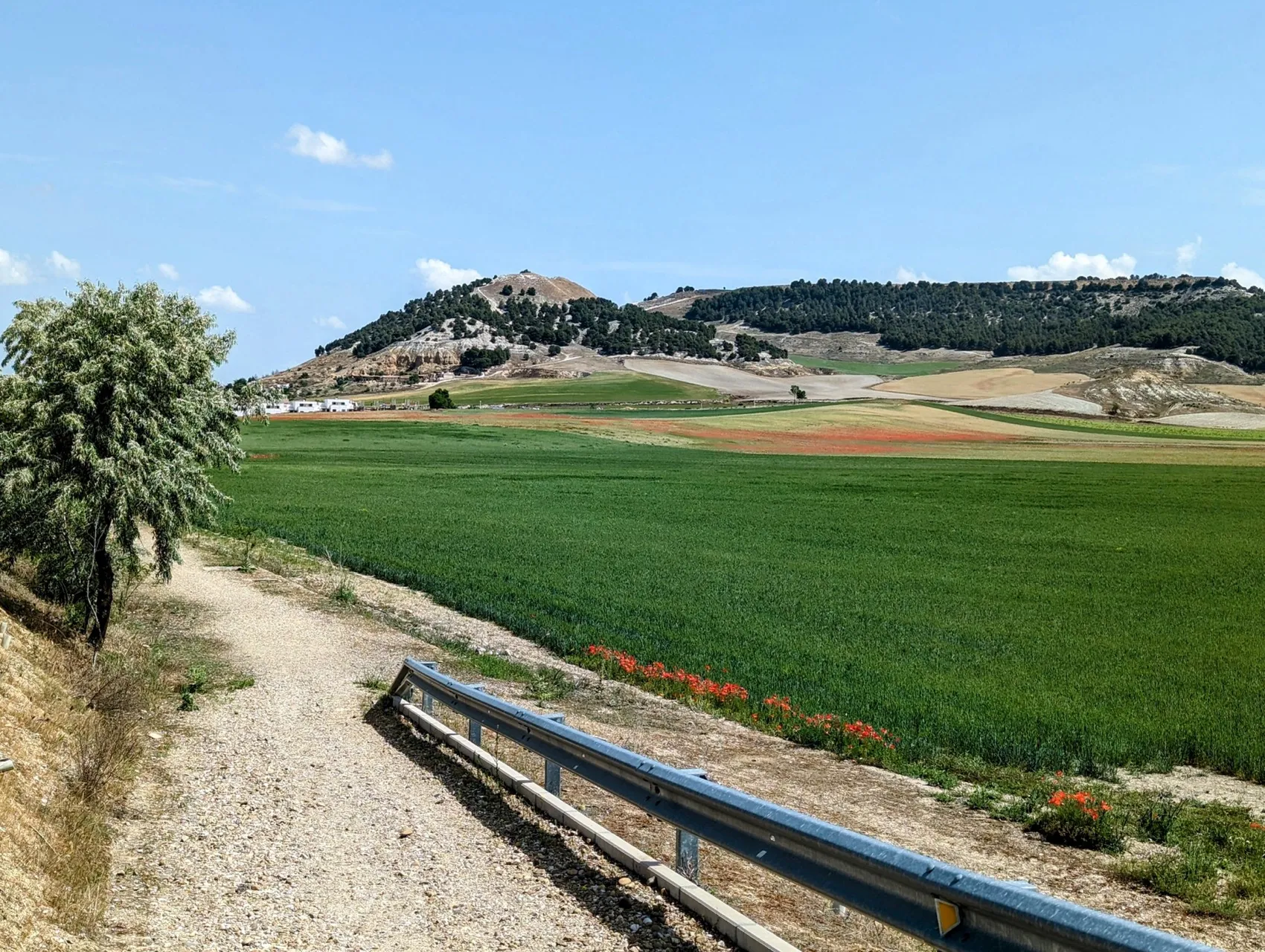
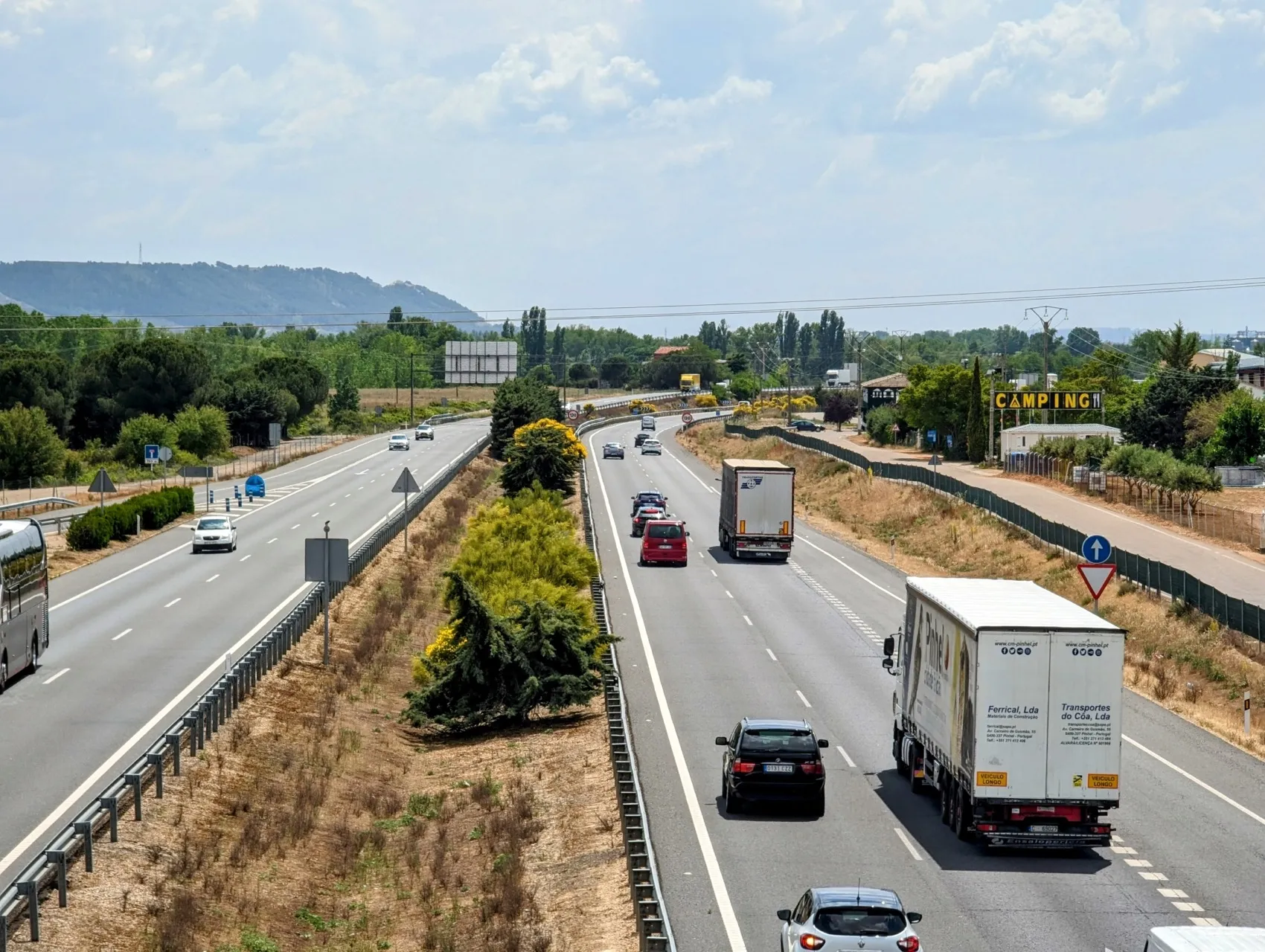
Whereas yesterday we were absorbed in city life, this morning we really feel a distance between us and where we are: it's time to go! We walk across Plaza Mayor, where they are building up the same book market we saw on Plaza Mayor in Salamanca, and head north between the high-rise buildings. The buildings get less and less old the further we get, and after about three kilometers the views become more expansive again. We walk past a wheat field over which bee-eaters skim a few meters from us. That stretch is delightfully rural, but the road we walk along remains big and gets bigger and bigger. We follow 'Ruta de Carlos V', better known to us as Charles V or Charles the Fifth, but also Charles of Luxembourg, King Carlos I of Spain, and a number of other titles and names. In the 16th century, he ruled 'the Netherlands' (the Netherlands, Belgium and Luxembourg), Spain and what is now Germany, Austria, the Czech Republic, Switzerland and large chunks of Italy and Hungary. With overseas territories in Asia and America, his total empire was larger than the Roman Empire. So a man of stature (literally, and figuratively, because at over 1.90 metres tall, he was quite tall for the time...). After laying down his crown in 1556, he decided to move from Brussels to a quiet place in Spain and spend his last days there. He made a long journey through his former empire to the monastery of Yuste, near Plasencia. On one of our family's scenic drives a few weeks ago, we visited the monastery. It's beautifully tucked away among the forests in the hills. Unfortunately it was closed because its successor, the current king of Spain, was visiting it, but it's a nice place to spend your retirement. At the time, we had no idea that we would be following part of his final route higher up in Spain. But to be honest, we still don't think too highly of the route he chose. He was clearly not going for the small, rustic roads on his way to Valladolid. The road we follow gets wider and busier. We have to stay close to the crash barrier, to avoid getting too close to passing trucks in the bends.
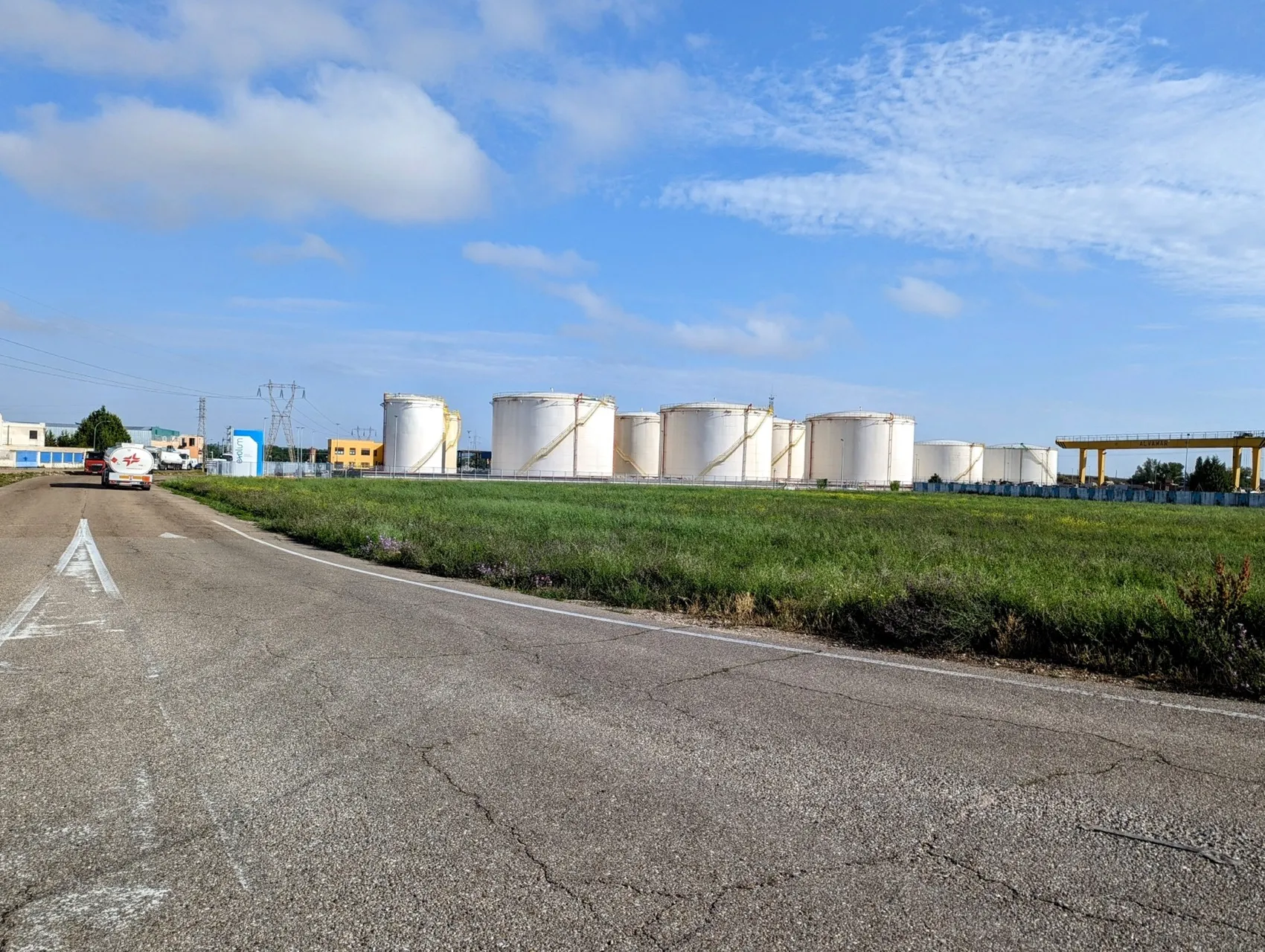
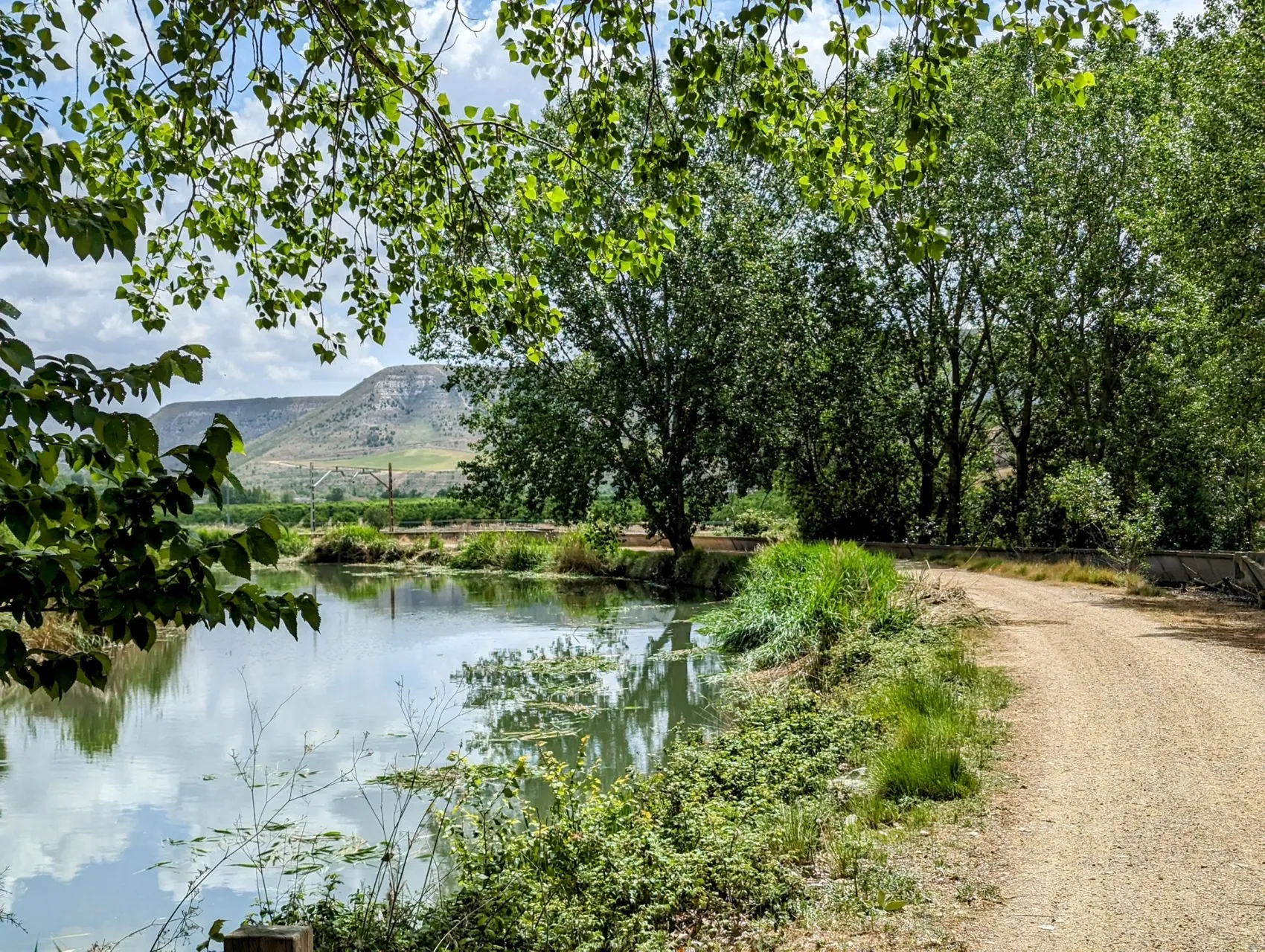
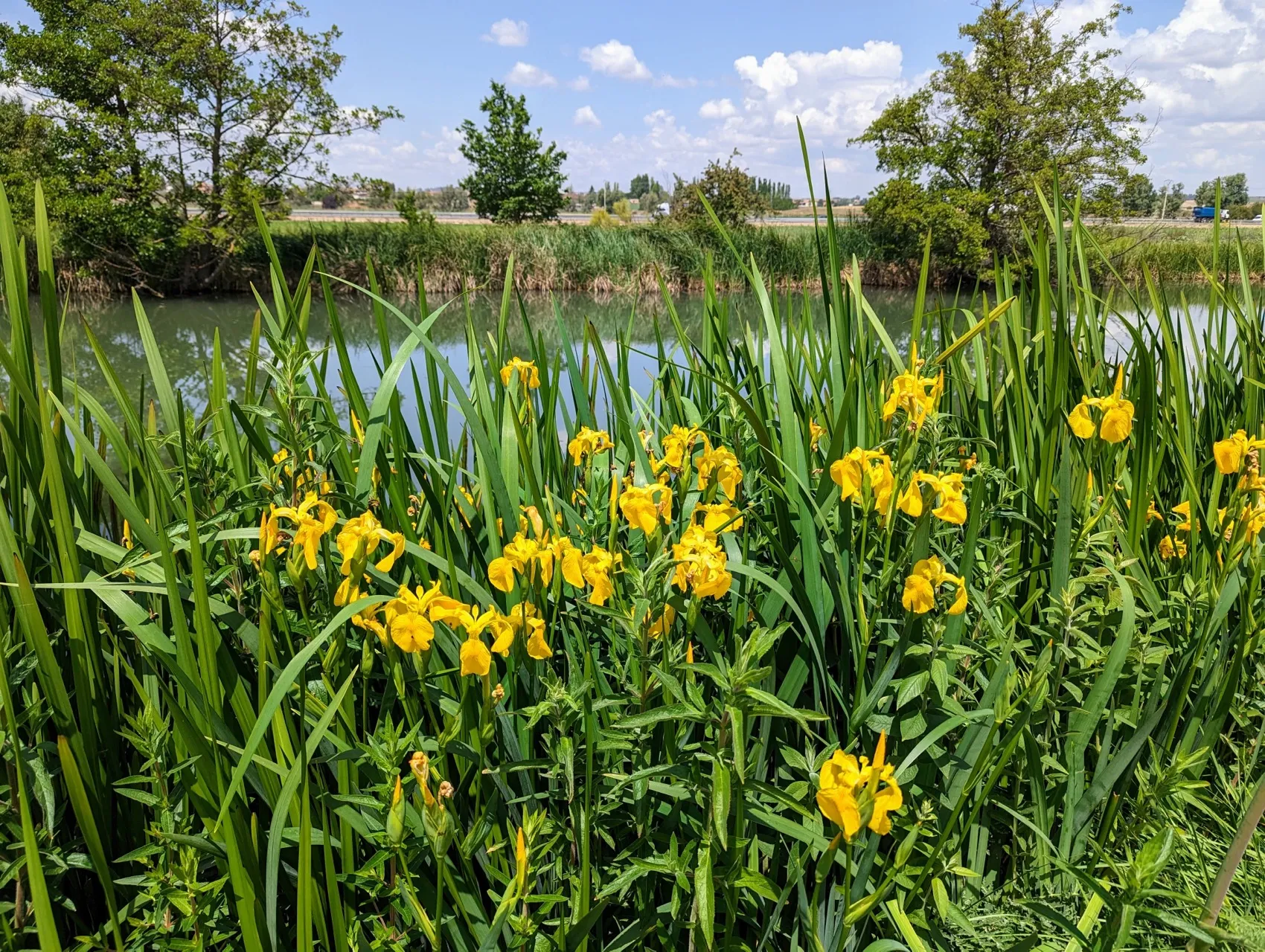
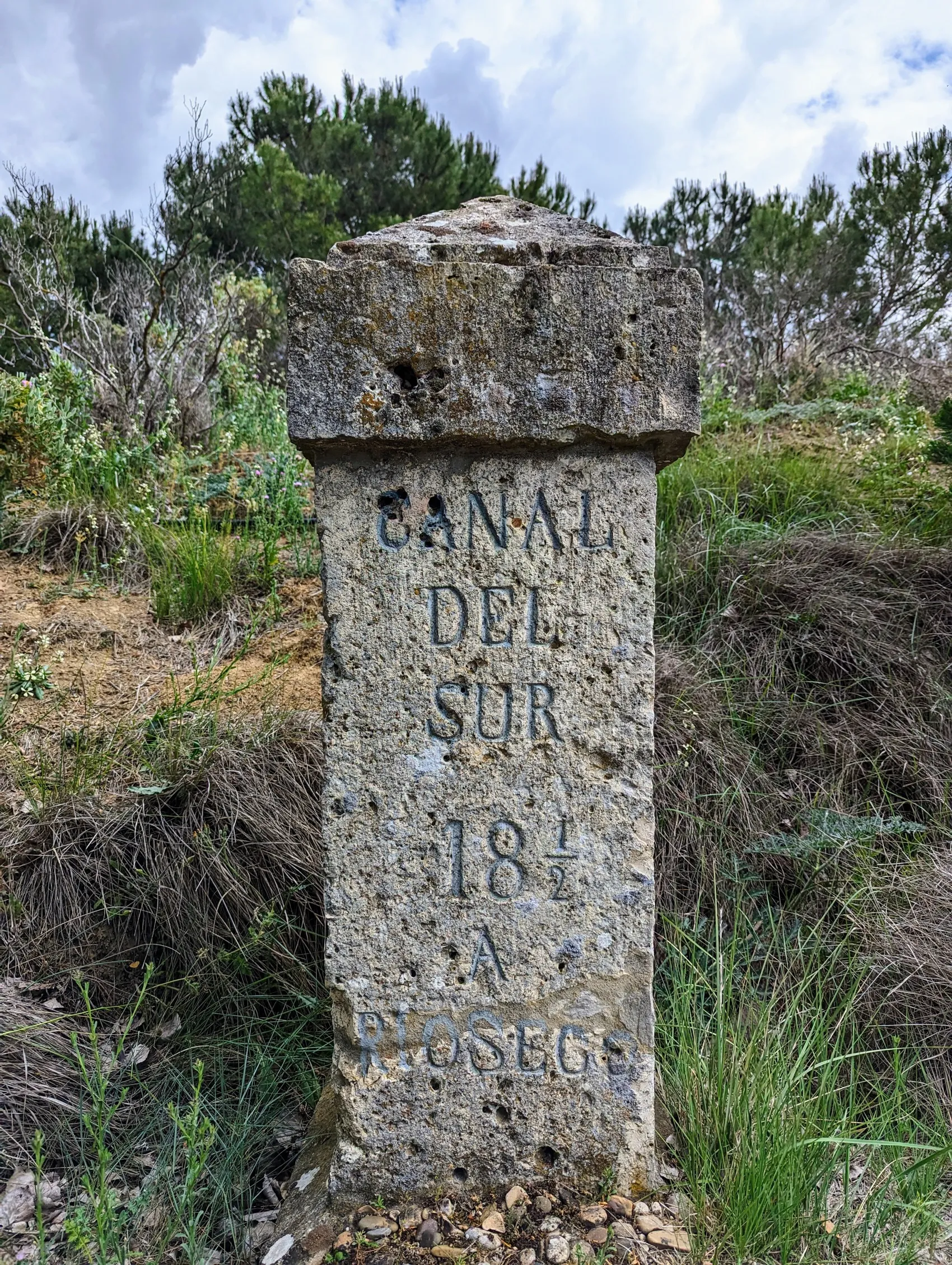
Especially at roundabouts, we have to be careful. It almost looks like we're walking on a motorway, but we haven't seen any "no pedestrians" signs, and the Guardia Civil we walk past twice today doesn't look up or back, so it should be OK. We end up walking on the road all the way to the next village, about 13 kilometers on the route, past a giant cemetery, businesses and industry, gas storage and a military base. We walk through the place and a little further, 15.5 kilometers after we left Valladolid, we turn off the tarmac road onto a dirt road. Lovely! We immediately are in the middle of nature along a canal, Canal de Castilla. Flowering yellow irises and willows line the water. To our right is a railway line on which the TGV occasionally comes crawling and a goods train races over (train traffic in Spain remains te be a bit odd...). To our left is the 10- to 20-meter-wide canal and a bit further left is the motorway.
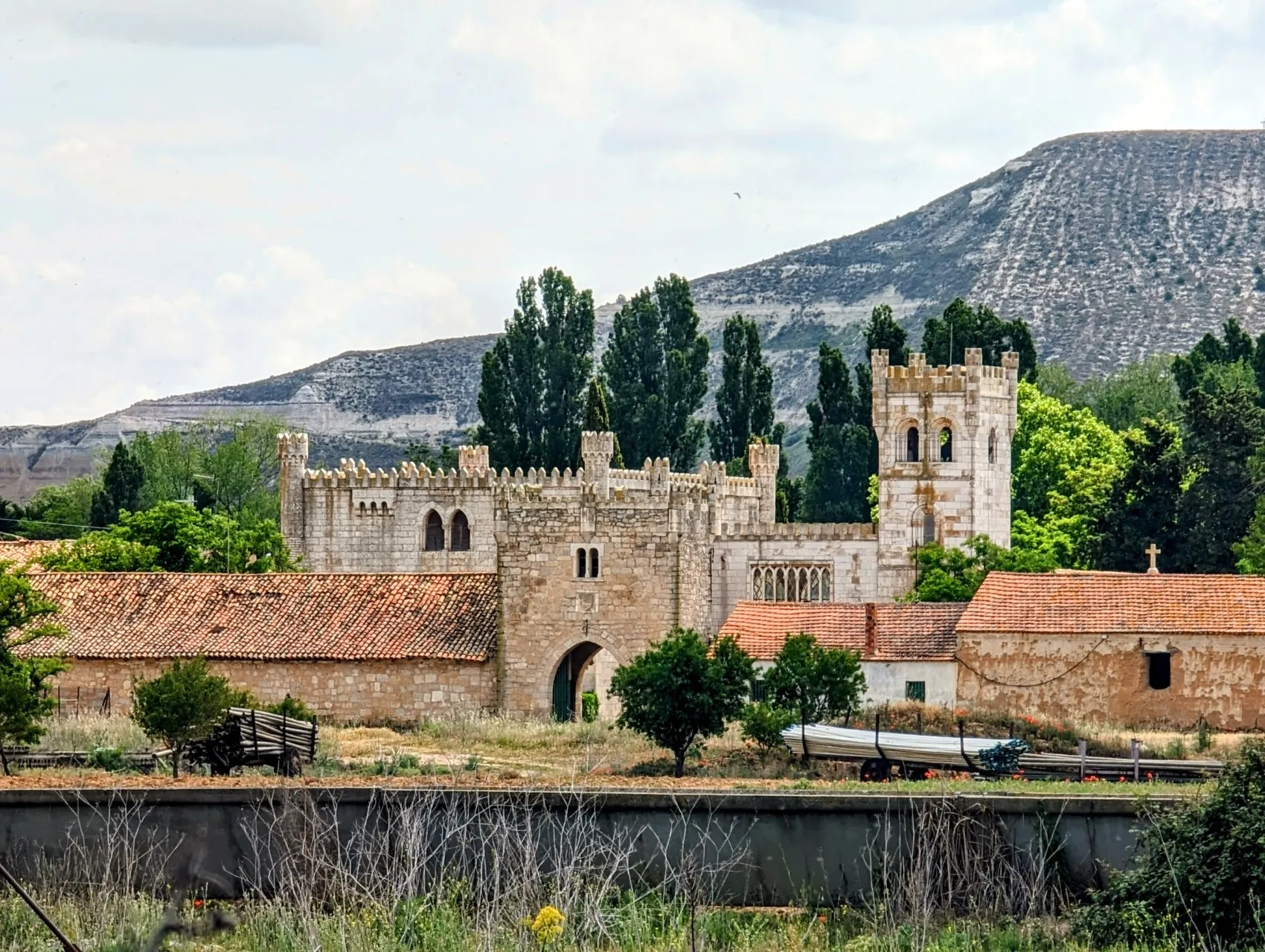
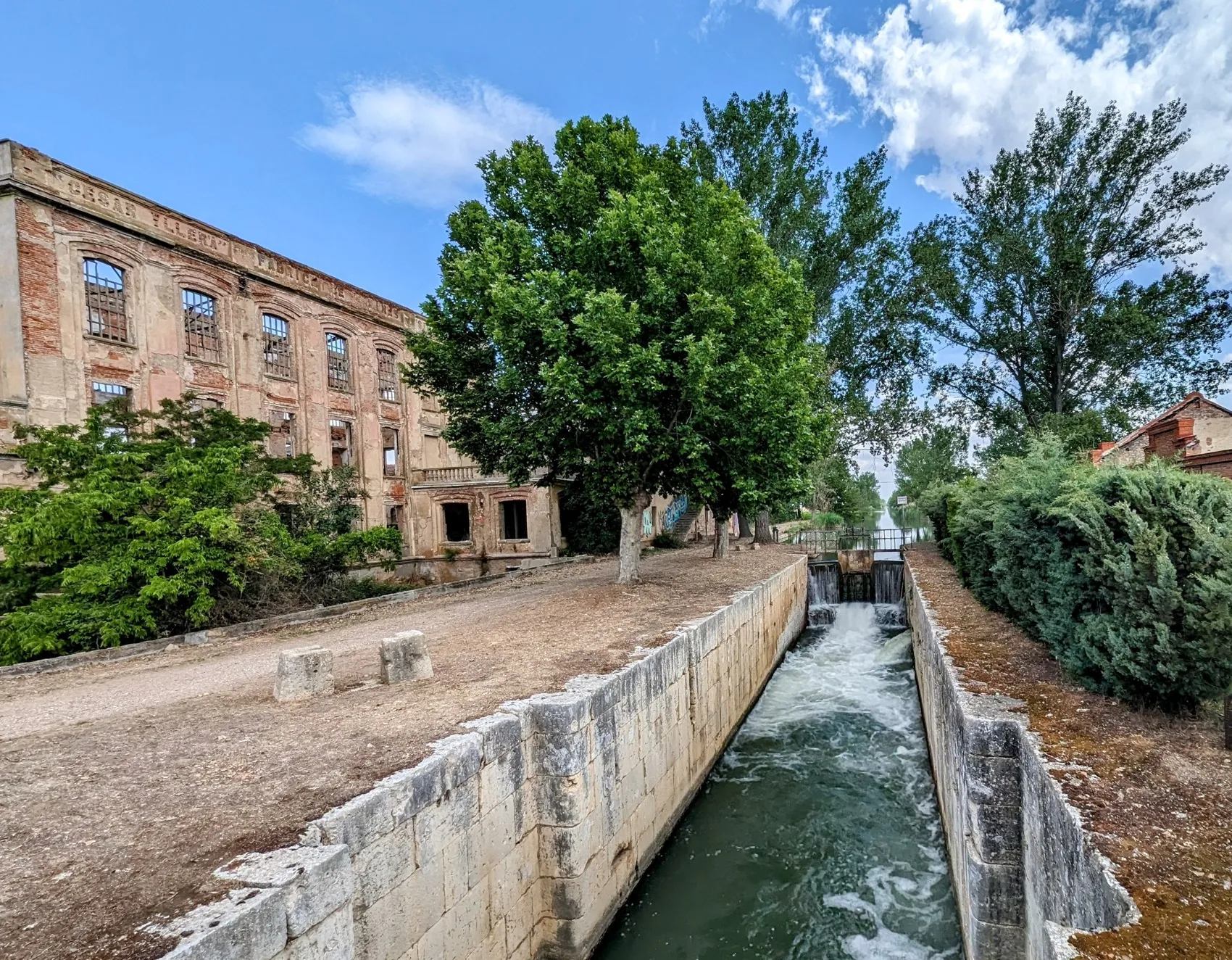
All in a nice straight line parallel to each other. We'll continue to follow this canal for the rest of the stage, as well as the railway line and motorway. It's nice for the feet, knees and hips to walk unpaved again after so much asphalt. After a break in the greenery, they have actually recovered quickly and the path continues nicely. We spot a snake crossing the road a few meters in front of us, a couple of large green emerald lizards, lots of storks and birds of prey again. The canal is clearly not used by boats (anymore), the locks we encounter have only one 'door' instead of two. Nowadays it's mainly used for irrigation. Although here and there, memories of a time when the railway and motorway didn't run here and this canal was the main mode of transport have been preserved. We pass by some brilliantly dilapidated factories that once used the waterway. The roofs are missing and the walls are daubed with graffiti, but here at such a beautiful grand building and a lock, you can almost imagine hard work still going on, loading grain onto ships or coal off of them. They remain fascinating places. And the canal is a beautiful structure to walk along. At the end of the stage, we cross the canal and the motorway to reach the campsite. The reviews on Google do not cheer us up, but it's actually not too bad. We find a quiet spot under some trees and set up our tent before it starts raining. It's nice to sleep in our teepee at a quiet campsite again!