Today's stage takes us from Utrera to bustling Seville. From the campsite in Dos Hermanas, we have visited the city several times in recent days and enjoyed the summer crowds (even though it's only April, temperatures have been above 30 degrees more often than not) in the beautiful old parks, the big stately buildings in the centre and the small alleys around them. We stood in amazement at the Semana Santa celebrations with the processions that seem to come from a completely different era. Hundreds, sometimes thousands of people walk in a procession from their 'home' church to Seville's cathedral. People with pointed hats, bearers of crosses, statues of the Virgin Mary on 2,000-pound stands, and people carrying them, musicians and altar boys walk in a long line into the cathedral, get their blessing and walk out of the cathedral on the other side, back to their own church. This happens throughout the week before Easter in dozens of different processions. The city is bustling with mostly poshly dressed people, more often in black. As an outsider, it's a bizarre scene to behold. So today we start the stage to get there on foot, tying this particular city to the rest of our hiking tour. At just over 36 kilometers, it's a long stage but quite flat, and looking at the map, a lot through built-up areas and busy countryside. Not really a stage we have been looking forward to, but merely one we still 'have to' walk in order to continue northwards. Luckily, we often get it wrong...
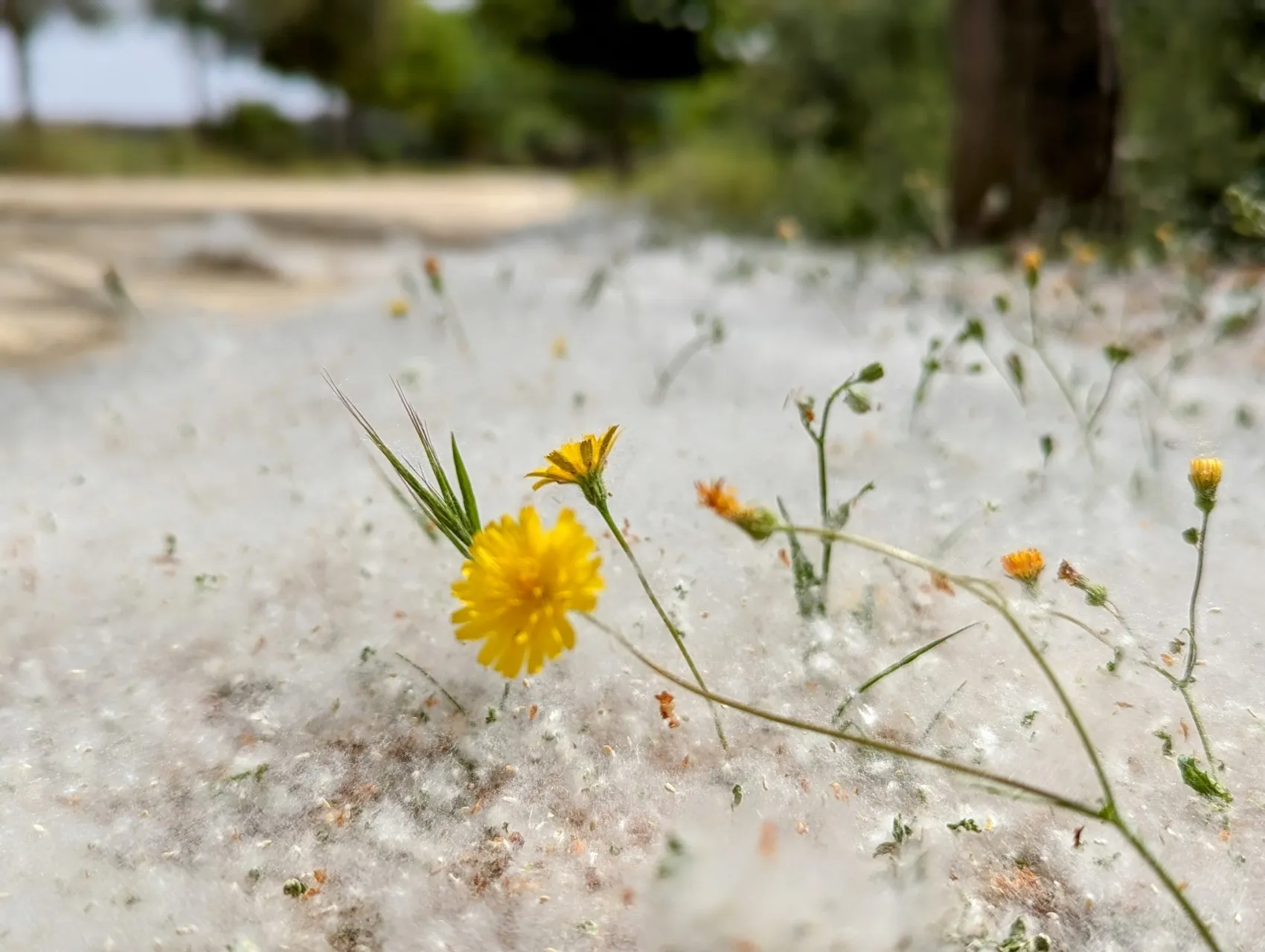
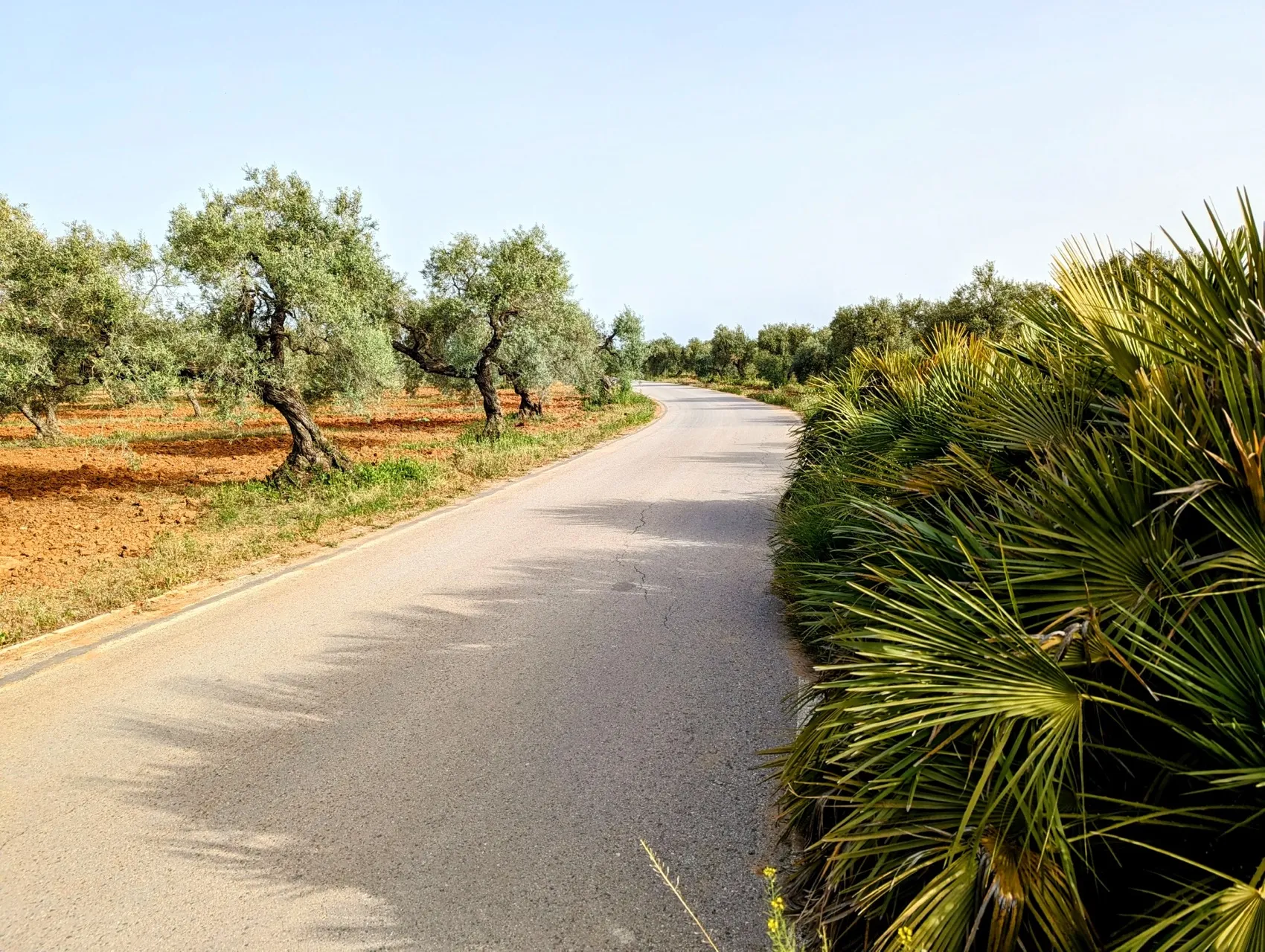
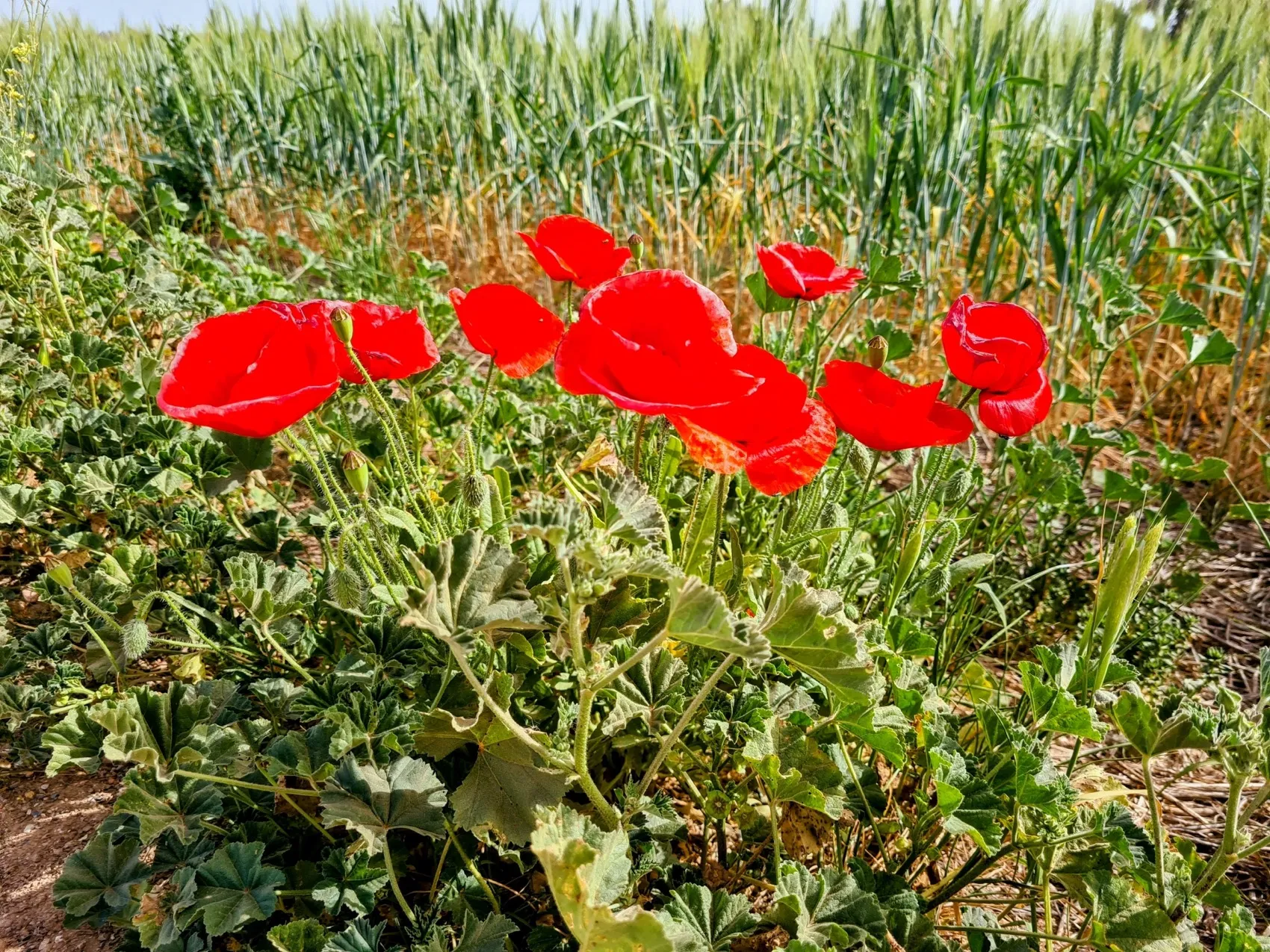
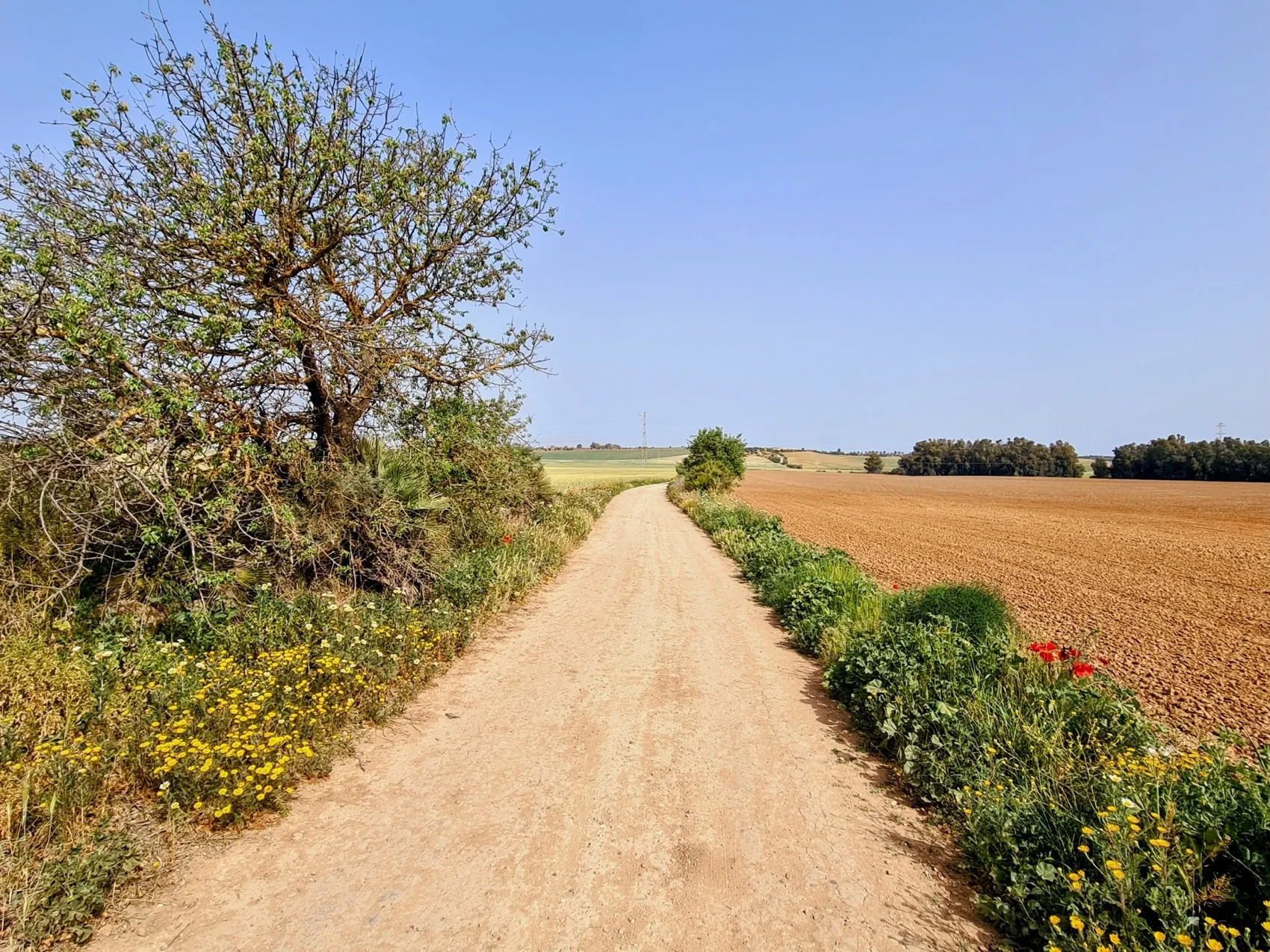
We take the first train from Dos Hermanas to Utrera. It's Easter Sunday so public transport is limited, but at 9 o'clock we can start our journey in front of this classic 19th century train station, decorated with authentic mosaics. A picture perfect, in the early morning sun. The station is a kilometer west of the city centre and we are hiking north-west today, so we won't see the centre of Utrera again. We walk along a major road where some bars and kiosks are opening. Pretty soon, the yellow shell of the Via Augusta, the route we're following today, indicates that we can turn right to leave the main road. We walk past businesses that are closed today and cross a railway track. We'll continue to follow the road we are on for another 16 kilometers. At first along the by now familiar rural houses, surrounded by fences and secured by large guard dogs, but after a few kilometers the scenery becomes more rural. The road leads us through beautiful old olive groves and the tarmac gives way to a dirt road. We walk across fields as flat as if it were an airport, full of poppies, cereals and sunflower, teeming with butterflies and bees. Birds are busy chirping around us and we even manage to take a reasonable photo of a bee-eater! Unexpectedly beautiful nature on the edge of this urban area.
At the foot of today's only hill, we take a break. On the map, the mountain looks fierce, it's a steep high peak in the altitude profile, but in reality it's a short hill with about 50 meters difference in altitude. We have the stove with us to make coffee, but we forgot to pack the pan this morning.... We find out that you can also make coffee with a titanium mug, directly on the burner. How convenient!
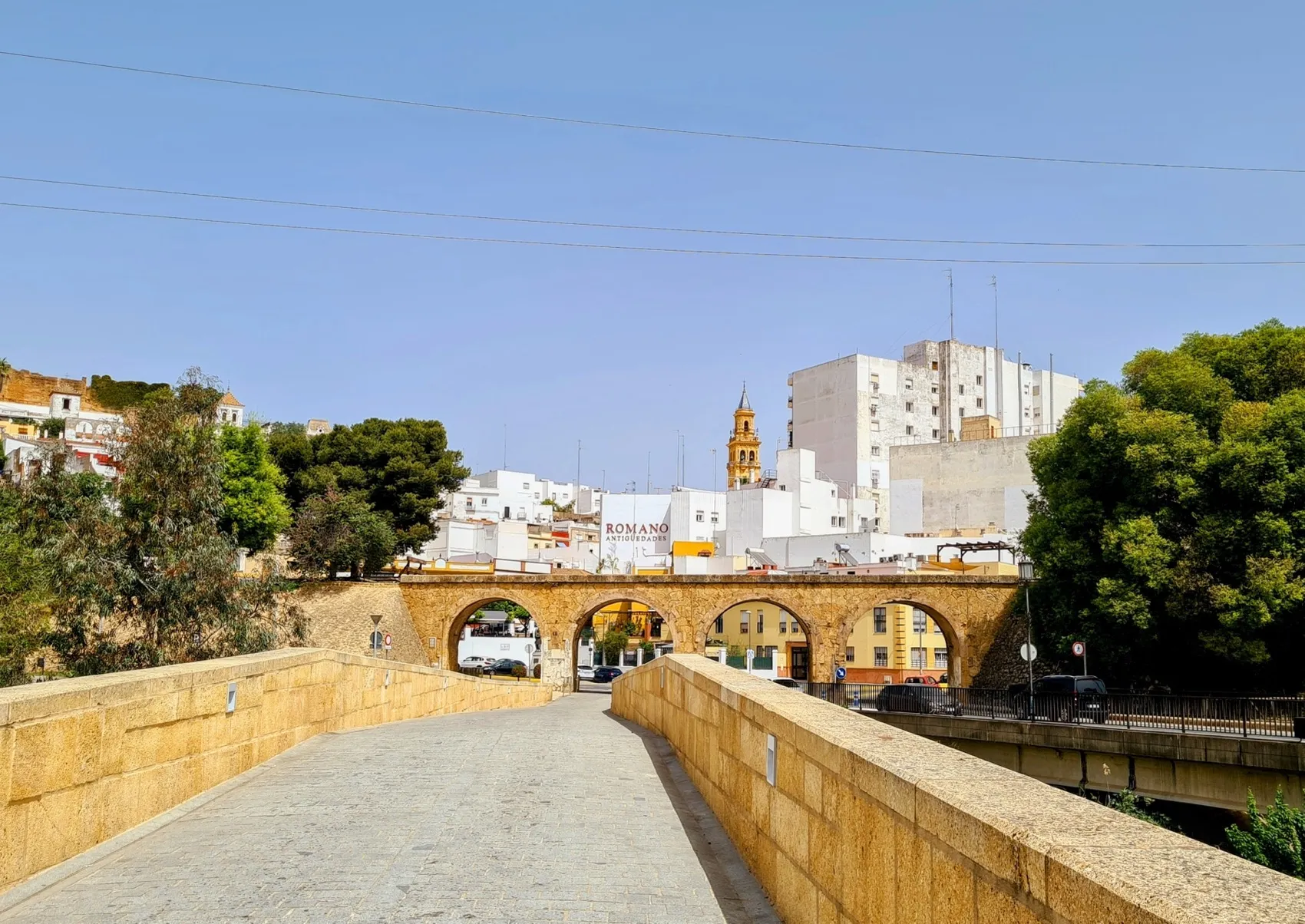
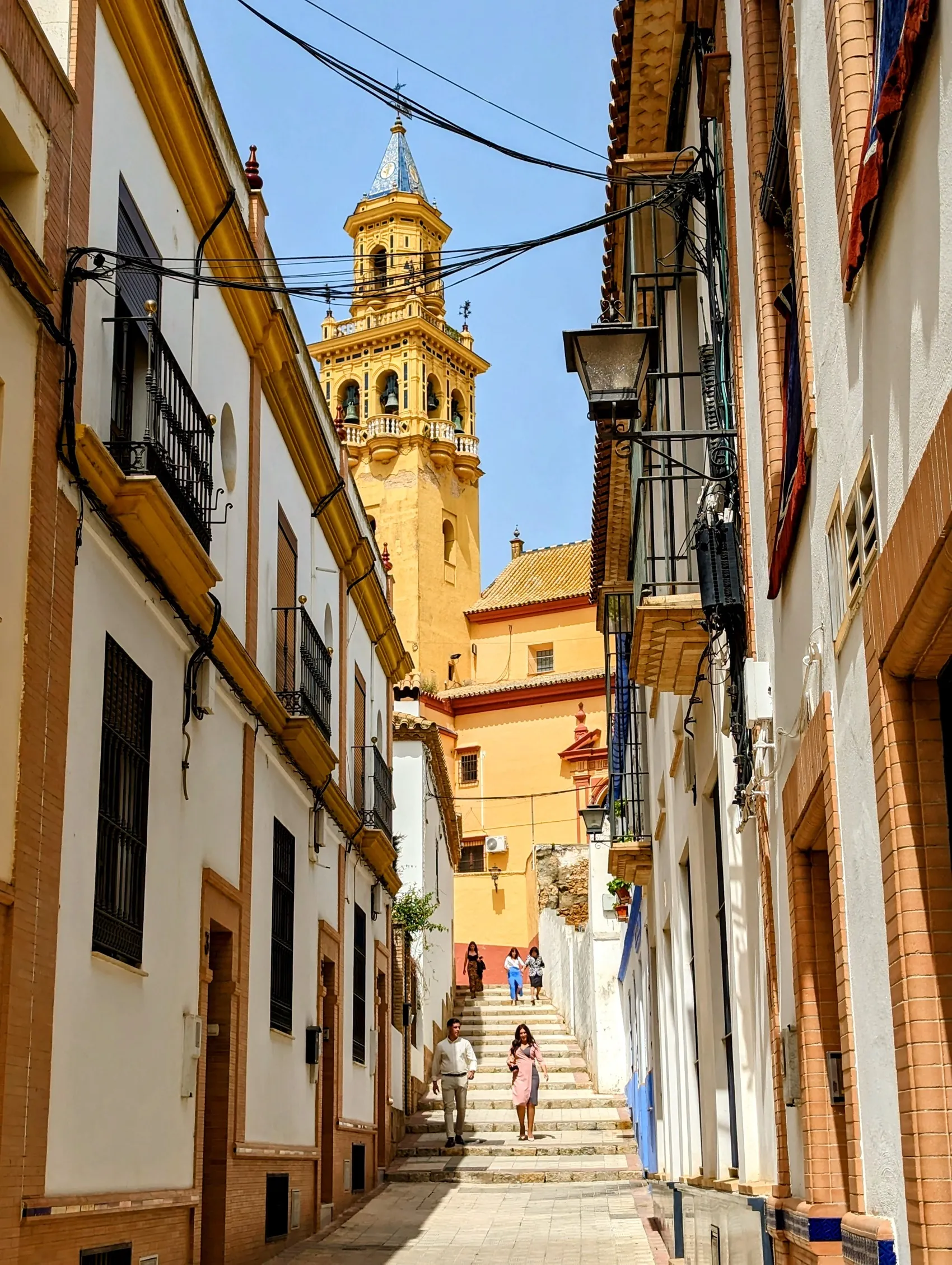
After the break, we are soon on top of the hill and can already see Alcalá de Guadaíra, the only town we cross today. With more than 75,000 inhabitants, it's quite a town and practically attached to Seville. We only just skim the place, but see the most beautiful part of the city. After walking briefly through a suburb and recreational area, we cross the Rio Guadaira river towards the old walled city via an old Roman bridge, the Puente de Jezús Nazareno. Next to the old bridge, which is closed to motorised traffic, is a new bridge. It seems that once it starts raining, the new bridge quickly floods, while the old one always stays dry. The Romans sure knew what they were doing, back in the day! We meander briefly up the narrow stone streets past old towers and churches and have a view of a castle. The church was clearly built in different phases: one piece is part of the old city wall, the foundations are from a mosque demolished in the 14th century and the church was built on top of it. It's a nice mix of architectural styles. The church mass has just ended after the Easter celebrations and people head towards terraces. The streets are pleasantly busy. Here, just outside of Seville there is not a tourist in sight. Quite a shame for such a beautiful place. Or maybe a blessing...
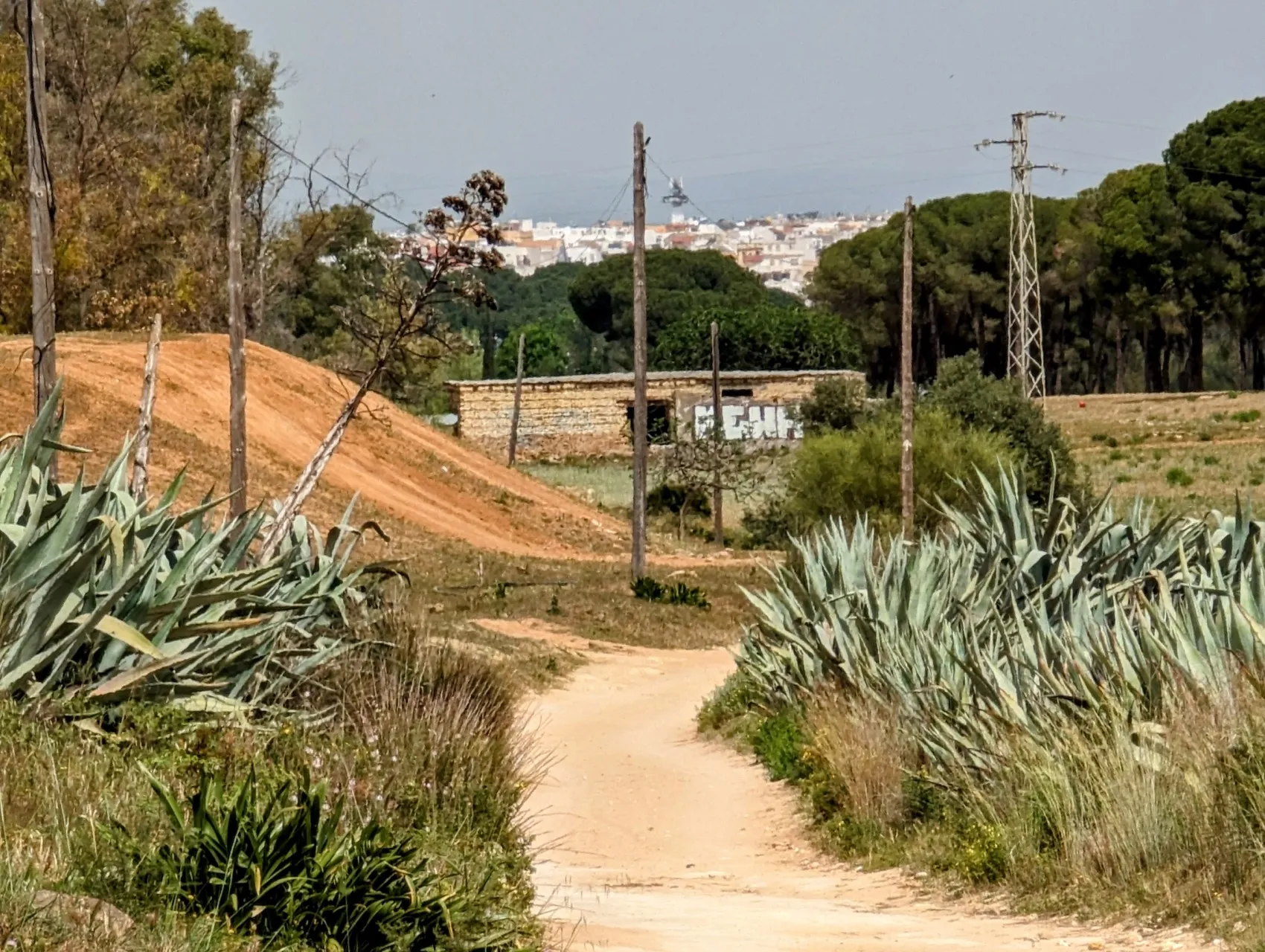
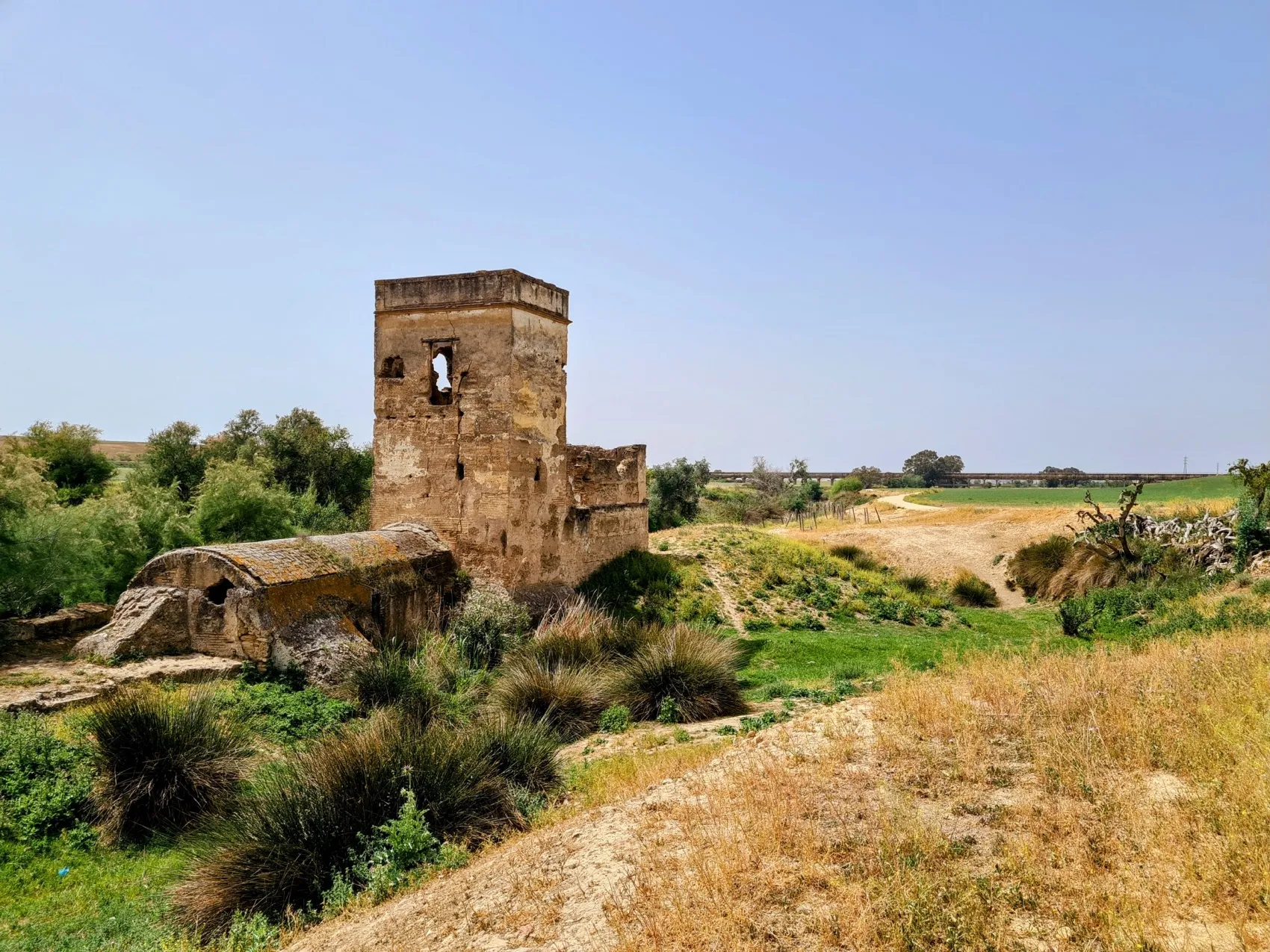
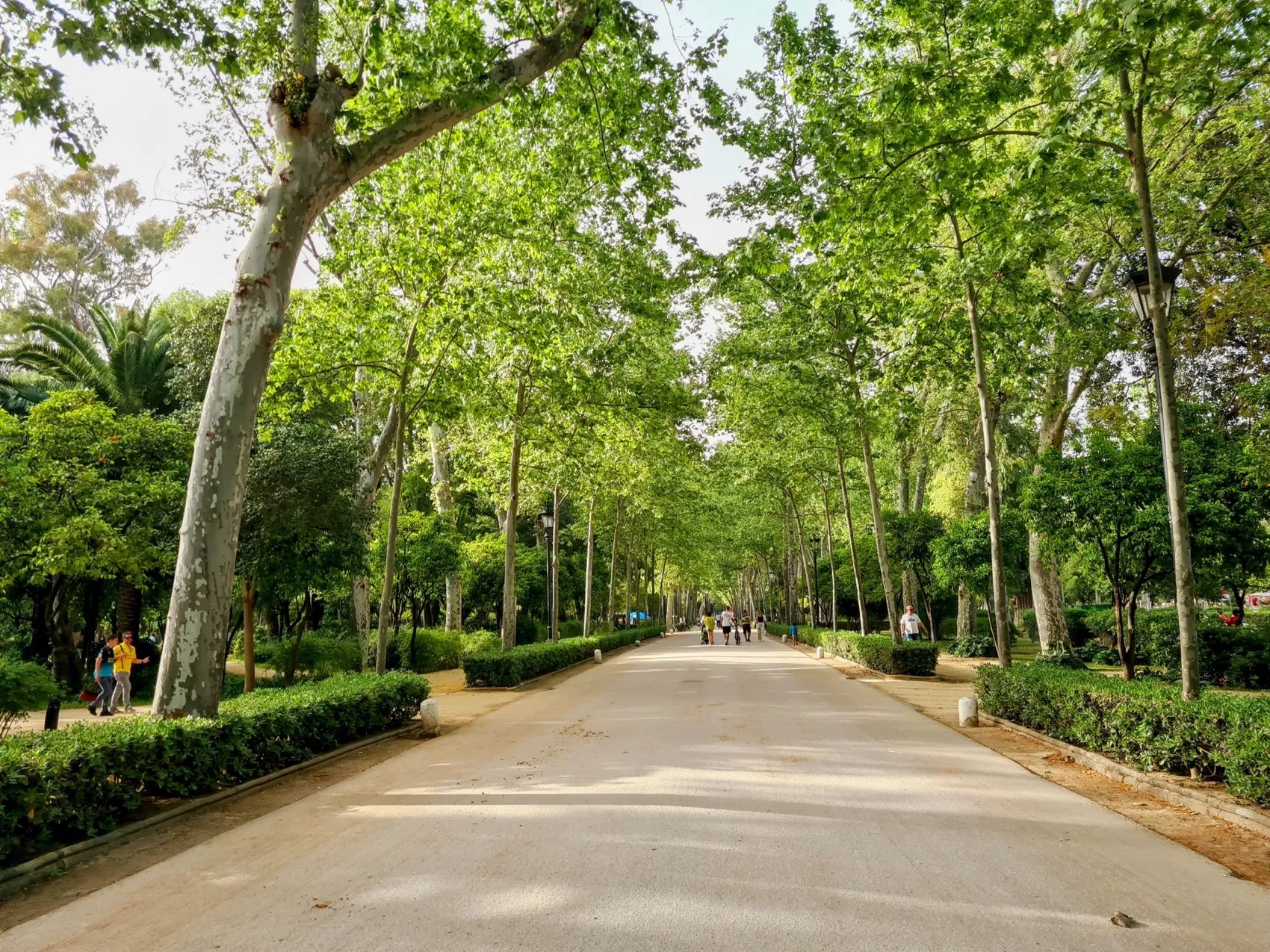
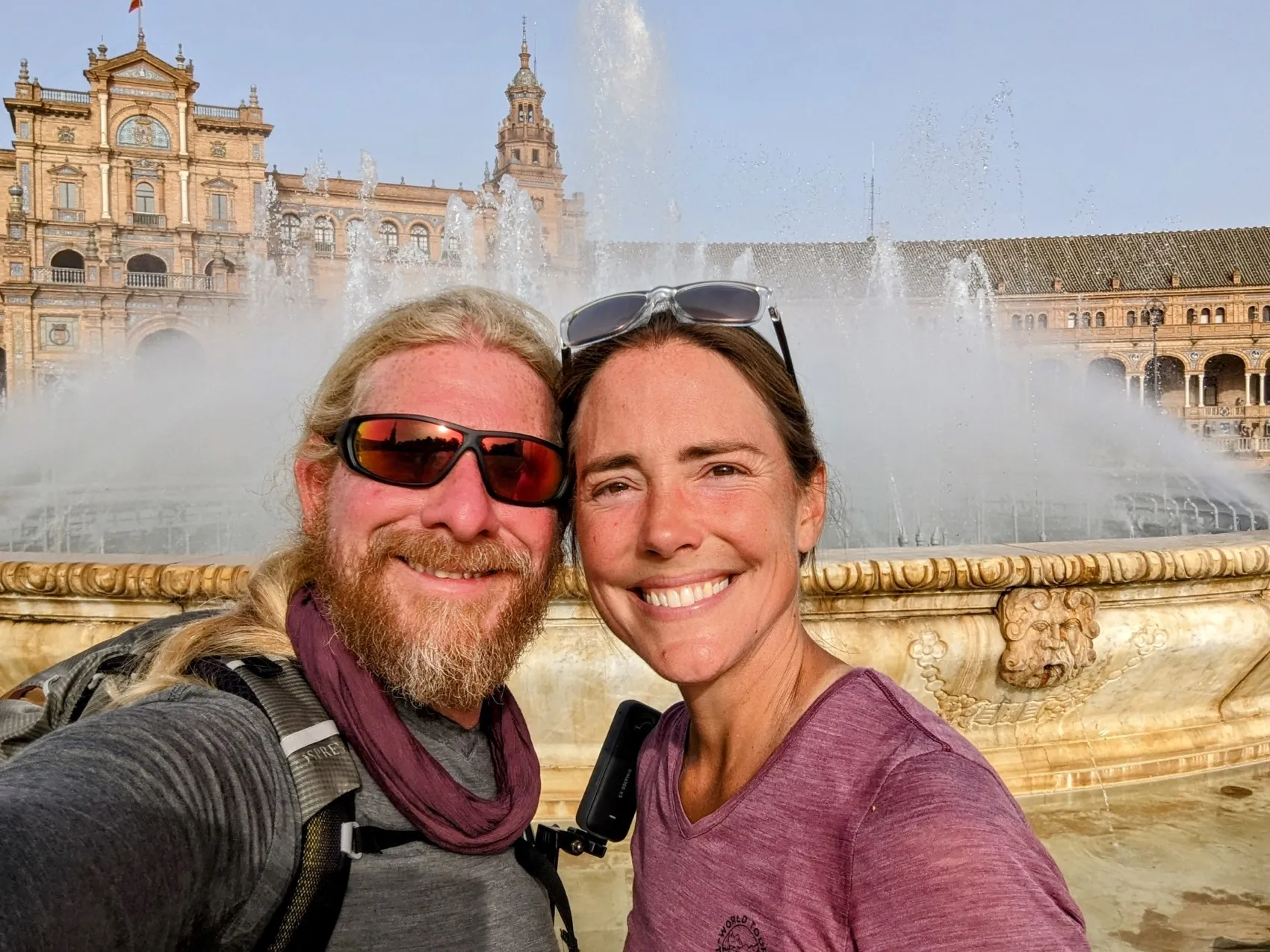
We descend to the river we just crossed and follow it out of the town. For a moment, the marking seems to leave the river and we follow it. Maybe we are following an old route or it once was a temporary diversion. But we would have been better off following the water, because after a few hundred meters we crawl on hands and knees under stimging bushes, with the barking of a guard dog behind us, to get back to the route. Once back on the right path, we follow it for about 6 kilometers along the river, meadows, bushes and old ruins of mills. It's a nicely laid-out route. The landscape is flat and on an open stretch, even though it's 15 kilometers away, we can already see Seville's tallest building, the Torre Sevilla. At the end of the path along the river, we approach the industry and businesses of just outside Seville. Our route indicates that we should walk there for the rest of the stage, but an aqueduct of a canal runs across the river. This canal brings water from the river flowing through Seville, the Guadalquivir, to the industrial area. The shell points us across this aqueduct to a beautiful newly constructed path that follows the canal. It's not on the map, but we decide to follow it anyway. As a result, we walk for several kilometers more through greenery. When we reach the edge of Seville after almost 32.5 kilometers, we immediately feel the city vibes. The last 4 kilometers we walk under old trees and past ever taller and older city houses. The deeper we get into the centre, the busier it gets. At the end, we walk into the large Parque de Maria Luísa. A park with beautifully landscaped gardens, squares, avenues and fountains, large stately buildings and our final destination in Seville: Plaza de España. It's busy today on this Easter Sunday. Families are enjoying the sun, students are picnicking under the trees, children are whooping for joy playing with the bells of a bubble blower and we hike-5 at the fountain in the middle of the square, at the end of this long but unexpectedly nice leg to Seville! What a beautiful hike. Today's route, the city of Seville, but certainly also the Spanish inlands that we have come to know since leaving Tarifa and the ocean behind. We have a few more days at the campsite to prepare the next stages, and then: Up North!