We wake up in the classical hotel in El Coronil. A nice place where we rested well, after yesterday's 30 kilometers and this morning we're ready for the next stage. We're glad though, that after so many hotel nights, there's a chance we can camp again tonight. Today we walk to Utrera where we take the train to Dos Hermanas, where a campsite is located. They don't not reserve pitches because of the Holy Week 'Samana Santa', but if we get there early there is a chance we'll be able to get a pitch. Today's stage is 20 kilometers and pretty flat, so we'll speed up to get there on time. It doesn't take to before we're back on the Via Serrana. A pilgrimage route used by the Berbers as a smuggling route between the kingdom of Gibraltar to the kingdom of Granada near Ronda, as early as the 14th century. So these paths have been used by quite a few religions and for quite a few purposes. In Utrera, the route meets the Via Augusta, which we have already walked a bit in the opposite direction at Chiclana de la Frontera in stage 21. The last few kilometers we'll walk it in the 'right' direction. It's cloudy this morning and the sun hasn't yet risen, so it's still pretty dark when we leave. Outside the village, we're soon walking on the dirt roads that farmers use to get to their fields. High grain, swaying in the wind, alternates here with fields of sunflowers. They are about 10 to 15 centimeters high, so they still have a while to go.
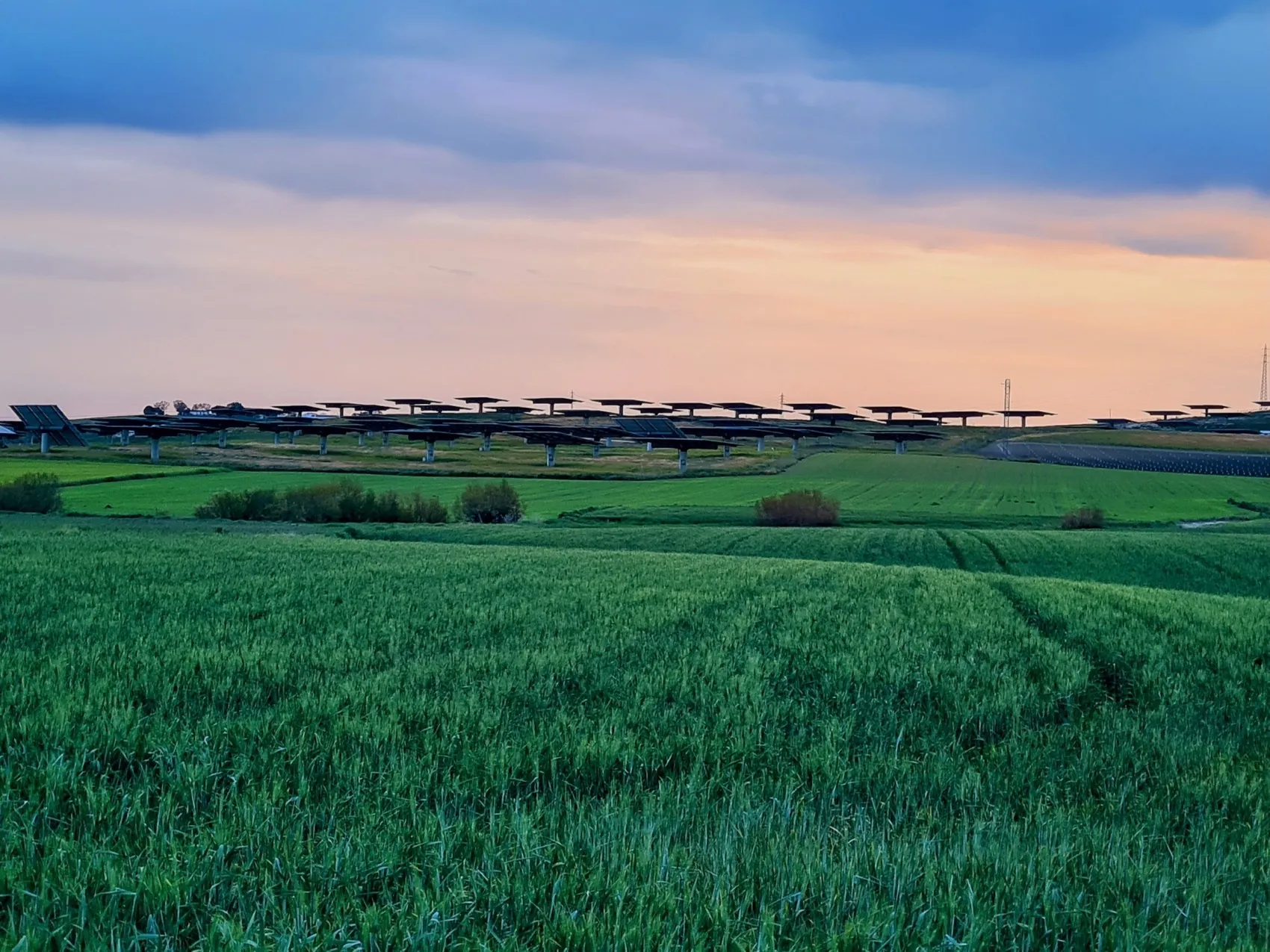
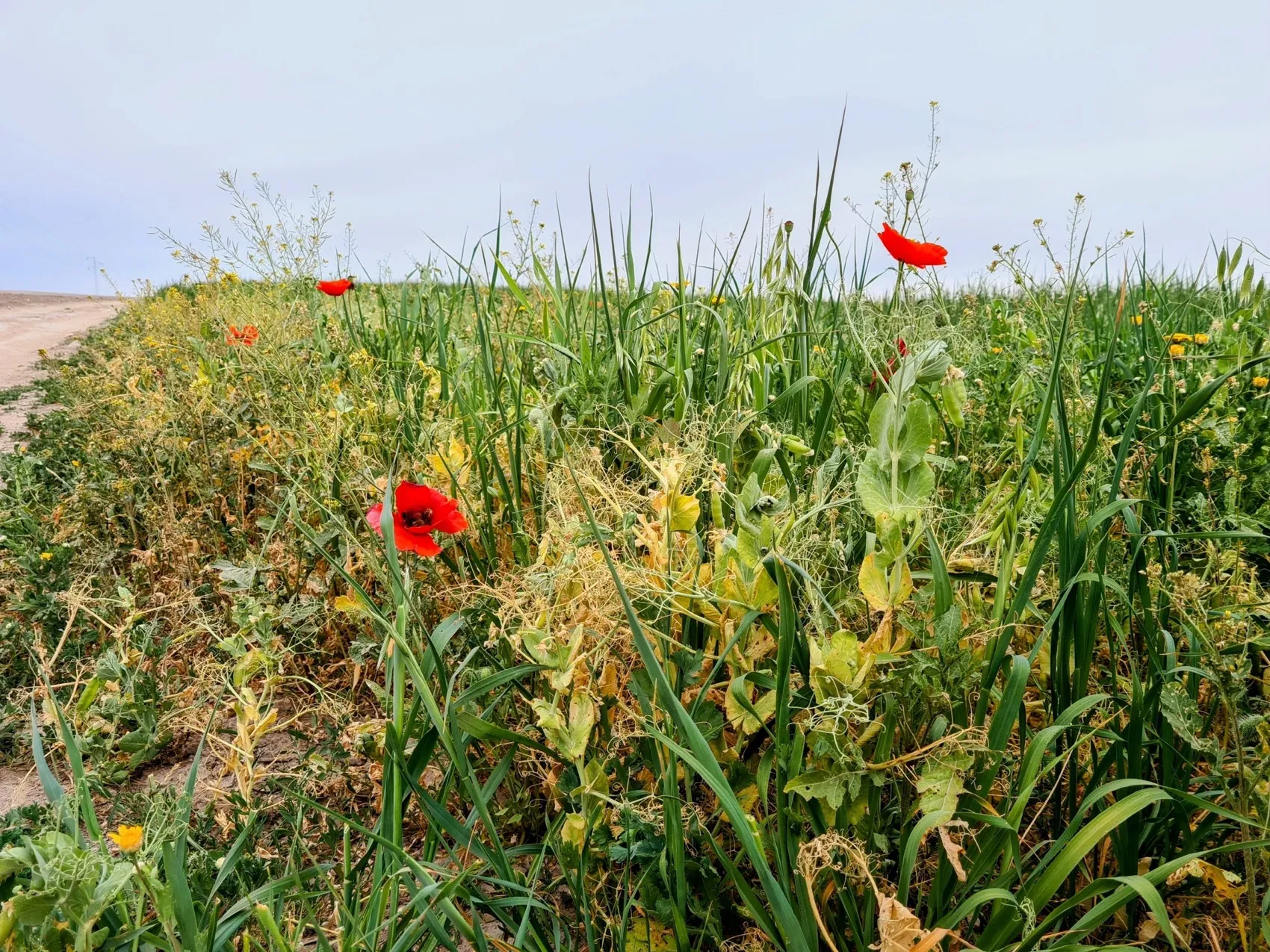
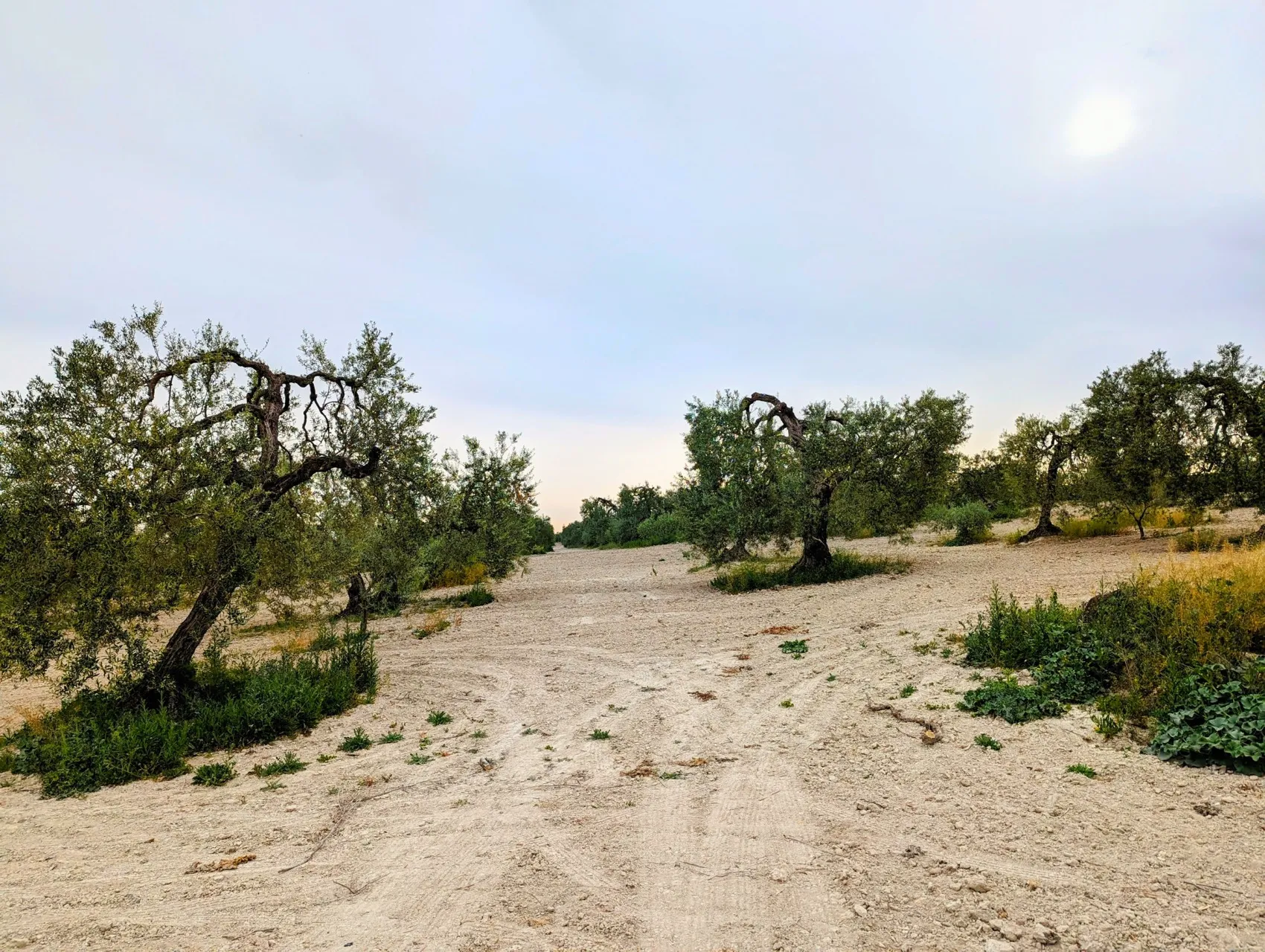
The roadsides are full of flowers, many poppies and even more crowned gooseflowers. These plants with yellow/white flowers, looking like a mix of camomile and chrysanthemums, are common here in southern Europe and give the roadsides a cheerful colour. The sun rises slowly and shines watery through the clouds above structures that look like giant umbrellas. When we get a little closer, we see that they 're solar panels on standards. Dozens, maybe hundreds of them rise meters above the field. There are so many, that it covers quite an area. A clever solution, as it provides quite a bit of shade and coolness on hot days, and it generates power as well. Beside these solar panel trees, shade is hard to find. There are hardly any trees or bushes between the rolling fields. Today this won't be a problem, unlike yesterday it's even a bit chilly this morning. For hiking, the weather is just fine. We ascend a little and descend again, the kilometers go fast. Halfway, we pause at the edge of an olive grove and enjoy the landscape, which becomes flatter and flatter. We walk more and more into the valley through which the river Guadalquivir flows.
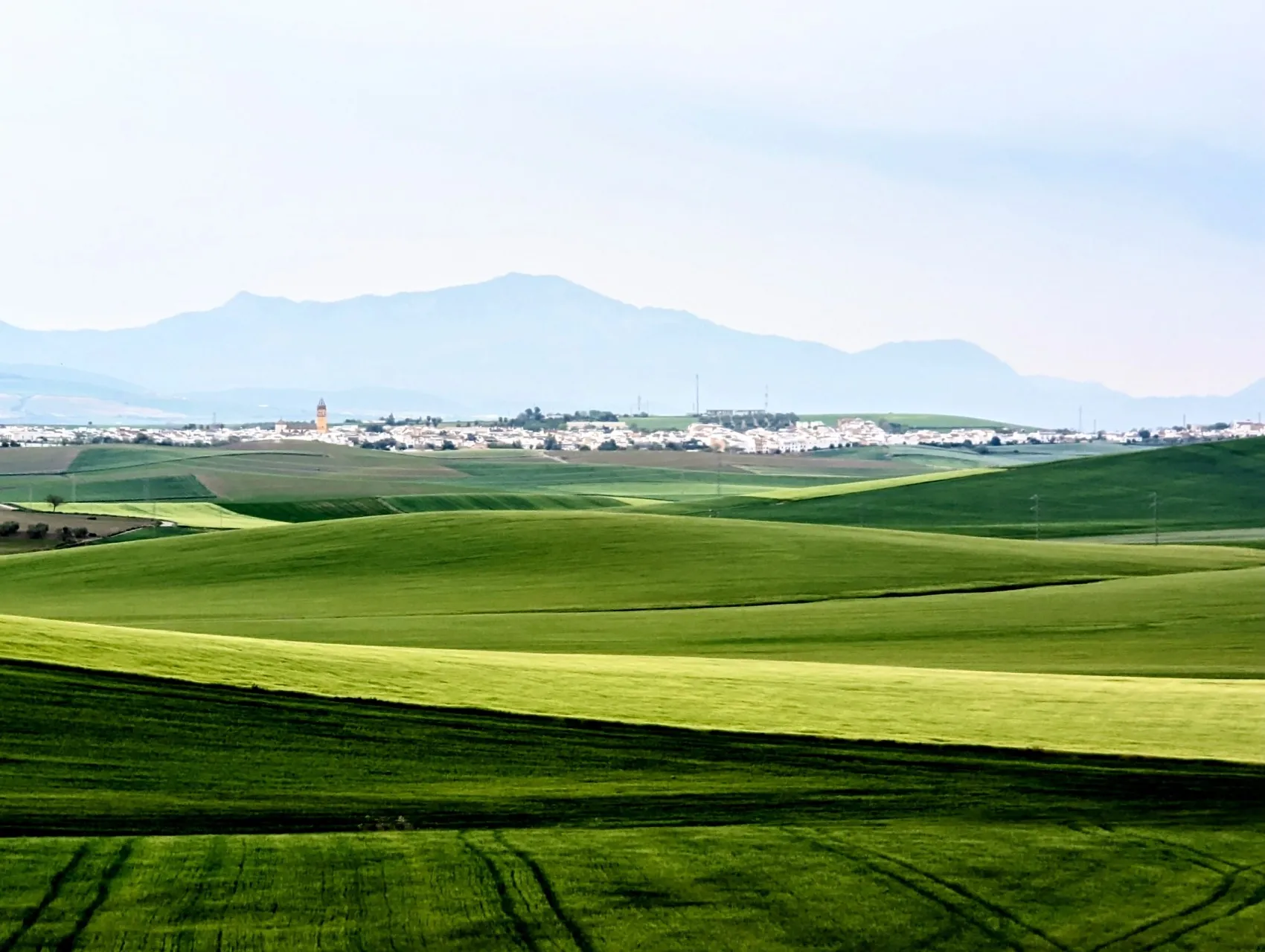
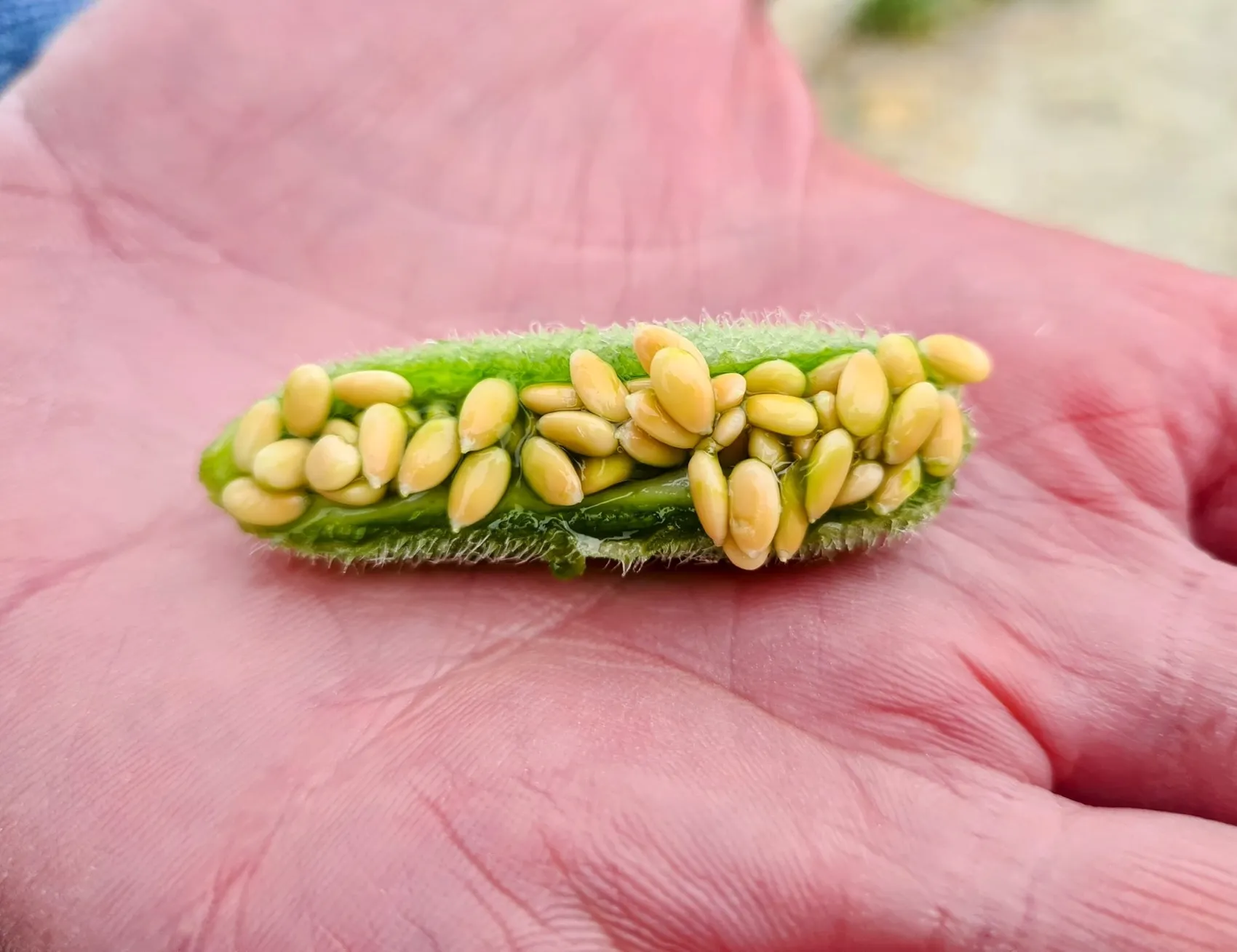
This river enters the ocean not very far from here, at the gigantic Doñana nature reserve where we hiked along at the sea side. We also see more and more sterks and white herons again, palms and cacti, plants we rarely saw in the mountains. At the end of the break, we see a plant we have seen many times since the start of our trip. Its flowers and leaves resemble those of pumpkins, courgettes and cucumbers. The plant already has fruits and they look like pickles. We pick one and cut it open to see if it looks alike inside. As soon as we put the knife in, seeds come out in a jelly-like slimy stuff. It smells awful, so instead of tasting it we look it up on the internet.
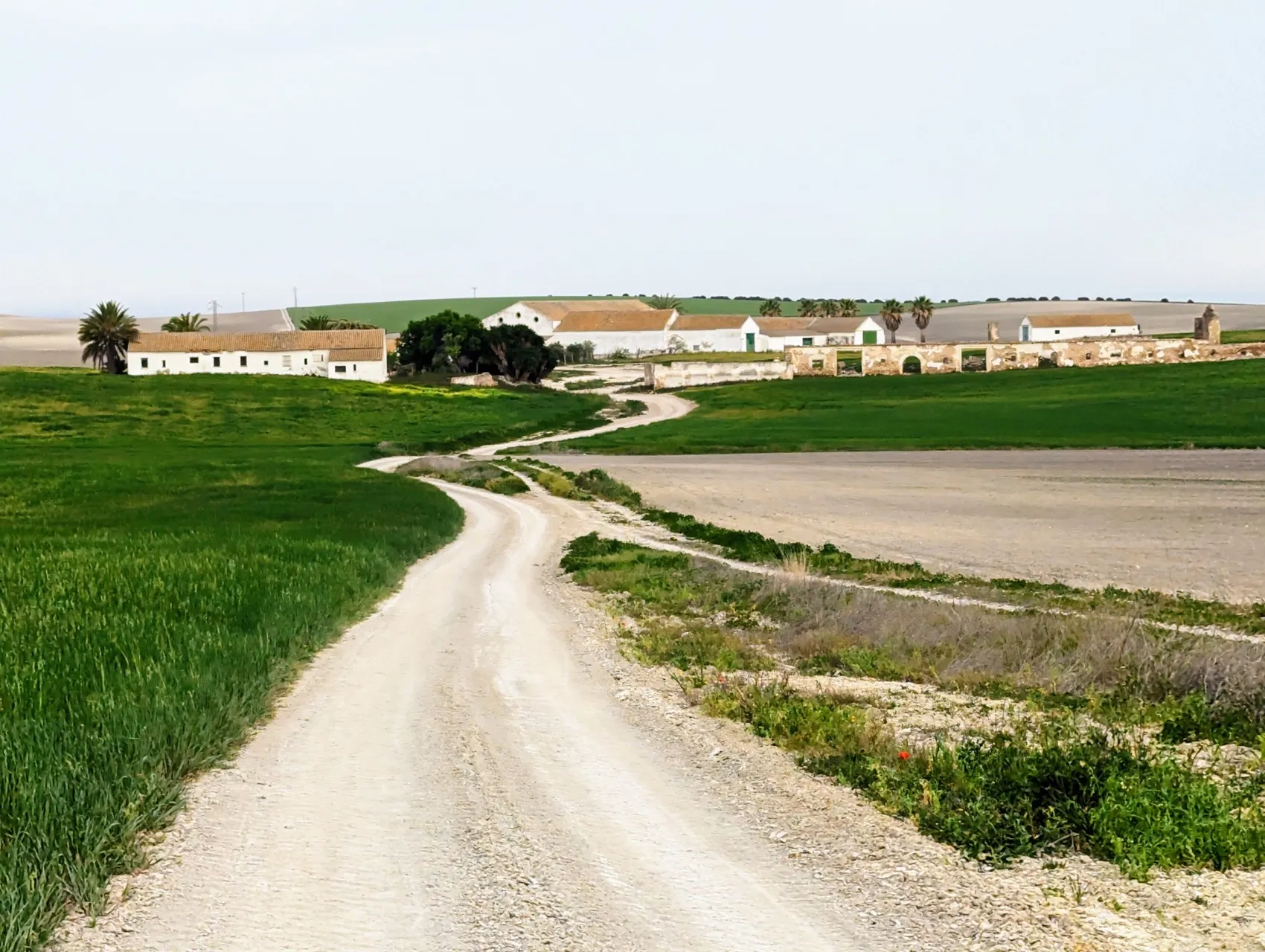
It turns out to be the jumping cucumber. The fruits are not fit for consumption, they are quite poisonous, and the smell certainly doesn't invite us to eat them. However, half an hour later, we still taste the bitter taste when eating an apple, even after rinsing our hands. Not a recommandation. But we're still standing, so lets hike the last part of the stage. After walking past fields for kilometers, we see a large, abandoned farmhouse with stables and outbuildings. The trail crosses the yard, so we take a look around. Most of the roofs have already collapsed and the walls are starting to crumble. What a shame for such a beautiful square farmhouse in the middle of the countryside. It would make for a great 'The great escape' episode.
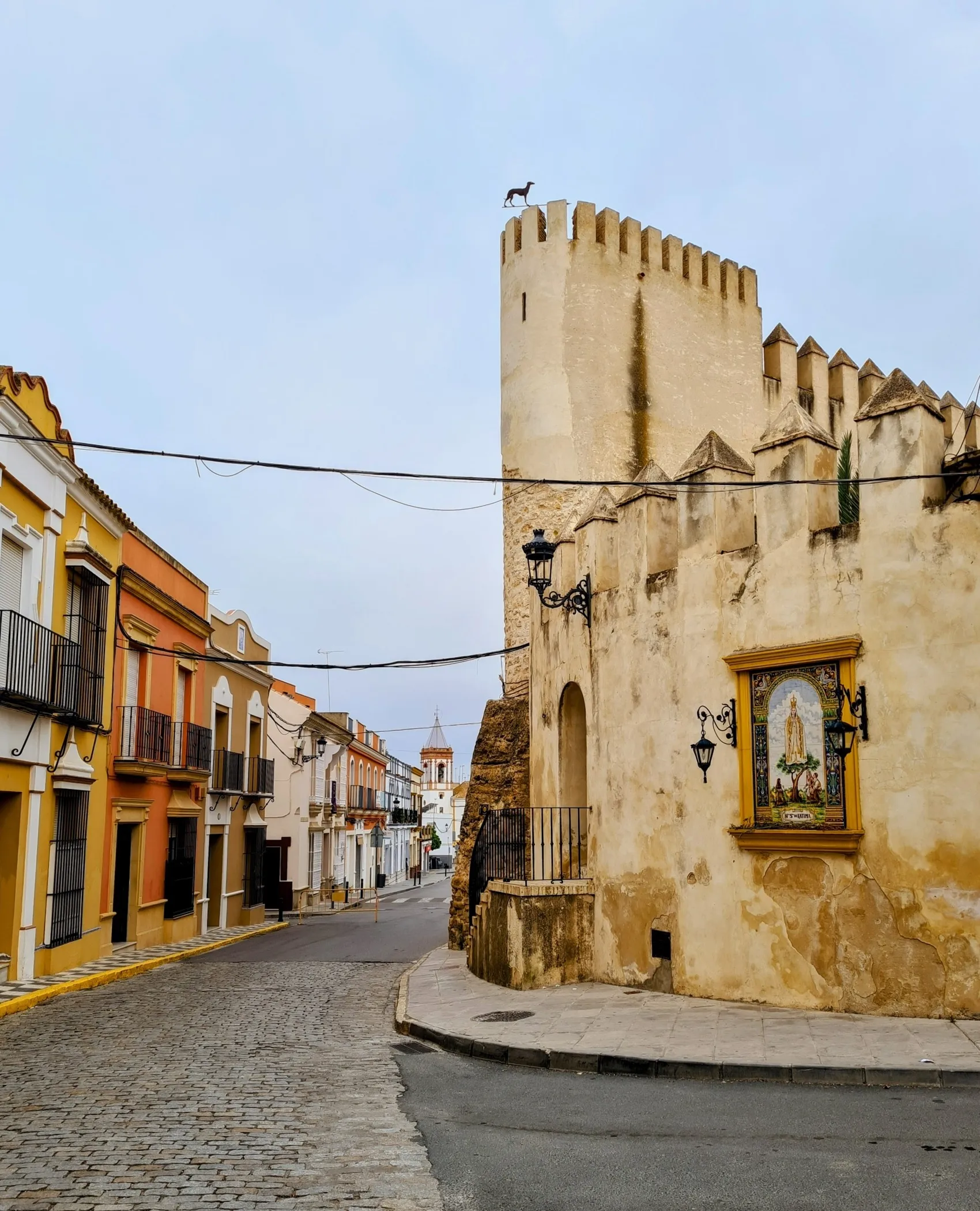
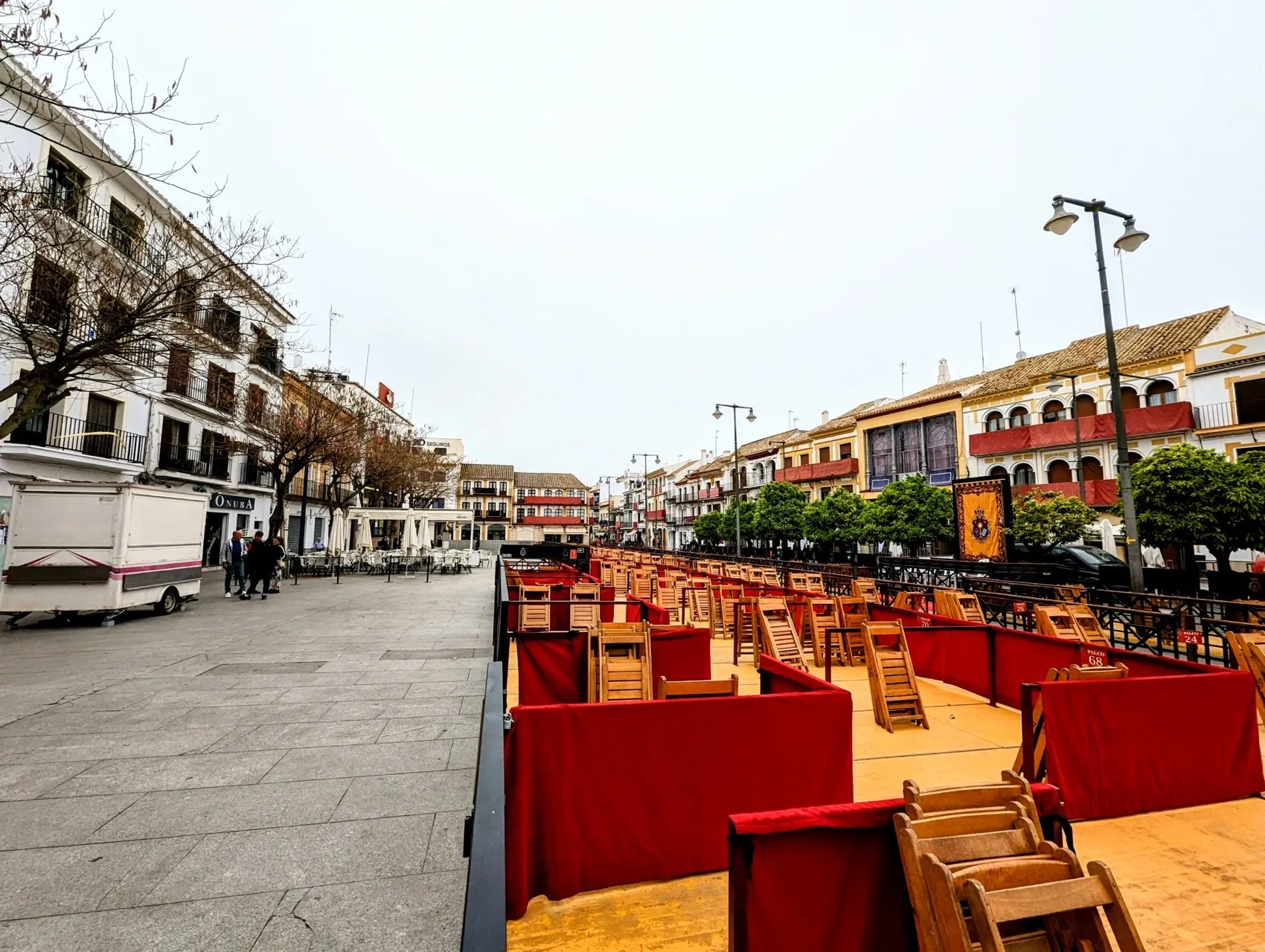
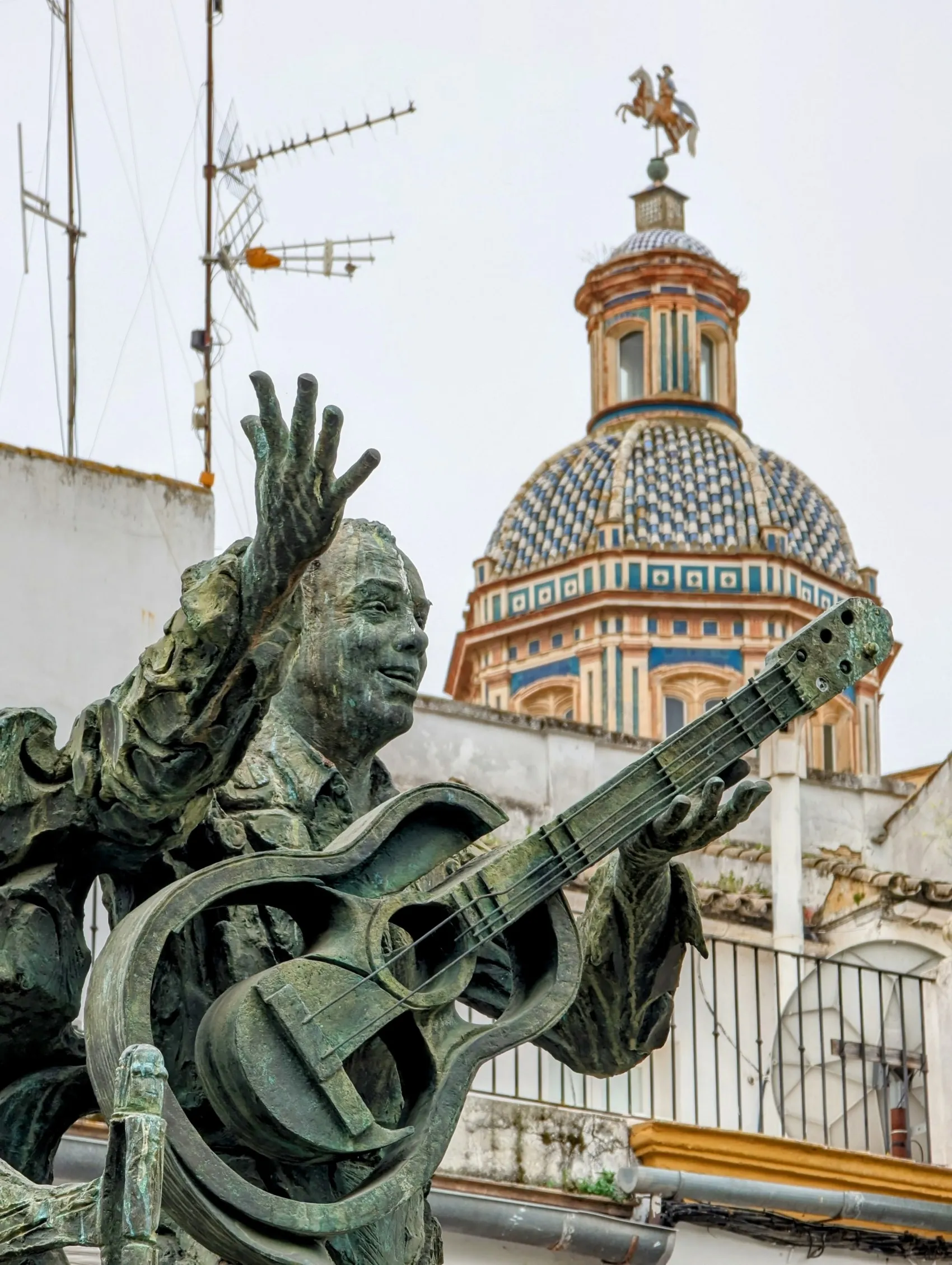
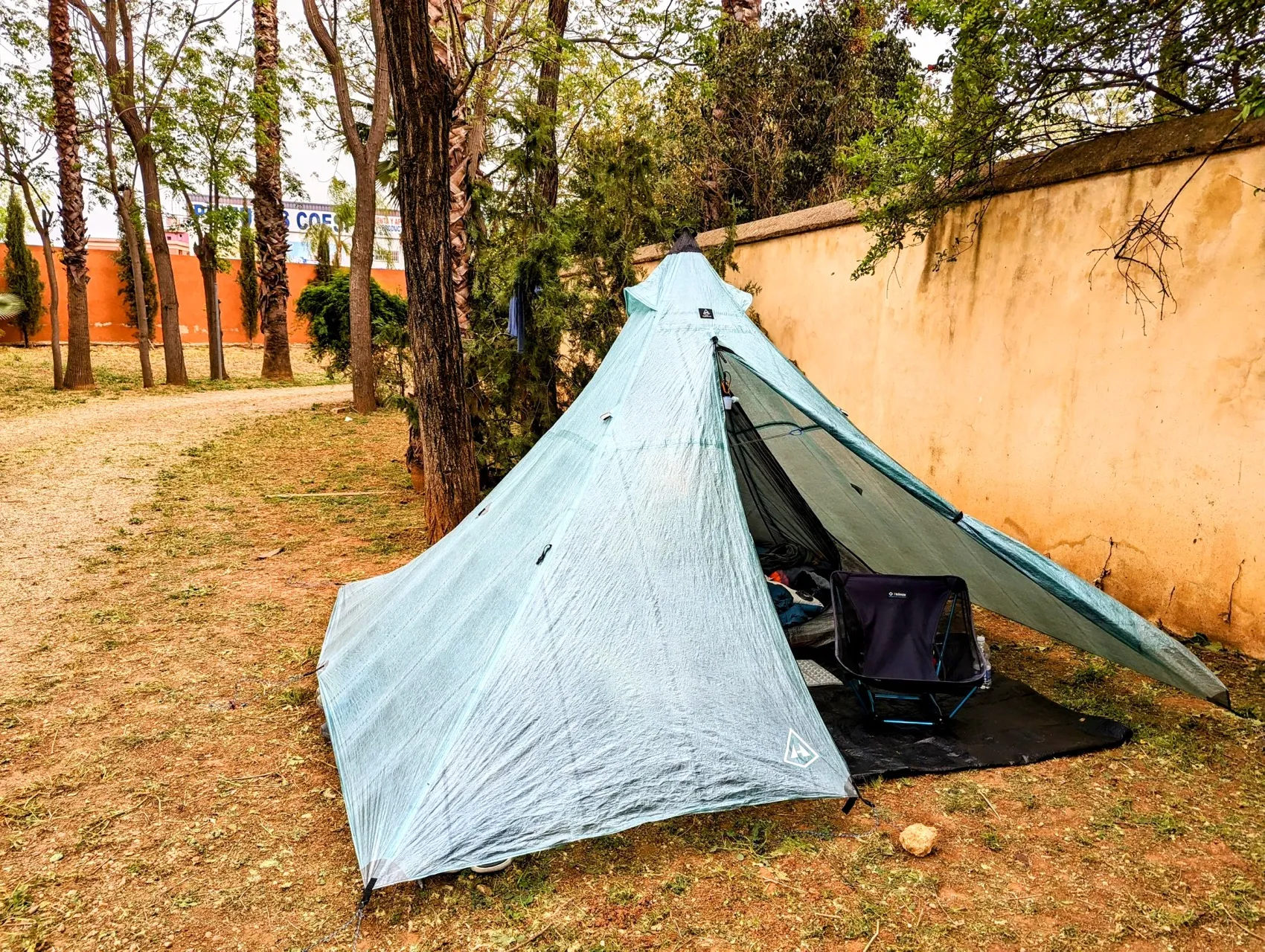
We can already see Utrera from a distance, its many church towers rising above the fields. The last stretch is on a small tarmac road, but we soon walk into built-up areas. Another beautiful place. But Utrera is no village or small town, it really is a city of stature, and it won't get much more Spanish than this. It's the birthplace of bullfighting AND this is where flamengo originated. In many shop windows in the busy streets, this piece of the past is widely available: tobacco shops sell black stone bulls and clothes shops flamenco dresses for young and old. We pass beautiful buildings and cosy squares, but we quickly head to the station to catch the train. Once at the campsite, there turns out to be plenty of space. A parcel has also arrived for us: our new tent! A pyramid tent, which is a lot lighter and quicker to set up. It's nice to be back on a campsite after so many nights in hotels. Tomorrow, after hiking 7 stages in 9 days in which we've walked 180 kilometers through the hills, we will stay at the campsite for a day. Then the last long stage to Seville awaits us.
2 reacties