Stage 84 consists of two parts that are good to hike as one stage: part A hikes up to Auron. This is a short stage of 6.1 km with 567 meters of ascent. This stage initially hikes through the old village center of Saint-Etienne-de-Tinée. It then climbs through the forest to Auron, a ski resort in the mountains.
Part B leads from Auron high into the mountains. Initially over ski slopes and through forest, later via Roya above the tree line. This stage passes through beautiful valleys and mountain meadows.
The part of the GR5 ahead of us is a stretch of over 55 kilometers through a high mountain range of the Mercantour, where we climb 3,500 meters and will also descend the same amount again. At the beginning and end of this section we will encounter a few small towns, but for the most part we will be above 2,000 meters and we won't pass a single village, store or campsite. And the gîtes along the route are closed due to this summer's drought. So this promises to be an intense stretch with two nights of wild camping.
The first part of this stage is a stretch we've walked several times in recent days to go shopping in Auron from Saint-Etienne. It's a trail that rises quite steeply over a wooded slope. A nice stretch, but not the most interesting to hike with a backpack. So we make ourselves a little comfortable this morning and take the bus to Auron, starting the second part of stage 81 there today. At least it saves us a good 550 meters of ascending. For those who are hiking the GR5: it can be done in 1 stage.
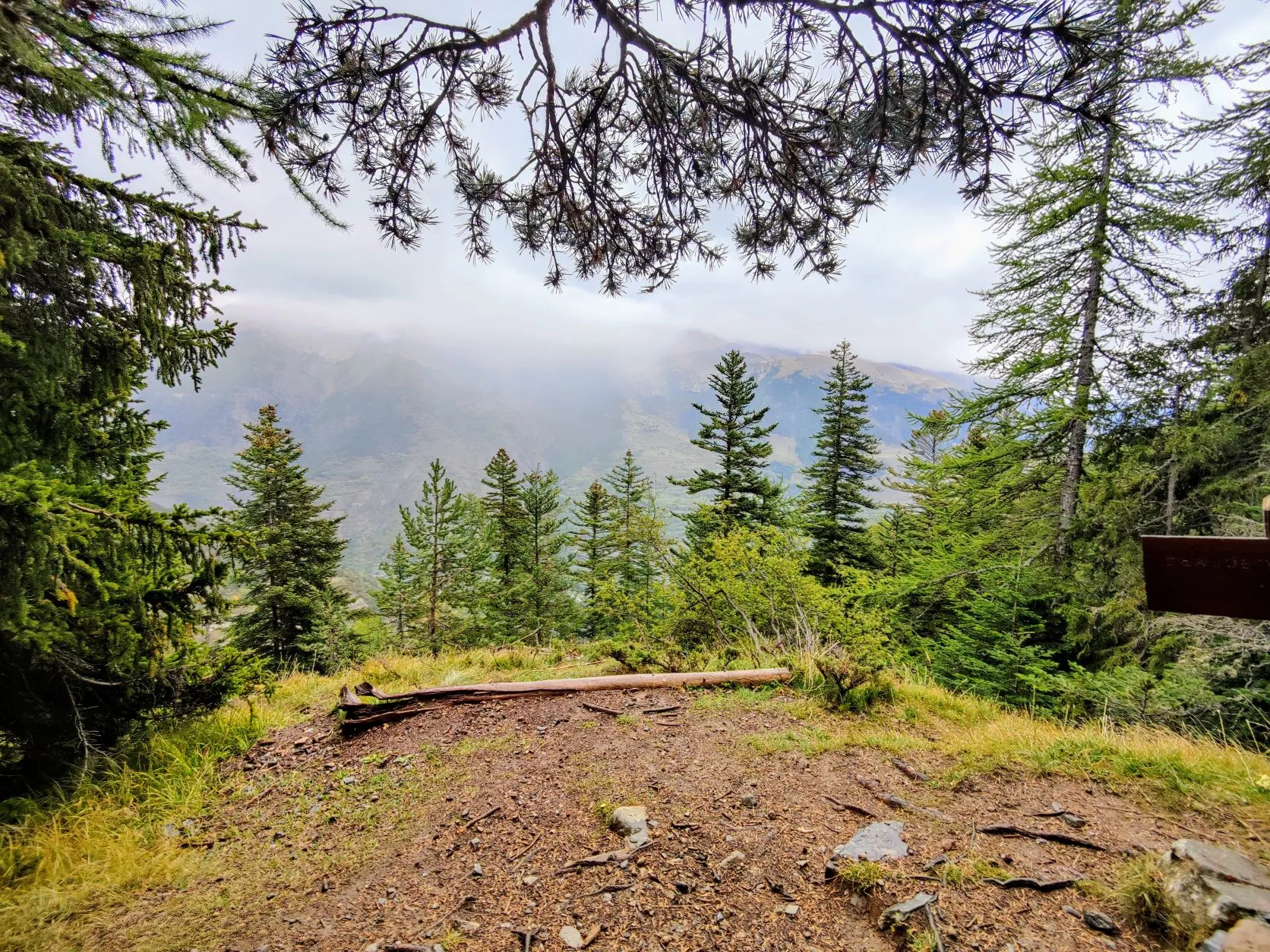
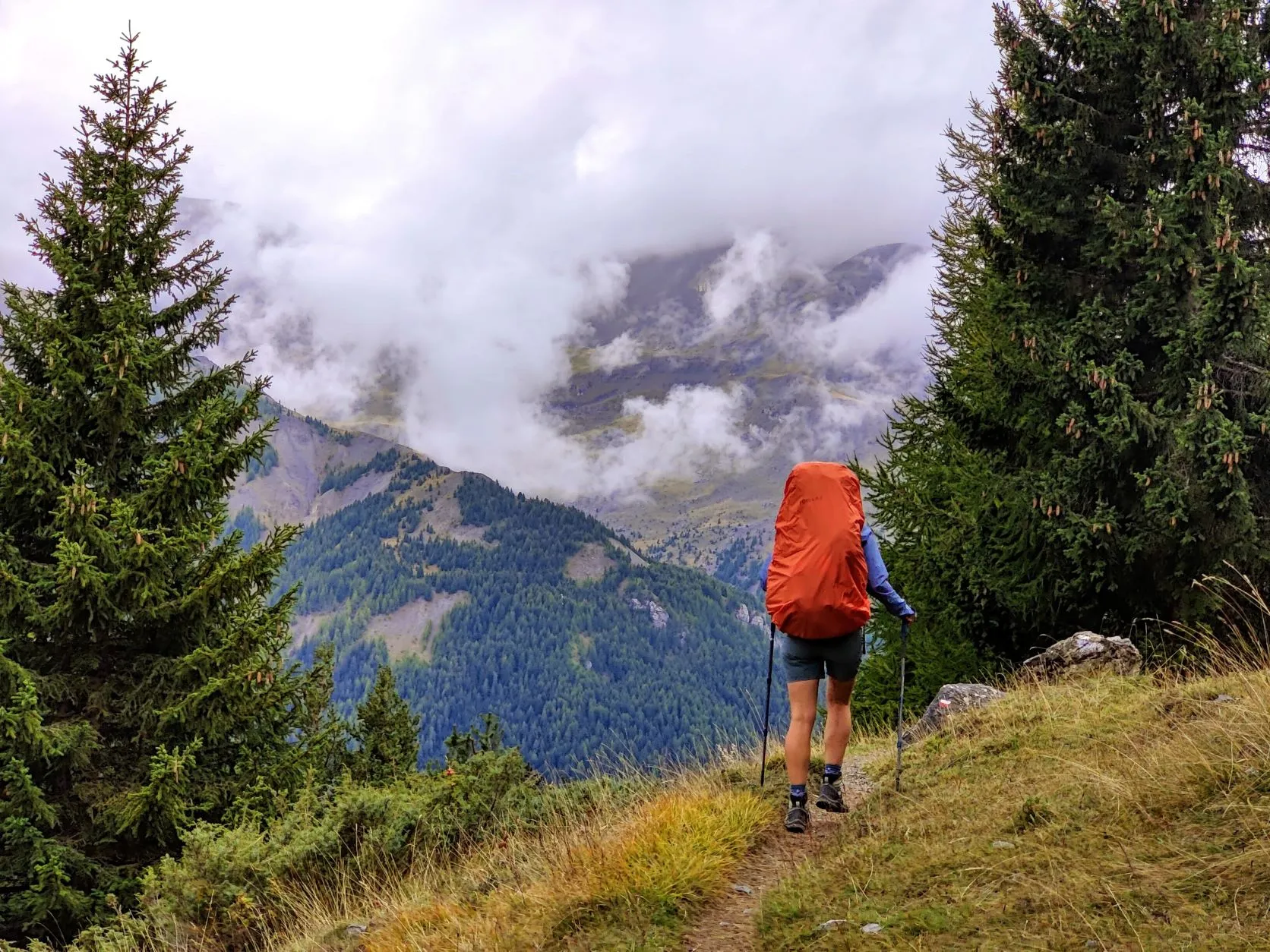
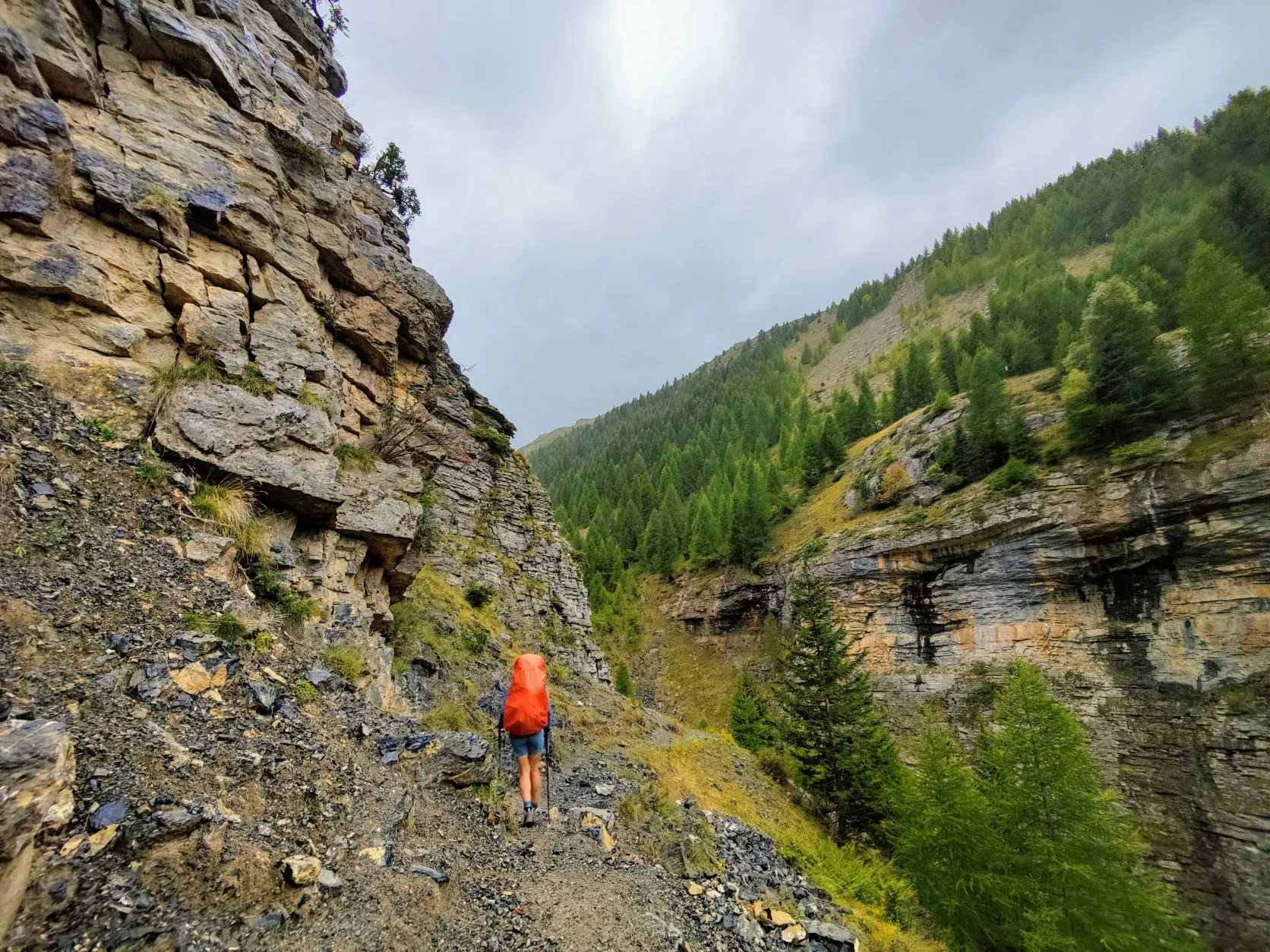
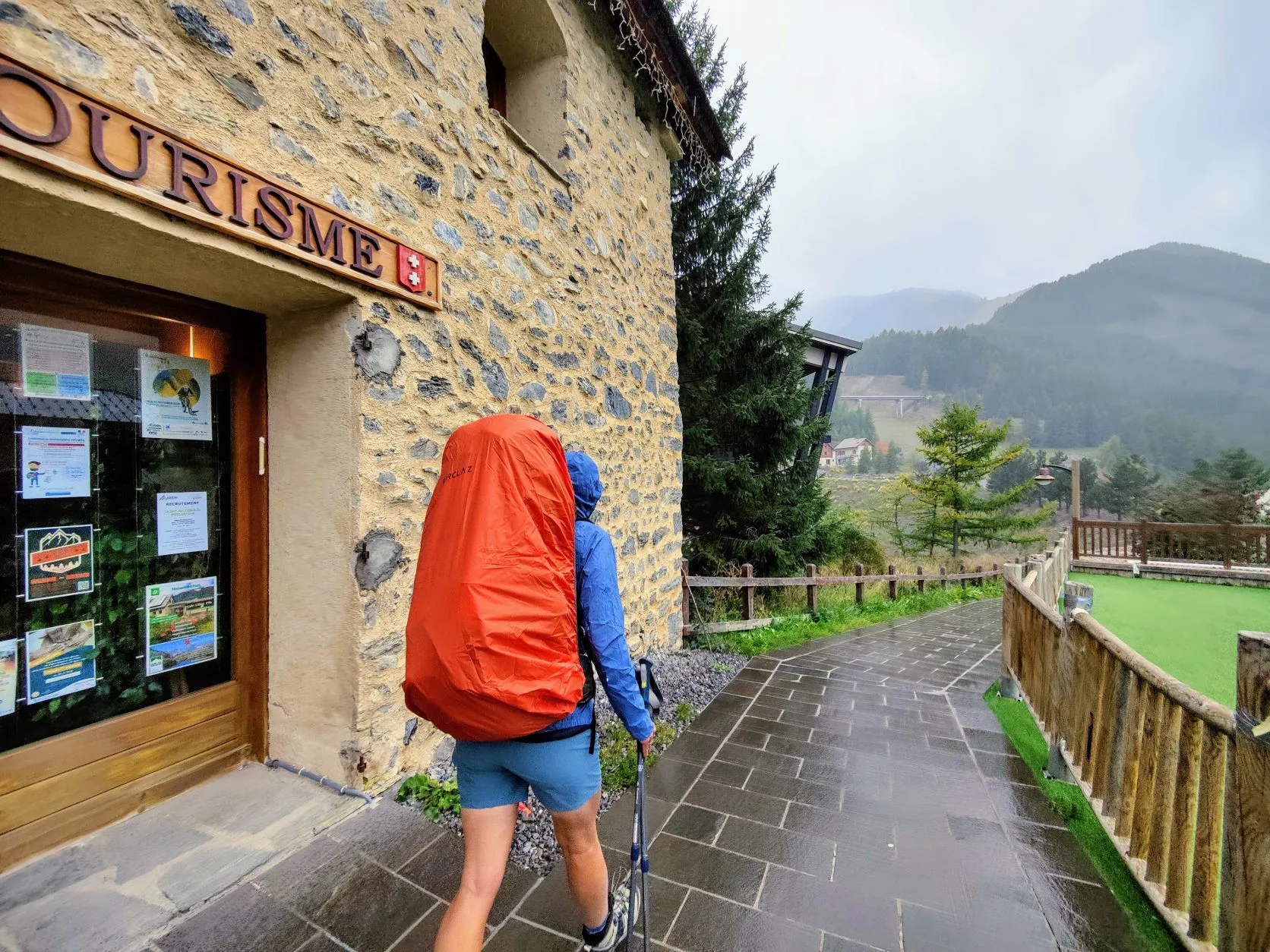
Since the bus to Auron only leaves at 9:45 am, so we wake up an hour later and arrive in the village a little after ten. The weather is pretty bad today, when we set out it's raining cats and dogs. We would have liked to stay at the campground another day, because from tomorrow it will be dry and sunny again, but the campground closes today, so we have to move on. So we put on our raincoats, put the rain covers over the backpacks and start walking.
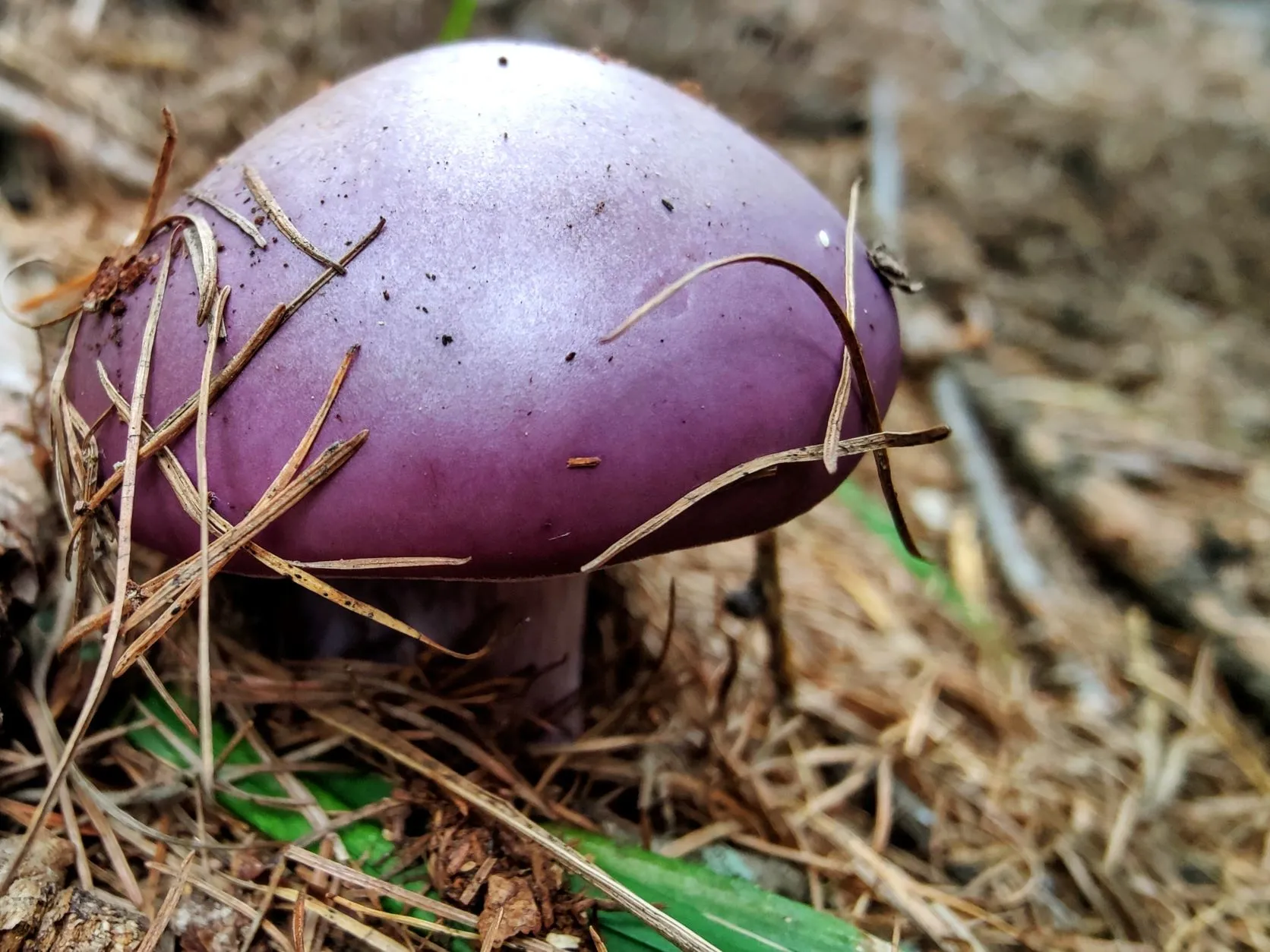
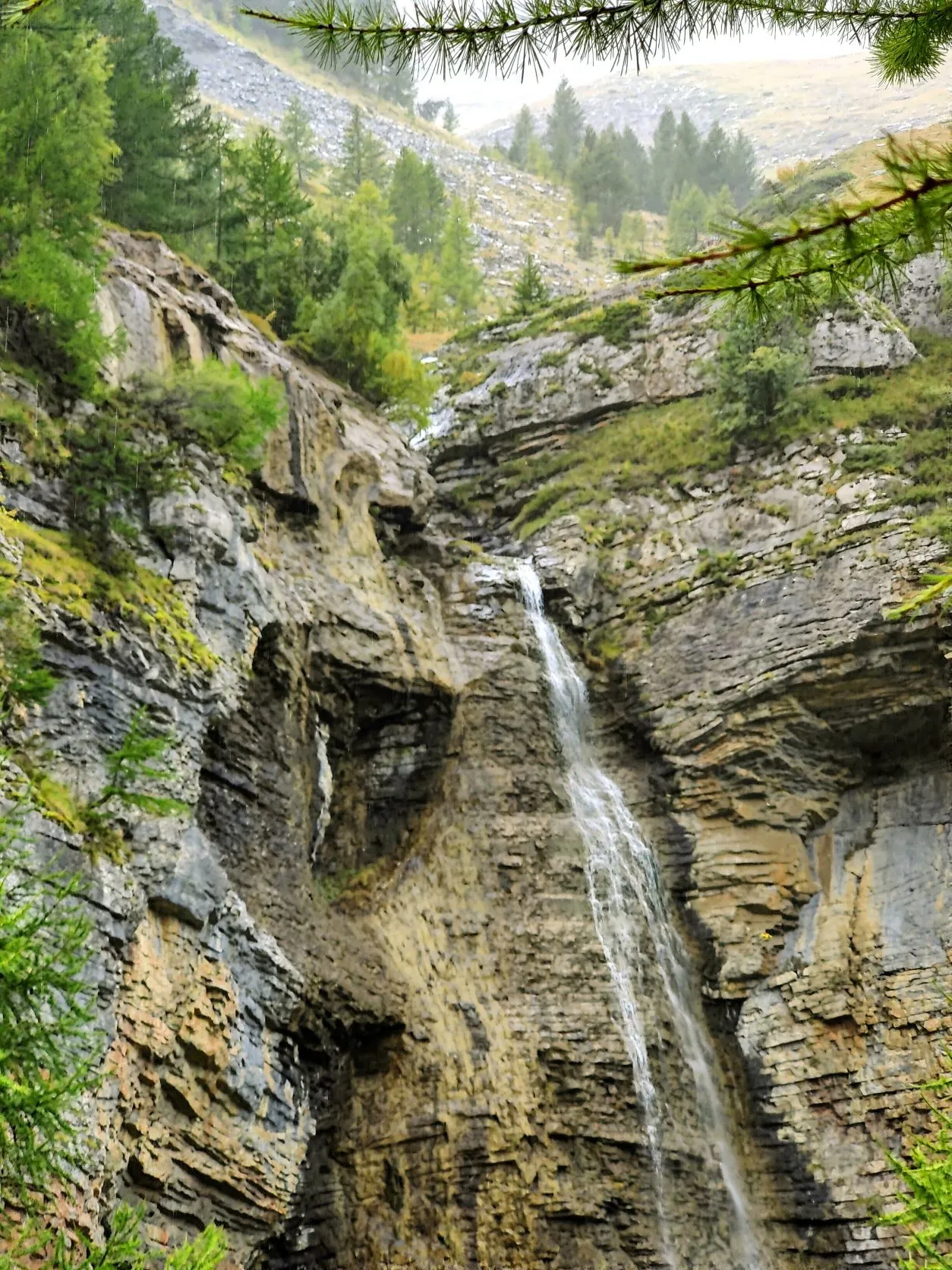
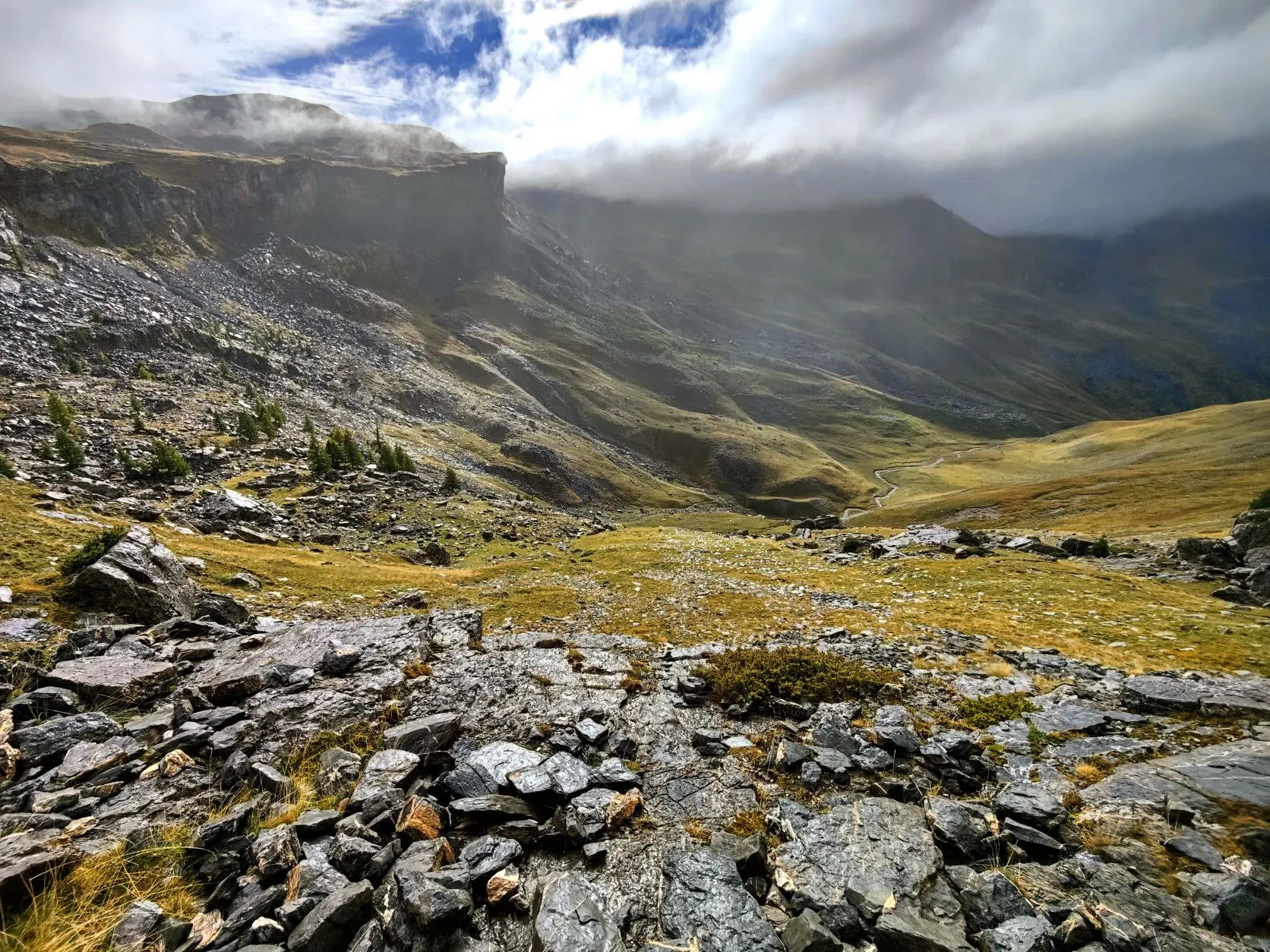
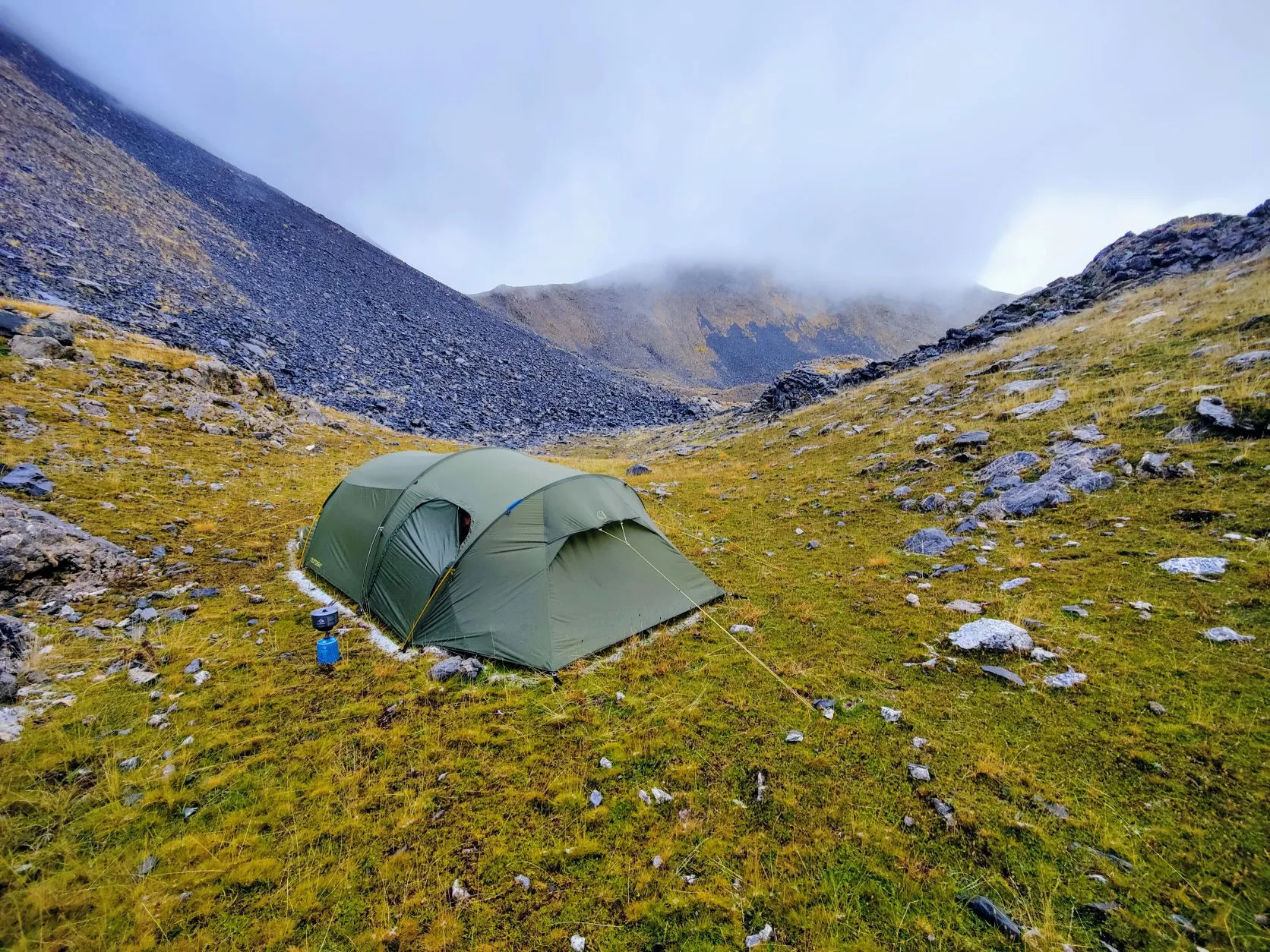
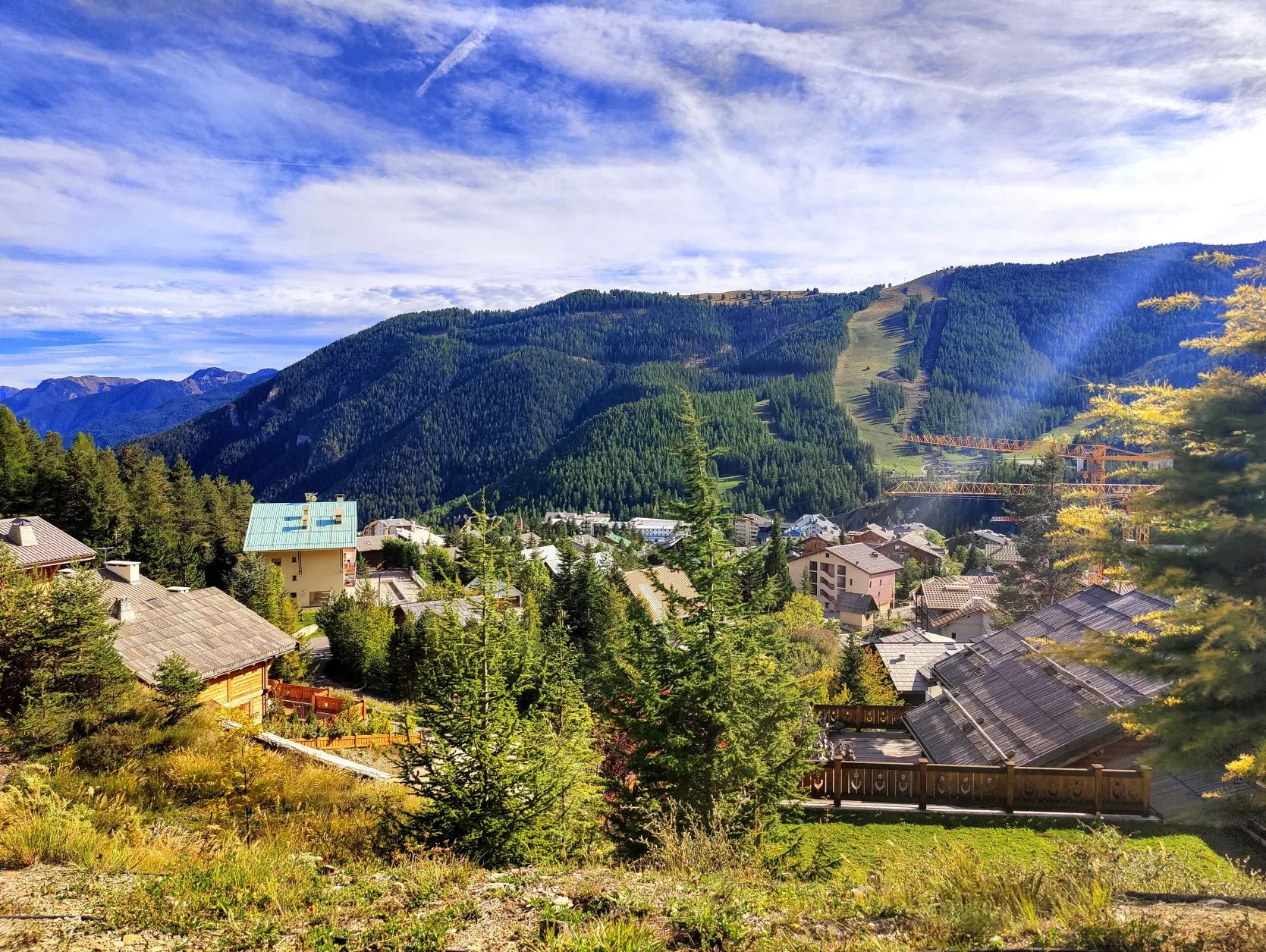
Auron is a ski village with many wooden houses. Now they are preparing for the winter season everywhere. As we walk out of the village and across the slopes toward the forest, we see the snow cannons, ready for the new tourist season. By now we are as close to the winter sports season, as we are to the summer season... Today's first climb takes us from 1,600 meters, to just above 2,000 meters at Col du Blainon. This trail goes almost exclusively through the forest. It's a dense forest where the bottom is filled with mushrooms. There are so many different kinds! The woods give us some shelter from the rain and as soon as we reach the top, it's almost dry. Just in time, because the descent runs through an open area with lots of grassland and narrow paths. Judging by the slopes, it has been used for agriculture for a long time, with old walls of stacked stones making terraces. Here and there are beautiful, old barns in the typical architectural style of natural stone with lots of wood, mostly unused. As we get closer to the valley, these old barns are more often refurbished into beautiful homes. We walk into Roya, the last village we'll pass over the next few days. It's no more than a church, a cottage and a few farmhouses, so before we know it we've left the village already. We descend to the Vallon de Roya River. We are just over halfway through our hike today and have already climbed and descended quite a bit, so we decide to take a break here. Given the rainy weather, our poncho/tarp comes in handy. We stretch it between some trees to sit under. With a cup of coffee and a sandwich, we take a sheltered break. From the river we start climbing. We are just below 1,500 meters and the next col is at 2,445 meters. We hope to find a place for the night a little below the col. We walk along an old mountain path between stacked walls through the woods. After a while the area becomes more open and we get views of impressive rock formations across the valley. Once we are out of the woods, it gets pretty rocky on our side of the valley as well and we walk past warning signs several times that say "Beware: falling rocks." No idea how these signs are supposed to keep us safe, but at least we have been warned...
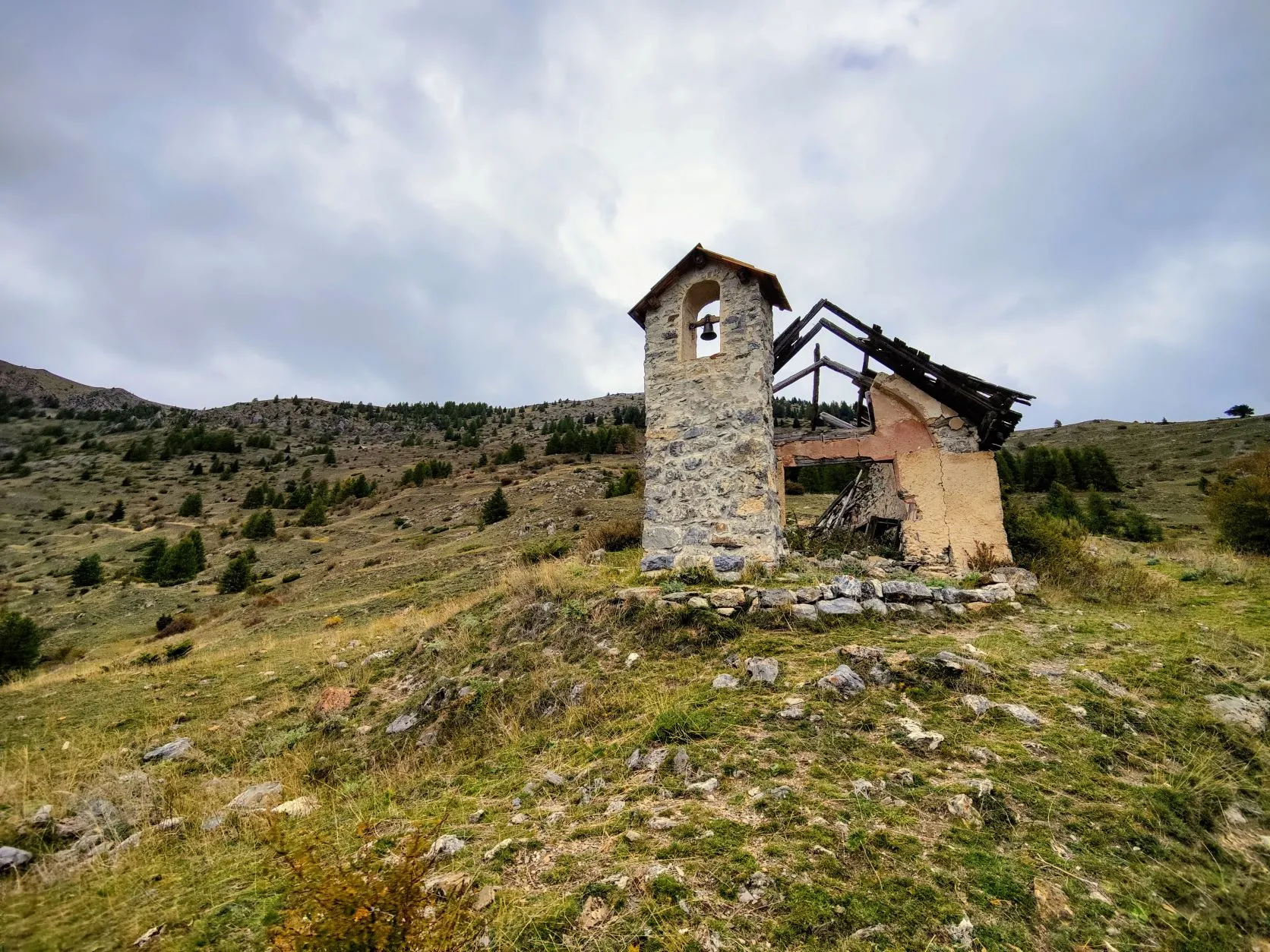
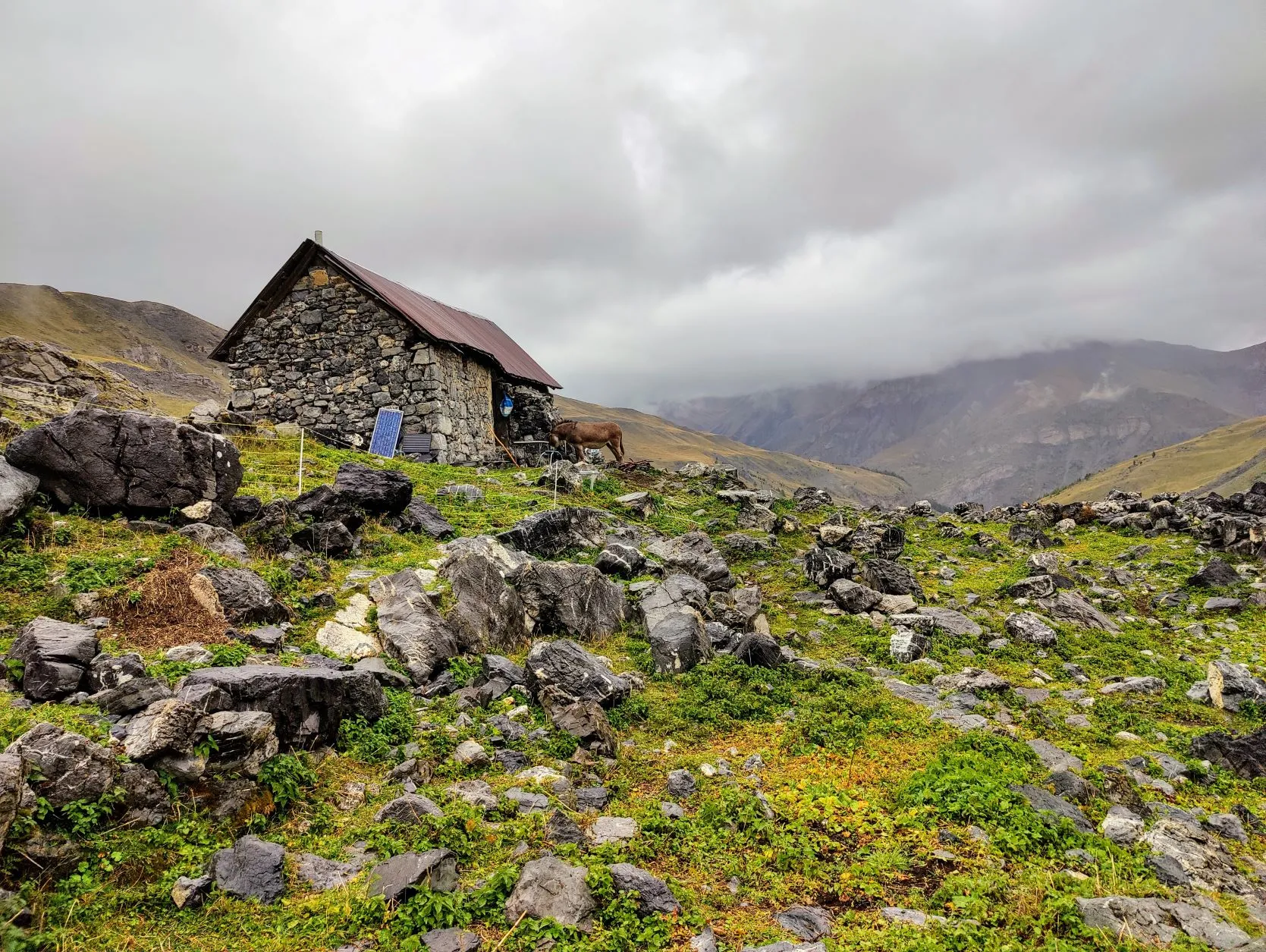
We cross a pretty wildly flowing river, which makes us feel positive. We've heard many stories this summer of hikers getting into trouble due to lack of water in this area, but the recent periods of rain have apparently alleviated this problem quite nicely. Through a somewhat narrow gorge we walk to a larger valley, with rocks and grassland. A little further on there is a shepherd's cottage. The sheep are probably already down in the valley, and the shepherd is taking a donkey to get the last of the things from his summer home. Sheep season this high up in the mountains is well over, and we are glad that it's unlikely to encounter more sheep with dogs further on.
At the last stream in the valley, just to be safe, we fill some bottles with water that we'll need for the evening. You don't know if it really is the last stream until you see nothing else. And then it's too late...
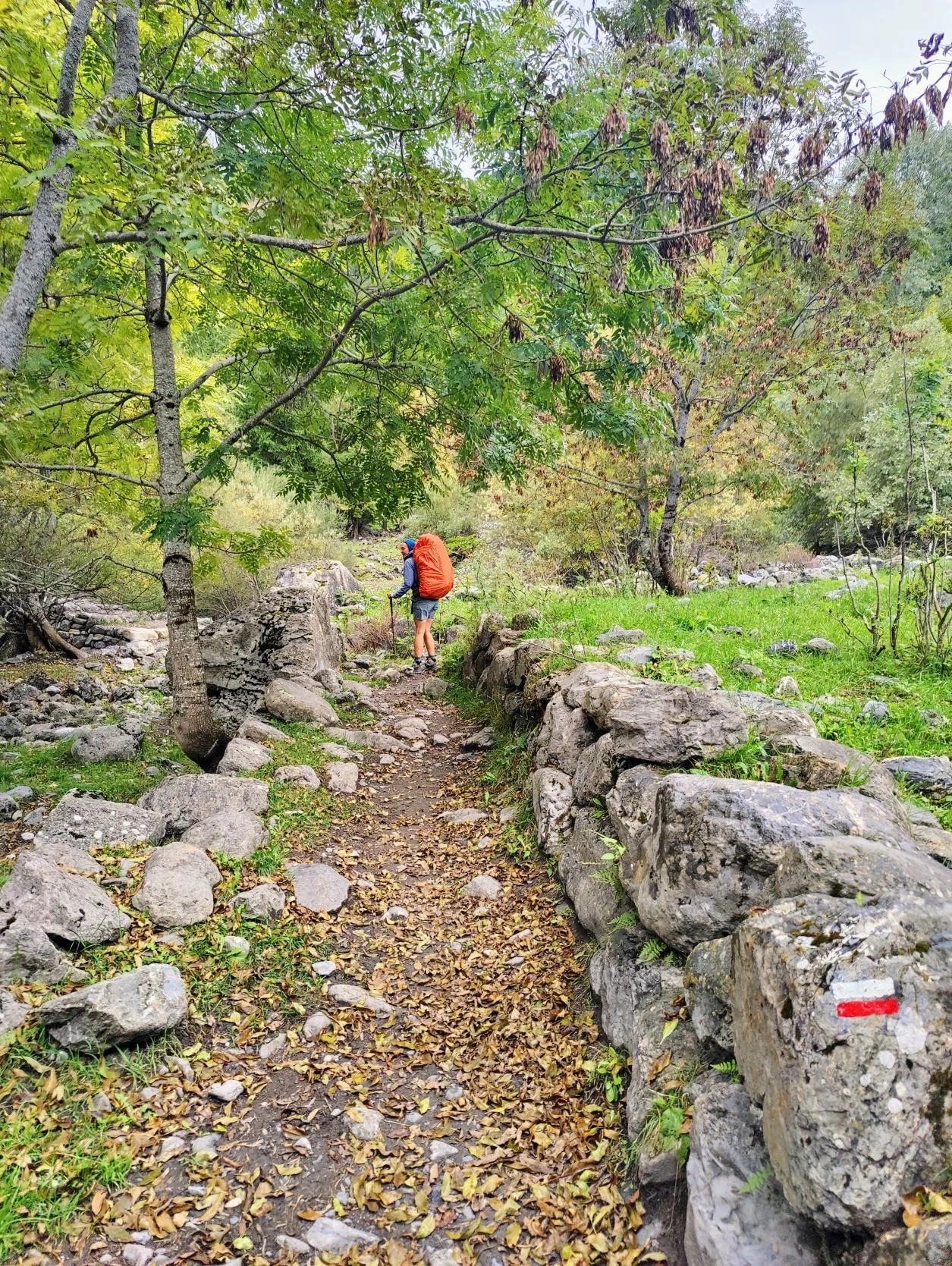
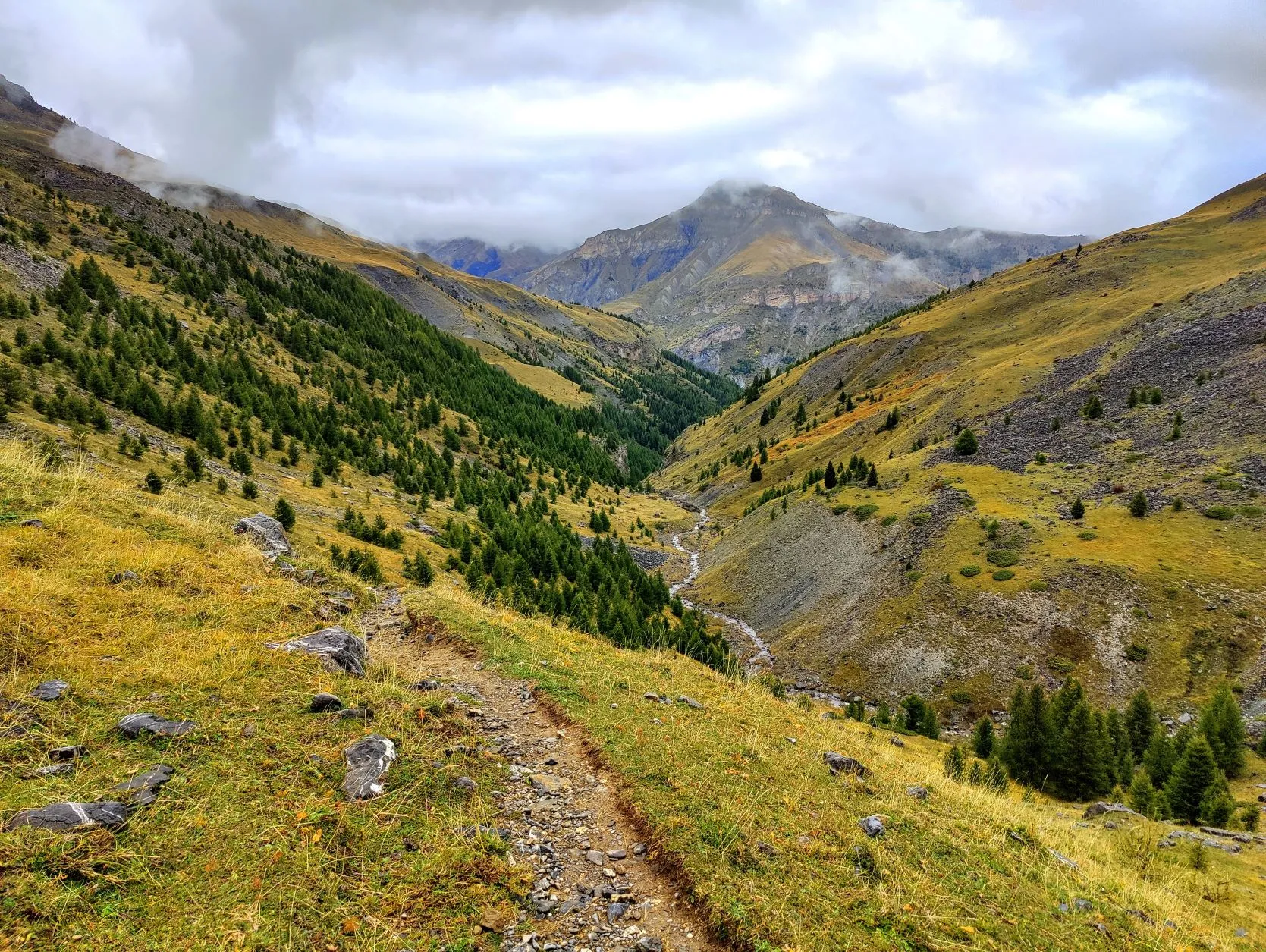
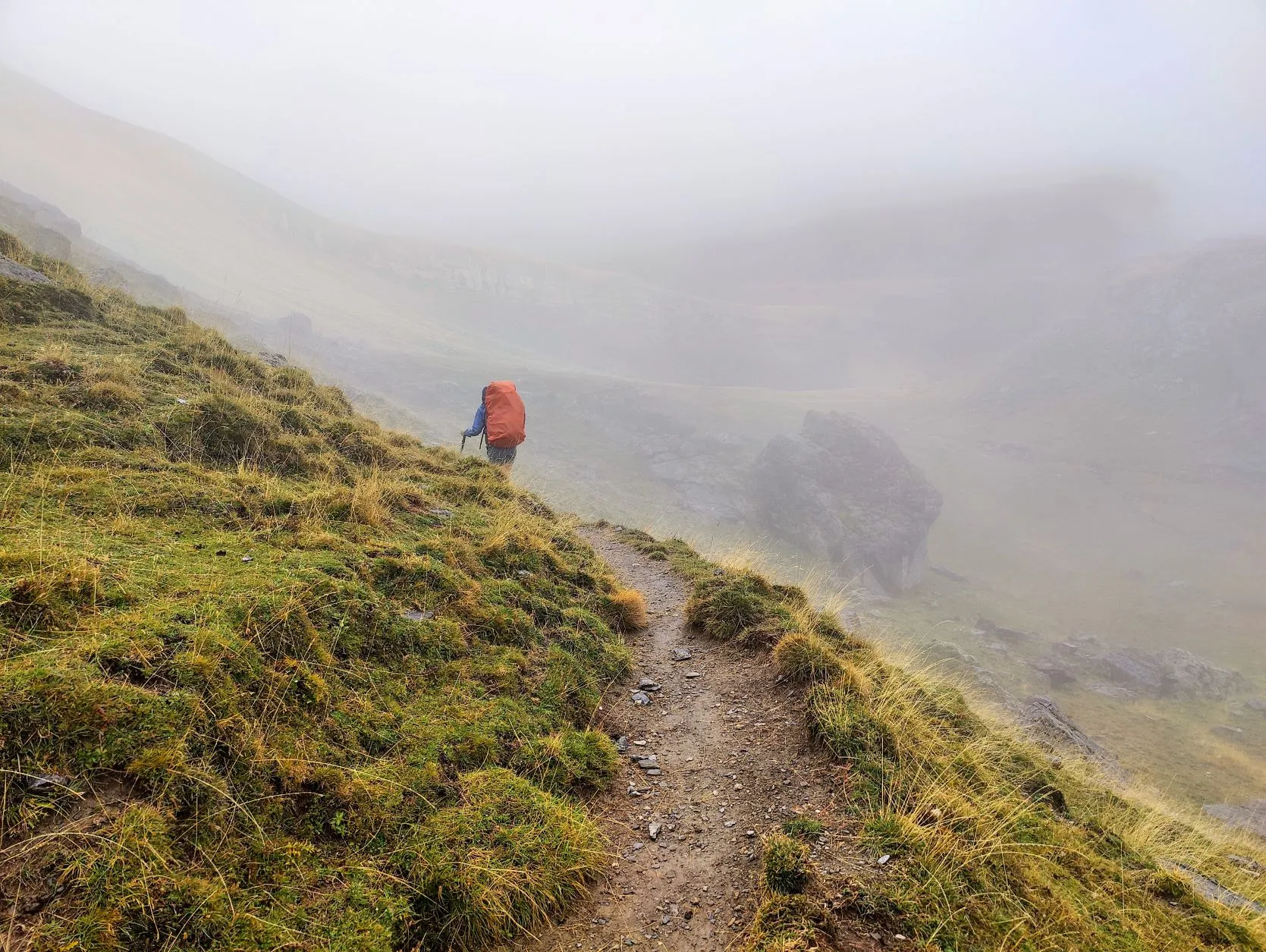
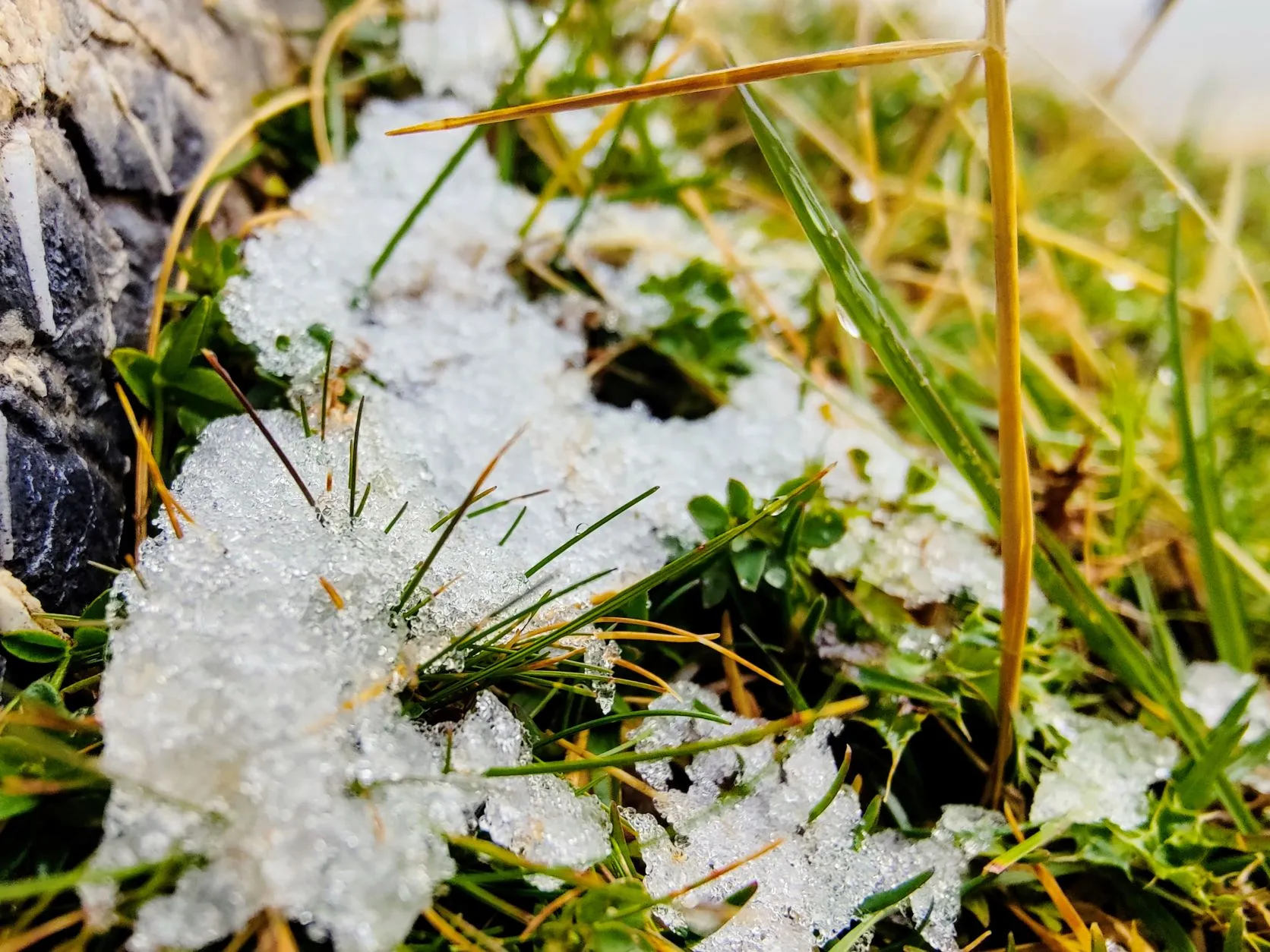
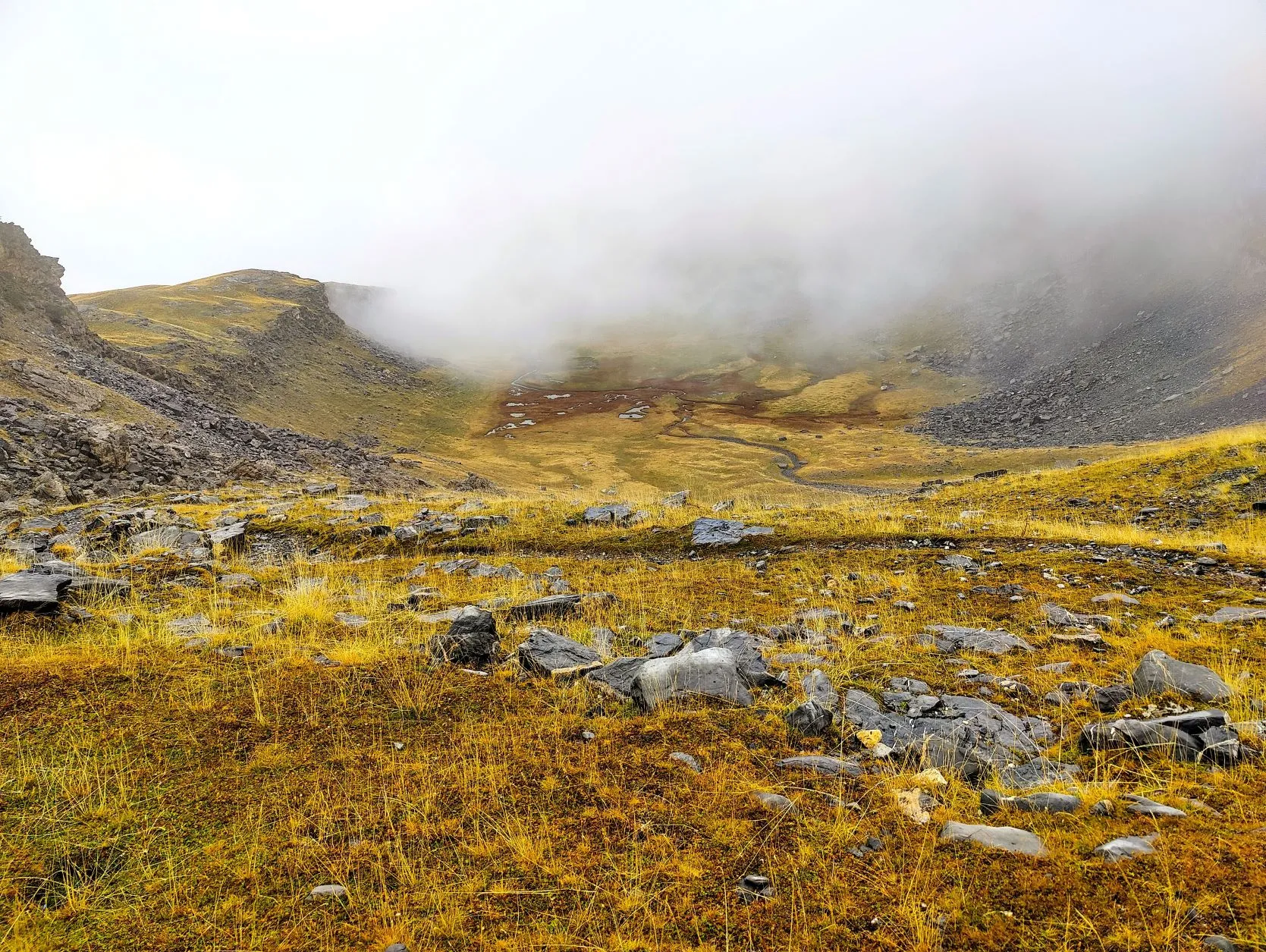
The weather is slowly starting to turn. It's barely 5 degrees, it is raining from time to time and it starts to get quite foggy in the valley. We still have quite a bit of climbing to do and are keeping a good pace, also to keep ourselves warm. Through the clouds and patches of fog we catch glimpses of the mountain, but most of it remains hidden from us. Rocks, slippery stones and the occasional bit of grass make up our path. We emerge onto a plateau with marshes and meandering streams, surrounded by high cliffs. How high we do not know, because we cannot see the peaks due to the fog. At the end of the valley we arrive at our final climb. From climbing we get quite warm and we are surprised to see patches of fresh snow here and there. It'll probably only be a few degrees above zero right now... We decide that the next spot that's large and flat enough for our tent, will be our bivouac place. Because if the rain turns into snow, it will be too slippery to walk. Fortunately, close to the area we previously envisioned for sleeping, we see a nice sheltered, flat patch of grass. As we pitch the tent, it already begins to snow. It's a kind of powdery snow, in between snow and hail and it's pouring down. The advantage is that it doesn't make you that wet and we have pitched the in no time. Quickly, everything inside and then we'll see. We have already removed the inner tent this morning, so the tent is now a large shelter with plenty of room to sit, to unpack the wet gear and to make coffee. Just a moment to recover and get warm before installing our sleeping place.
Fortunately, tomorrow the sun will shine again and everything can dry. We wonder how cold it will get tonight, at almost 2,400 meters altitude... At least we are warm and sheltered in our little tent!