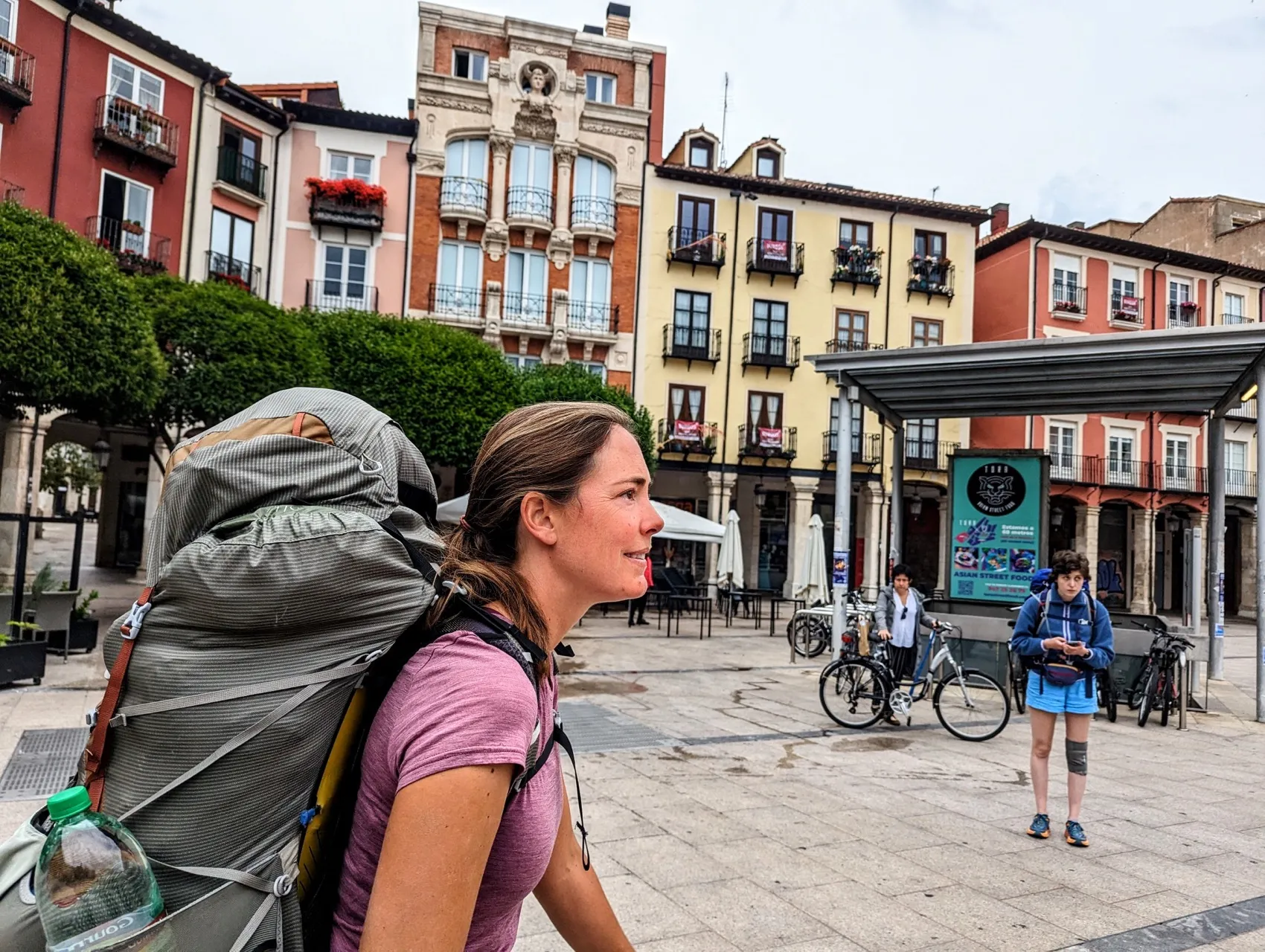
It's gray this morning, and it looks like it might rain at any moment. This gives the city a completely different feel as we walk the streets compared to yesterday, when the sun was shining and the streets were bustling, as if Spain was already on summer vacation. The beautiful Plaza Mayor, the impressive Gothic cathedral, the medieval city gates—especially the Arco de Santa Maria, which was the main entrance to the city from the 14th century and lights up in the evening, enhancing the sculptures on the building. Also, the magnificent parks along the Arlanzón River, where an outdoor exhibition is currently taking place featuring beautiful nature photographs from around the world. Throughout the downtown area, there are life-size bronze statues, many of pilgrims with knapsacks, which is fitting since pilgrims are common here. Burgos is one of the major cities along the Santiago route. With the hustle and bustle in the narrow streets, both small and large squares, tourists, pilgrims, and the people of Burgos, the city is lively. We will definitely come back here to spend more time. But this morning, the street scene is totally different.
It's gray this morning, and it looks like it might start raining at any moment. This gives the city a very different feel as we walk the streets, compared to yesterday when the sun was shining and the streets were bustling as if Spain was already on summer vacation. The beautiful Plaza Mayor, the impressive Gothic cathedral, the medieval city gates, especially the Arco de Santa Maria, which has been the main gateway to the city since the 14th century and lights up in the evening, making the sculptures in the building stand out even more. There are also the magnificent parks along the Arlanzón River, where an outdoor exhibition featuring beautiful photographs of nature from all over the world is currently taking place. Throughout the downtown, you can find life-sized bronze statues, many of pilgrims with knapsacks, which is fitting because pilgrims are frequent here. Burgos is one of the major cities along the Santiago route. With the hustle and bustle in the narrow streets, the small and large squares, tourists, pilgrims, and the people of Burgos, the city is lively. We will definitely come back here to spend more time. But this morning, the street scene is completely different.
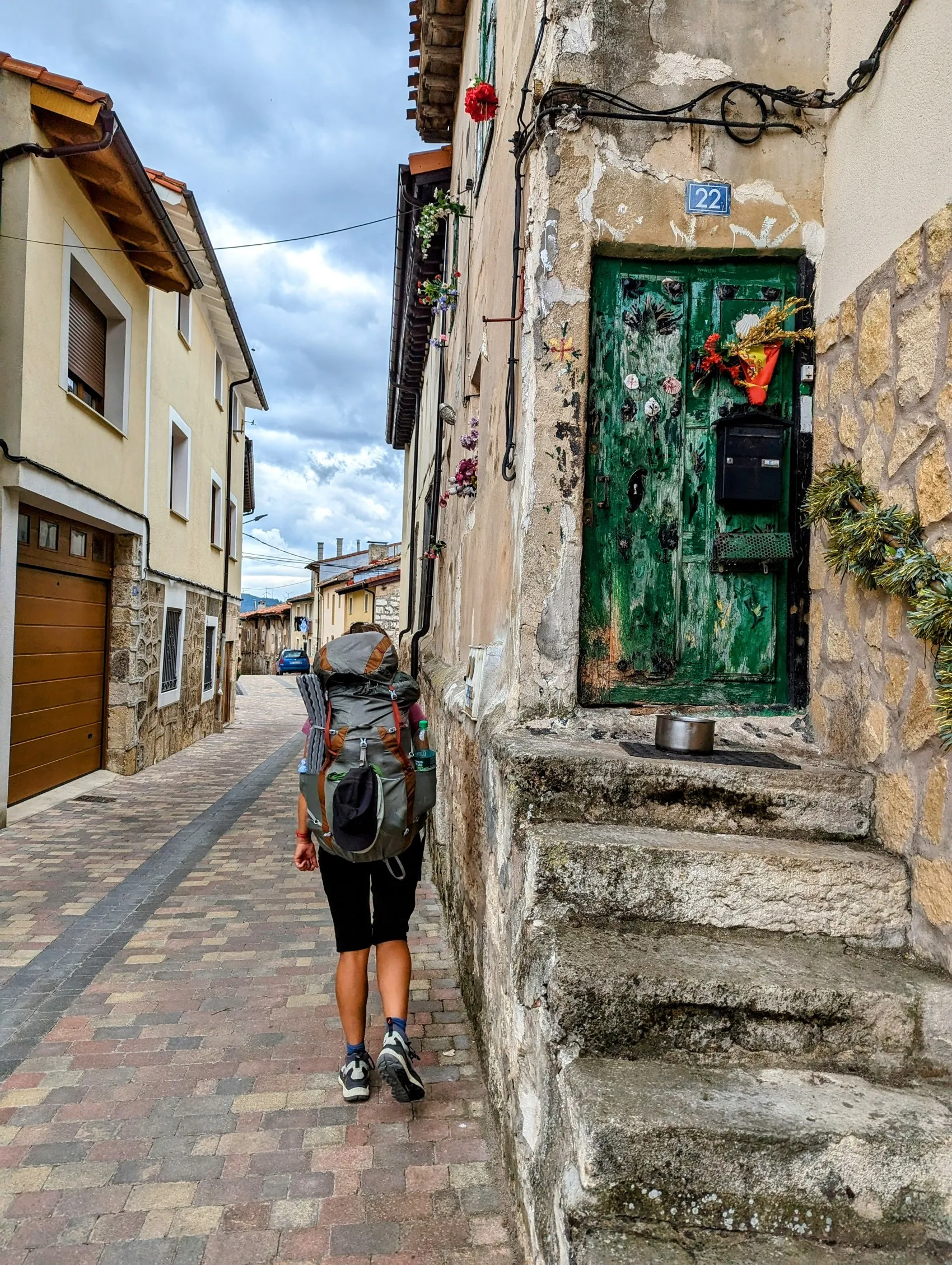
A class is given lunch packs for the day, garbage men loudly empty the glass containers, and a cart that scrubs the streets in the morning drives through the city. People are heading to work and some pilgrims are getting ready to leave in the opposite direction to us. We are not following the route back to the Pyrenees but the Camino de Santiago Vasco Interior, a less known route through Basque Country, hopefully less crowded.
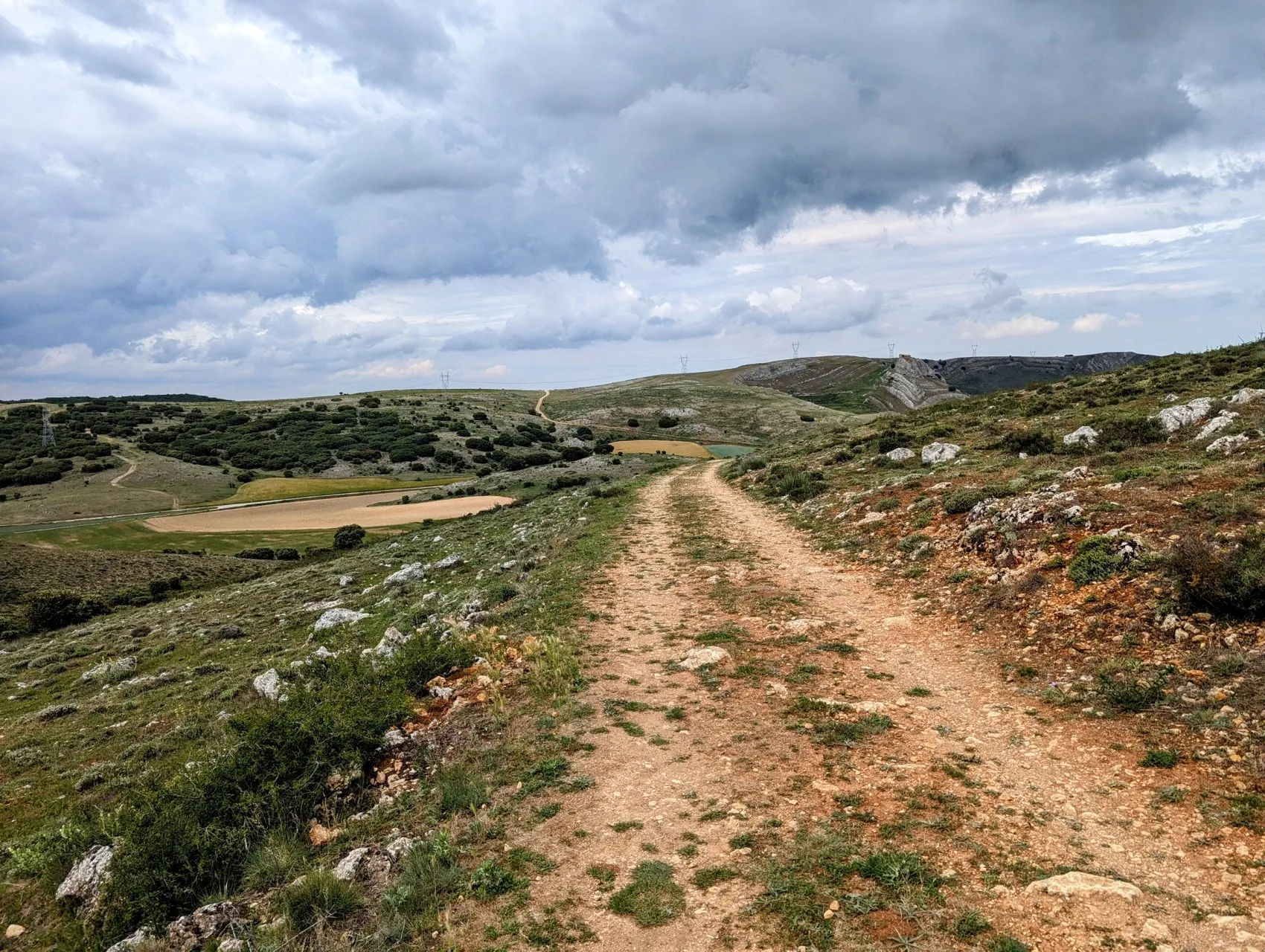
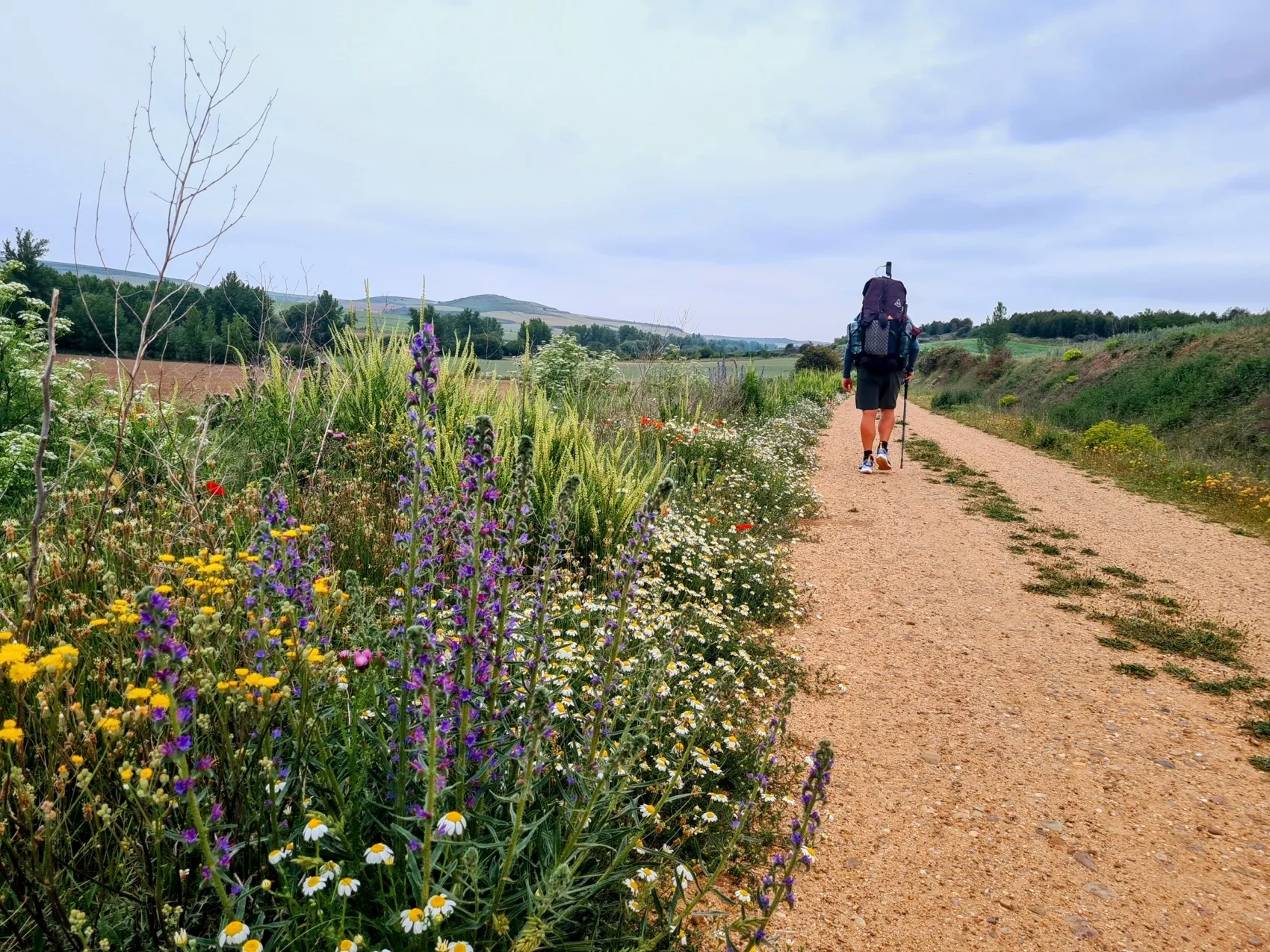
Initially, we walk past parks and beautiful stately old buildings, later it becomes less authentic with tall white apartment buildings and some rundown houses. The section out of the city is quite long. For 7 kilometers, we walk through the urban landscape, businesses, and streets, then we pass under the highway and walk on an unpaved road into nature. Unfortunately, it really starts to rain now. The rain cover goes on Malou's backpack, the Osprey backpack is not really waterproof and the fabric quickly soaks up rain. Fortunately, it's not cold, and we leave the rain jackets off. If we put them on, we'd only sweat more. Especially with the backpacks on, climbing uphill, as the route goes over 1000 meters today. The landscape is again beautifully rural. We walk through the valley of the small river Rio de Morquillas alongside grain fields and orchards. The road verges are also full of flowers. Next to the red kite soaring above us, the verges here are full of the plant named dyer's greenweed. The plant has twining branches with white/yellow flowers. Their shape and color remind me of sparks shooting out from a campfire. Beautiful plants that have been used for thousands of years, also in the Netherlands and Belgium, as a dye plant to color textiles yellow. There's also a lot of fresh green fennel along the path, whose young shoots make a tasty snack while walking.
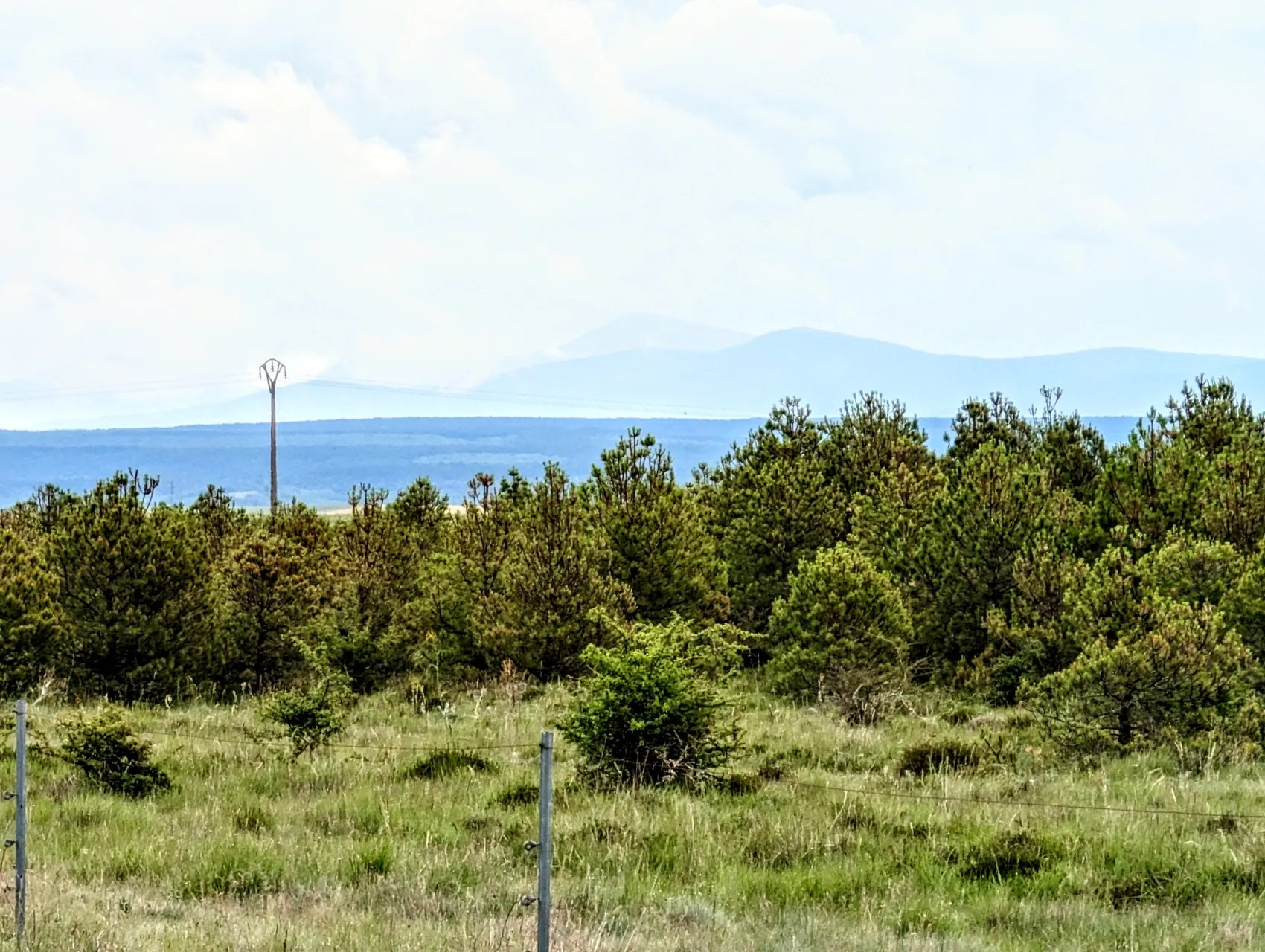
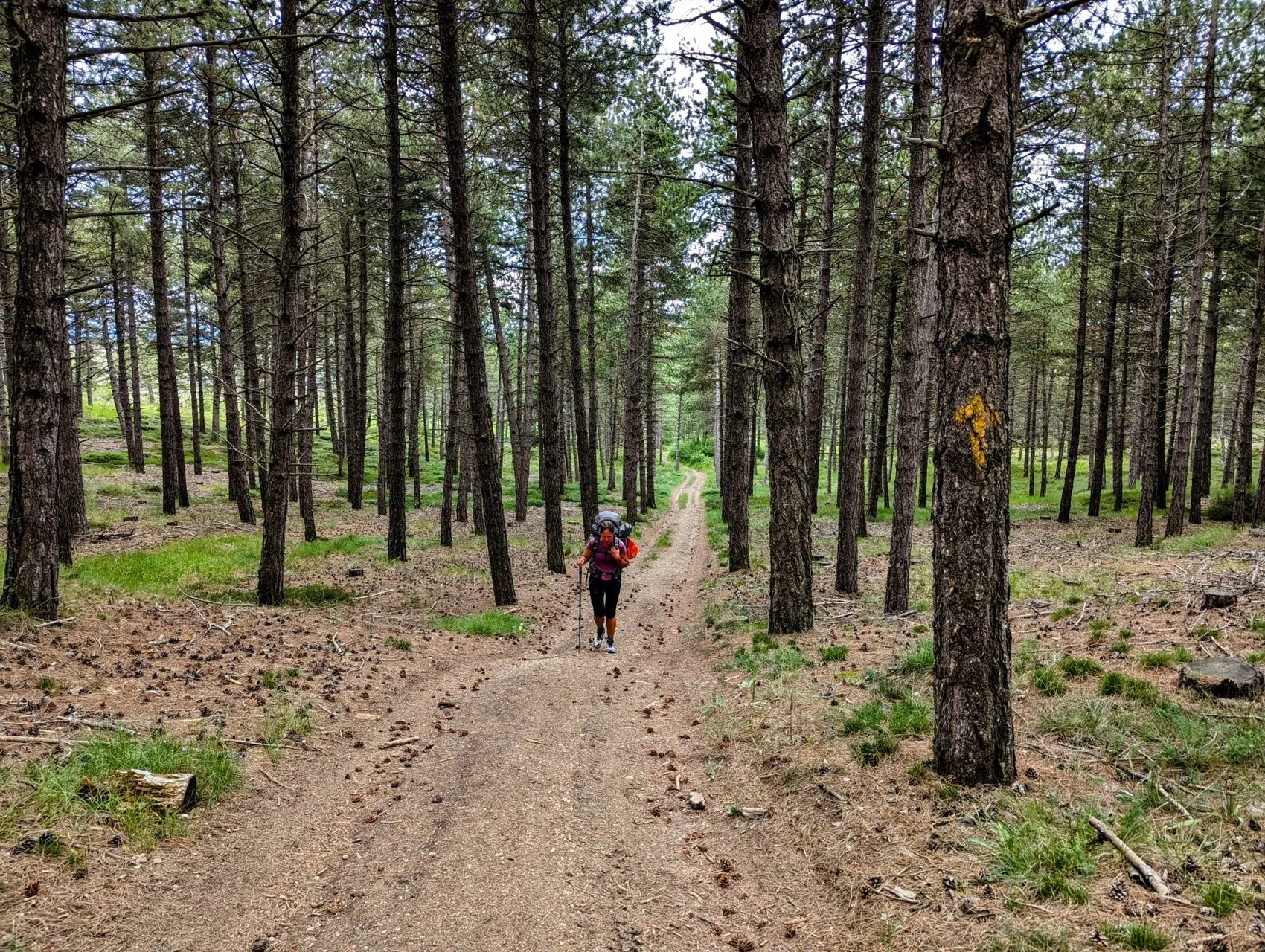
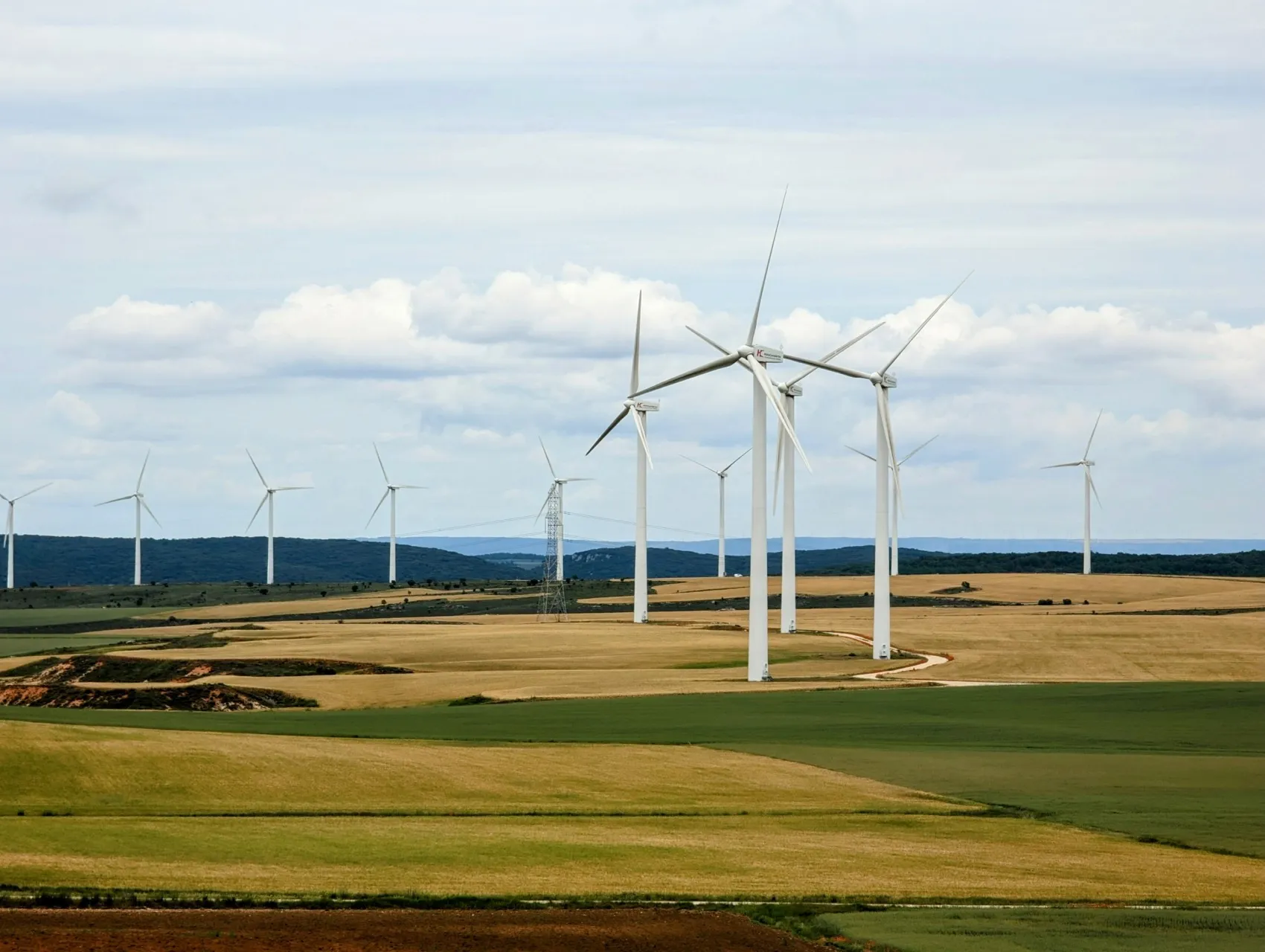
After 14 kilometers, we pass a golf course, after which the landscape becomes much more open and fortunately a bit drier. It's a large plain with marshy meadows filled with heather plants and yellow grass, and for the first time in a long time, we see orchids again. A bit further to the east, we see high mountains. These are three mountain ranges that from this distance seem like one. They are the Sierra de la Demanda, Sierra de Atapuerca, and La Bureba, formed at the same time as the Pyrenees. These ranges are a bit lower but still rise above 2000 meters. A preview of what's to come after Pamplona, in about ten stages. The path we're walking on was probably in much better condition in the past. We walk over partially sunk white stones that clearly once neatly formed a road. It's an old Roman road that was part of the Via de Italia, but most of it has now disappeared. We've already walked quite a few Roman roads through Spain. In the past, there was a large network of paved main roads across the Iberian Peninsula to the large cities, and smaller roads to the smaller places across the plains for driving cattle. It's nice to come across another section here. We walk for a long time over this plain towards the highway, where we quickly veer off into a forest. We have to climb steeply through this open pine forest to the highest point of the stage and the highest point until Pamplona at the foot of the Pyrenees, at 1018 meters. It feels strange to descend from here still 200 kilometers away from the foot of such a mountain range. On top of the hill, there are dozens of wind turbines and we have a view of many more. But it's a beautiful place and they're not spinning hard, so we take a break before we start
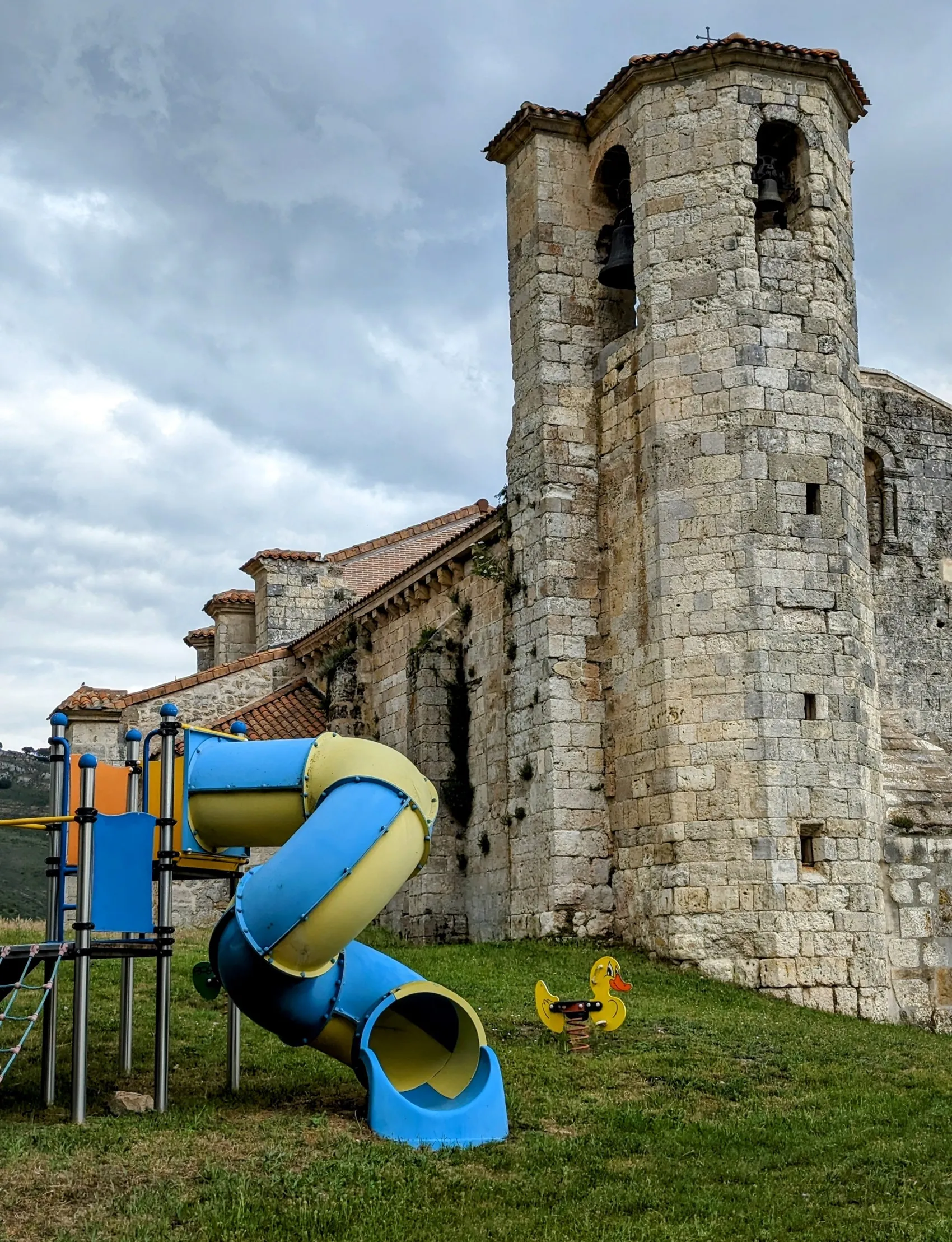
the last stretch. We're not bothered by them, until it suddenly starts to blow hard and they make quite a noise. It's time to move on, as the sky is starting to darken again, so we pack up and descend along meadows and villages towards the campground. Tonight, we'll sleep wonderfully in our tent again. We manage to set up the tent dry, then a few drops fall. We've been very lucky again today. And the route was wonderfully quiet, apparently, everyone else chooses the French route to Santiago, on the internet we see photos of them now walking in lines. It seems we made the right choice…