Camping Morille, where we stayed last night, turned out to be quite a story. The owner showed us the field where we could pitch and asked if we wanted to stay. After 32 kilometers, we were happy with any spot and this field with fruit trees and red strawberries was absolutely fine for us. There was electricity and water and we were happy to drop off our backpacks. But at the end he casually told us that there is only a shower in summer. And by the way there are no sanitary facilities either.... Well, that's kind of awkward. Because of the language barrier and not being quite up to speed after so many kilometers, it took a while before we really understood the situation and had already agreed. The owner was already busy cleaning chairs for us, raking up the cut grass and building a shelter over the water point. He's a policeman in Madrid, lives in Salamanca and this is his hobby project. A nice spot on the edge of the village, but unless you have a small motorhome with its own facilities, not really recommended to camp. We were given a key, so were able to lock up the fenced-in area properly, and had a very quiet night. This morning, we really noticed that it's a lot colder here at this altitude. It's about 7 degrees and the wind is strong. The stage to Salamanca is only 21 kilometers, so we can have an extra cup of coffee this morning to warm up. We haven't seen the owner's father, who was supposed to come and water the plants at 8.00am, when we leave at 9.30am.
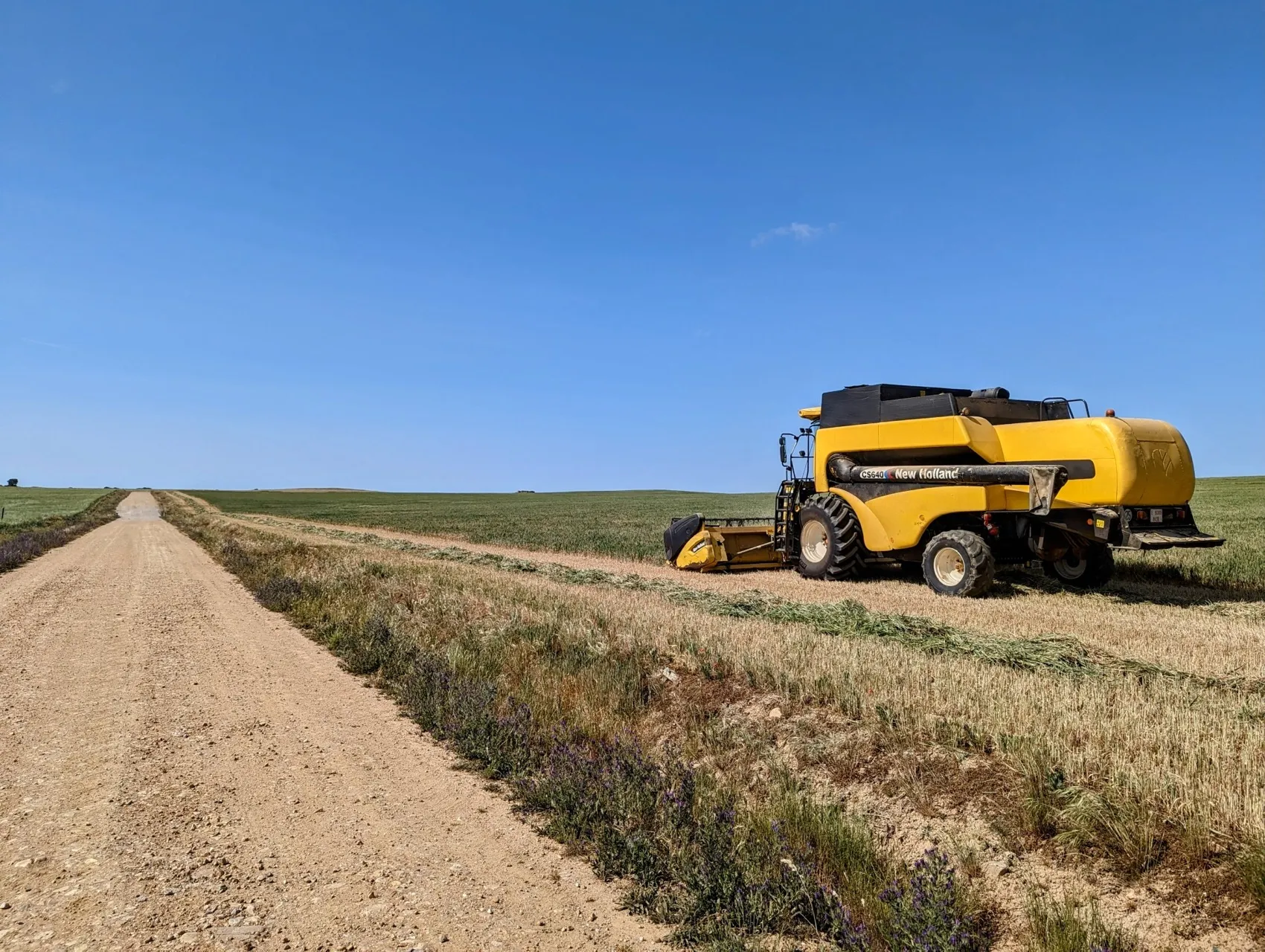
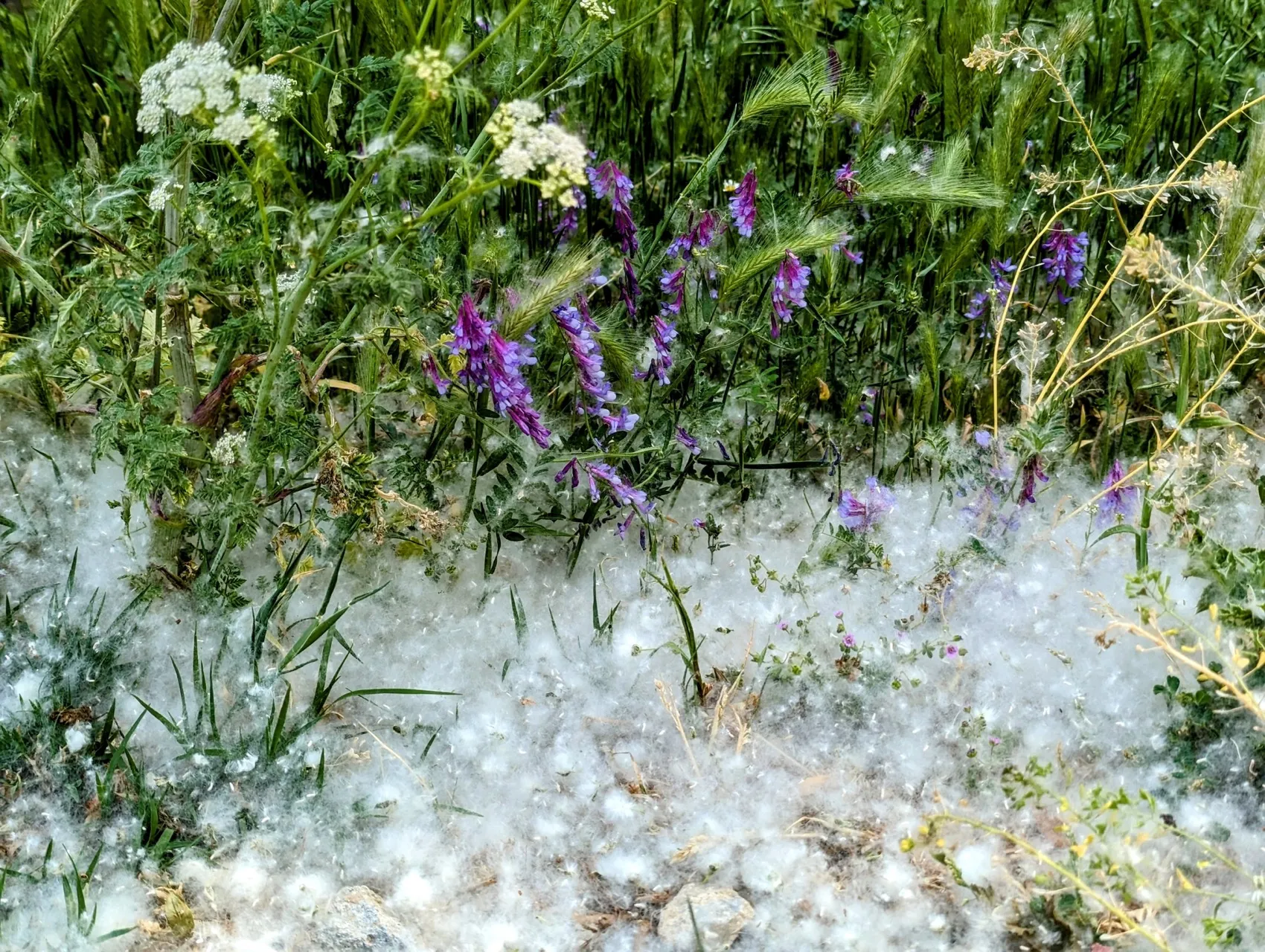
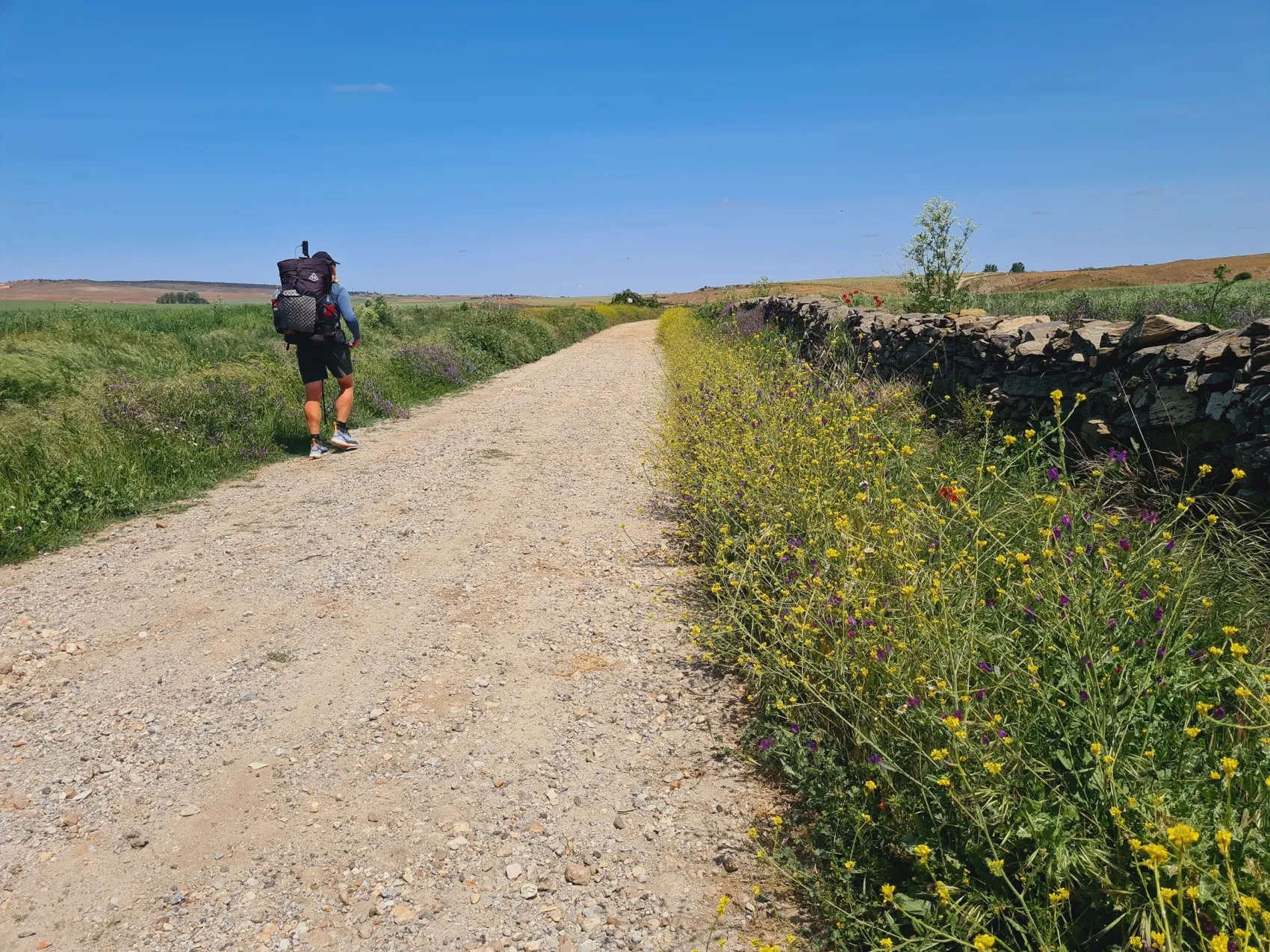
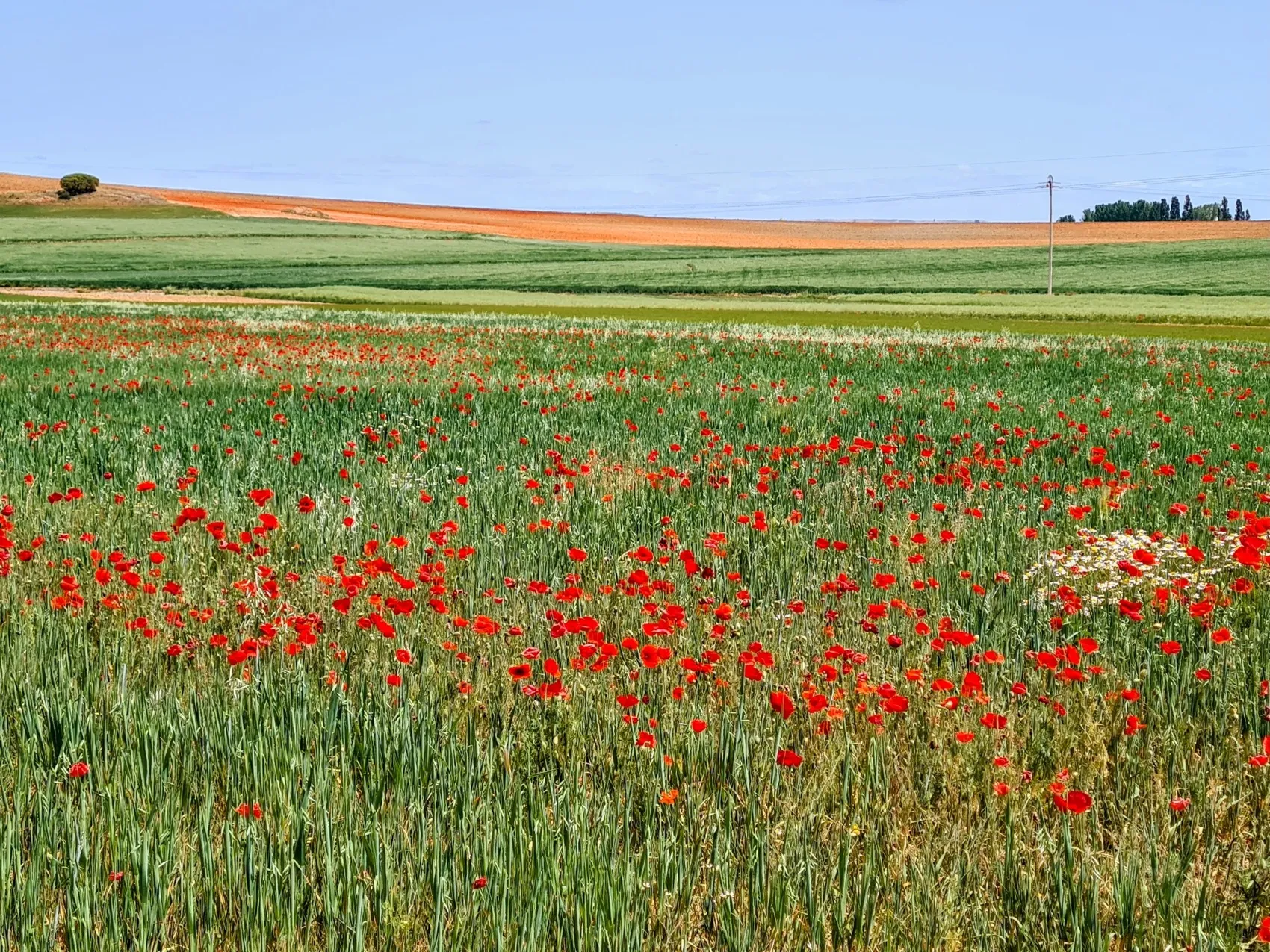
For the fact that we've hiked more than 30 kilometers yesterday, our legs are still pretty fit this morning. We walk through the village, which turns out to be several streets larger than expected. It has a lovely authentic look with meadows with cows and horses between the houses, a café and a small church. Just outside the village we turn onto a dirt track that we'll follow for most of the stage. It's a gently undulating landscape with green fields in the valleys, a small lake or river, lots of flowers and storks, and on the higher parts vast fields of grain. In the fields where the grain still stands, farmers are harvesting it with big machines. The fields of yellow grain turn red with poppies and it seems as if there are more poppies than grain in some parts. In places further along the road it almost looks like it has snowed, the verges are all white. On these open stretches of field, the (s)Iberian wind is cutting cold, but not that cold. It's the fluff from the box fruits of the poplars and willows, which abound in the valleys and on the edges of villages. Together with the white covers of flowering elderberries, it sometimes looks like winter wonderland. The poplar is a valuable plant for this area, thriving here. It provides shade in summer and stops the cold wind in winter. And while today it's chilly, a few weeks ago when we were still walking in the sun along the ocean, it was freezing that it was cracking in this area. Poplar is very light wood used for fruit boxes, but mainly to make paper. Elderberry bushes are also used in many ways. The flowers are edible and drinks are made from the fruits. The leaves are used in insecticides and from the branches they used to make sambucas. These are hollow tubes that were used to light fires. From the willow branches, baskets are woven and traps made to catch fish. The bark was also used as a pain reliever. So there are hardly any superfluous plants in the landscape here, even though we don't know much about them nowadays, making it sometimes difficult to appreciate them for their right value.
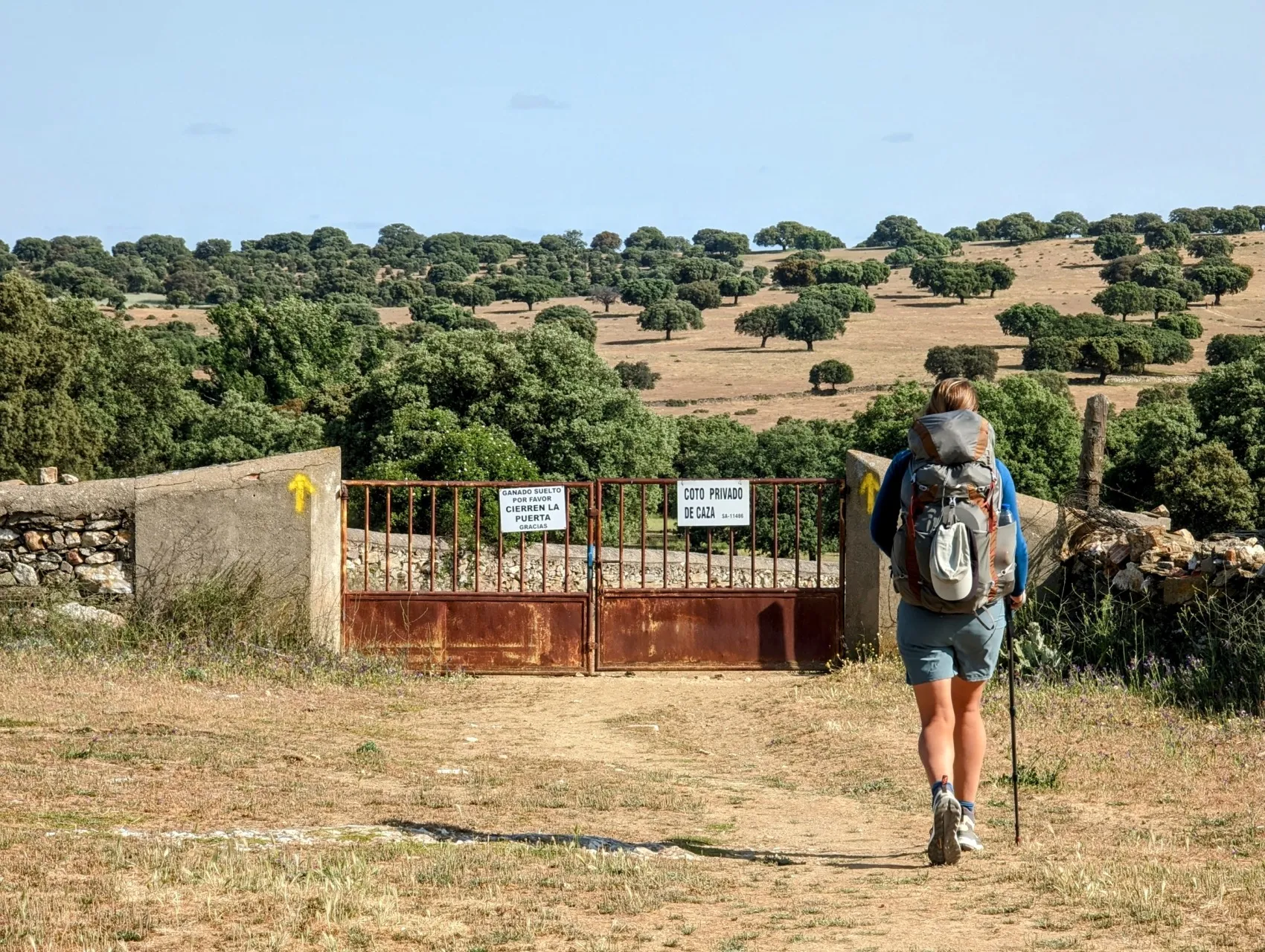
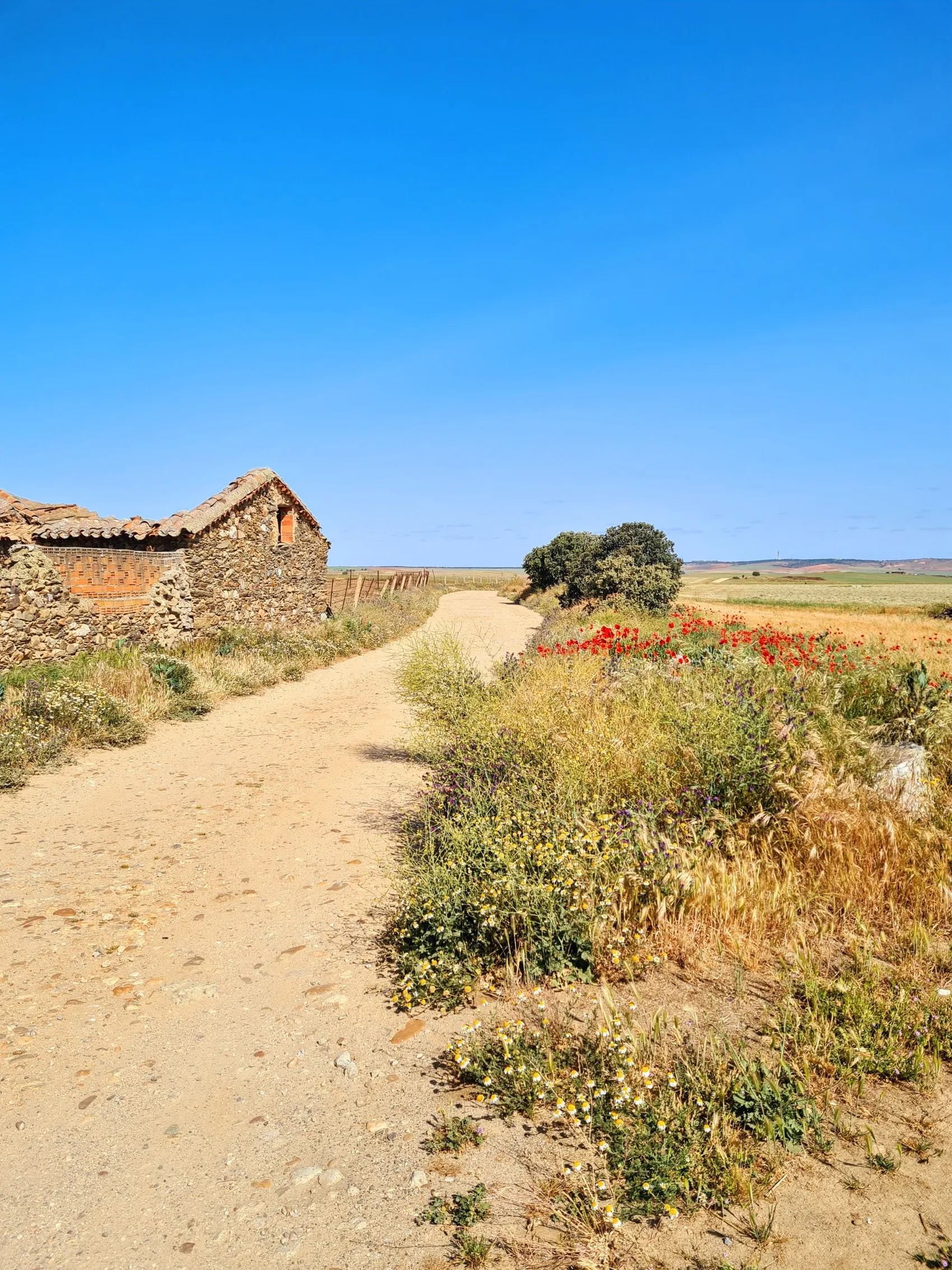
We look for a place where we can sit a bit sheltered from the wind to take a break. Fortunately, we come across a little house, where we can pause in the sunny side out of the wind. Here it's lovely and warm, what a difference in temperature. We are in no hurry to go further, as we can only get to our flat in Salamanca from 4 o'clock onwards. When we finally do walk on, the wind has died down a bit and it has warmed up nicely. We walk for several more kilometers over hills and valleys. It can be seen that we are getting closer to a big city, as the landscape, like Mérida and Cáceres, becomes a lot barer. This last valley before Salamanca, a wide valley that has a steep side on the north side, has a rich history. Here, in 1812, Napoleon's troops were dealt a significant blow by Spanish, Portuguese and British forces. This battle of Salamanca, 'Batalla de los Arapiles' has a small Dutch tinge: Prince William of Orange, then better known as 'Slender Billy' fought as adjutant for the English army for the Duke of Wellington. It was an important battle in which there were many casualties on both sides, but marked the beginning of the end for French rule in the Iberian Peninsula.
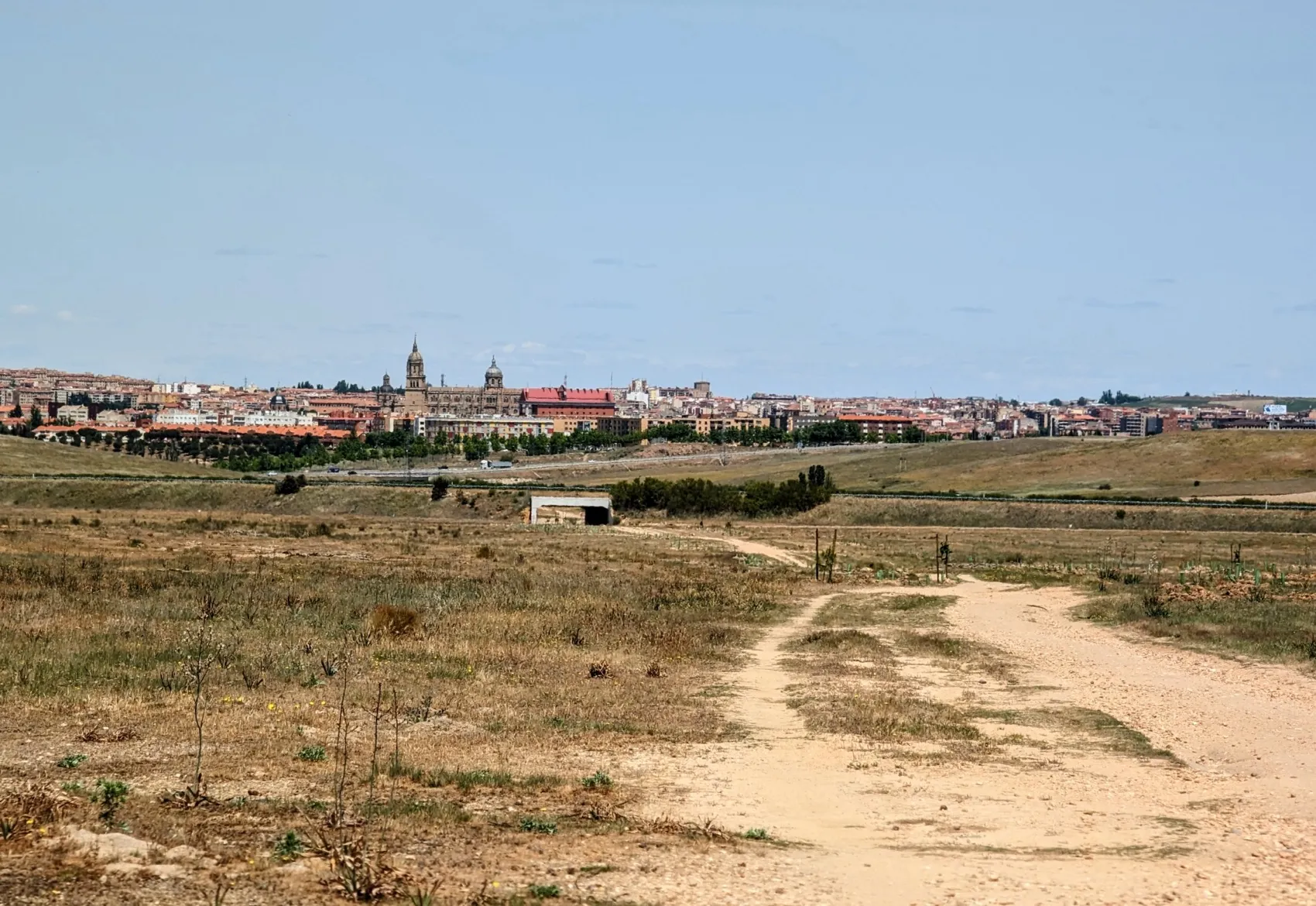
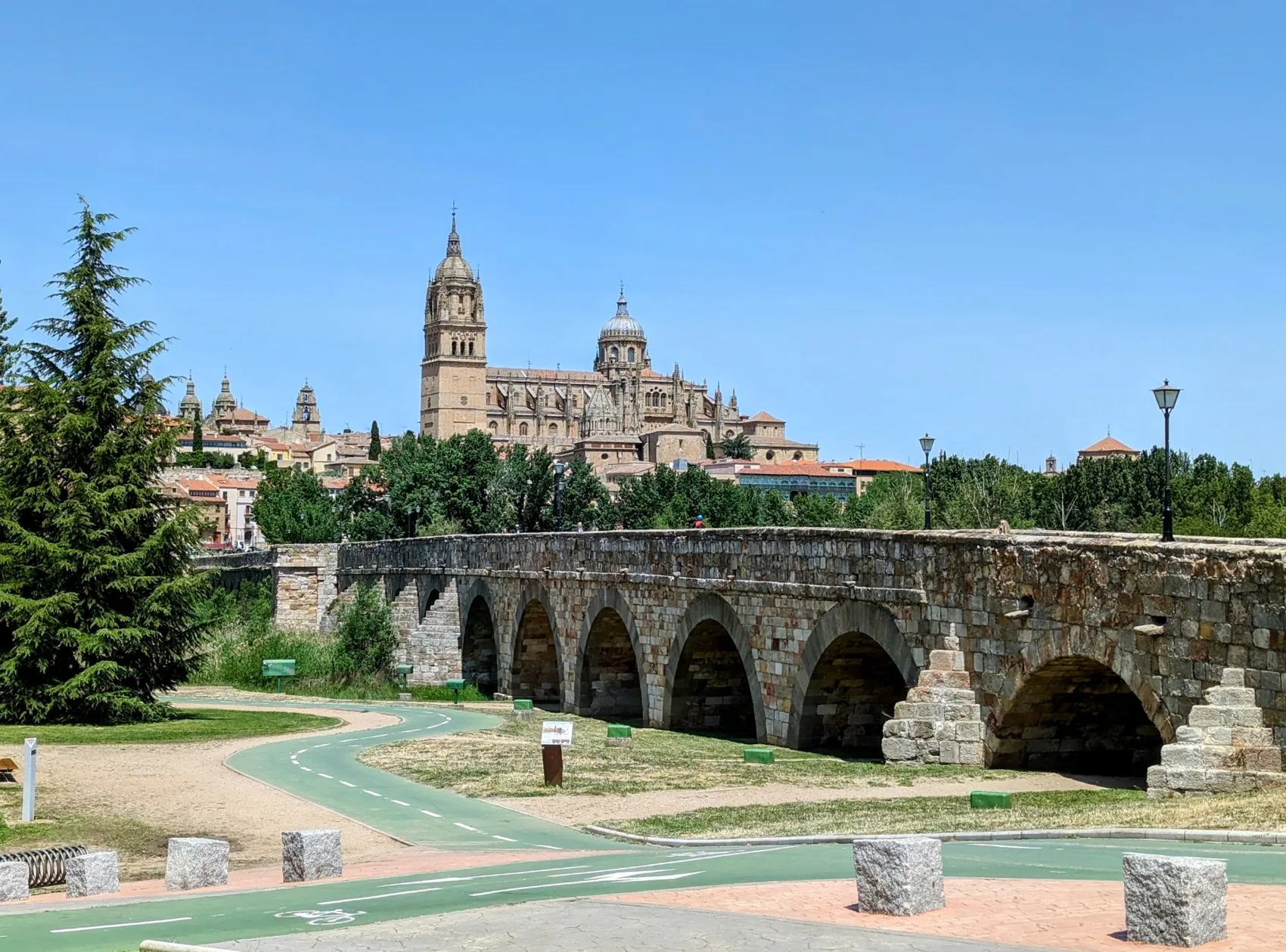
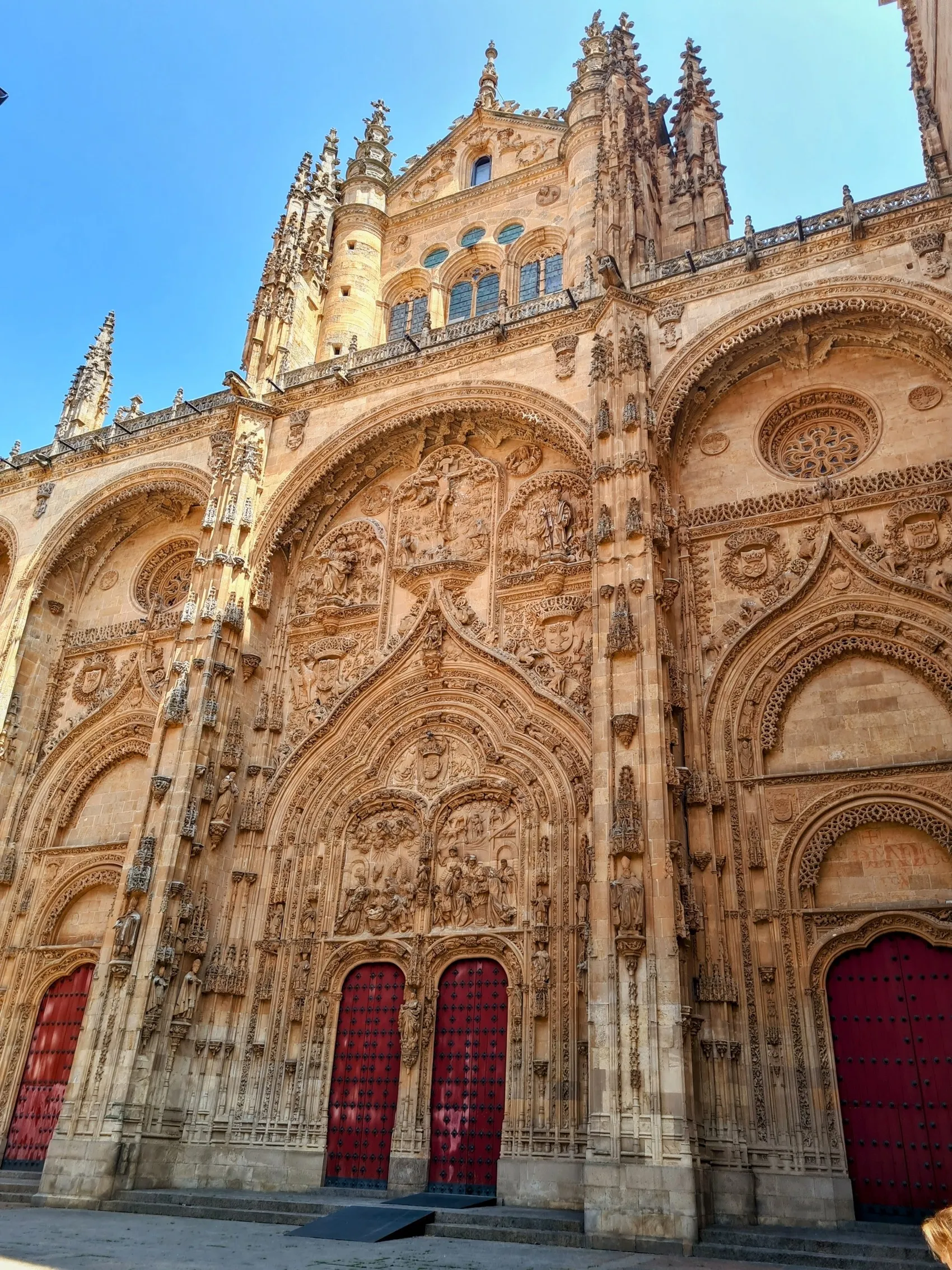
Now the hill looks peaceful and once at the top we can already see the city of Salamanca. We keep following the meadows until we pass under a motorway twice. On the other side of the bridge we are at the edge of the built-up area, but immediately in the middle of city life. Sandy paths give way to neatly paved roads, verges become pavements and fields are replaced by buildings with the occasional park and strip of grass. Fortunately, we soon enter a green corridor that takes us to the edge of the city centre, until near a long Roman bridge over the river Tormes. We cross the bridge and fall from one amazement to another. From the Art Nouveau buildings on the outskirts, the 12th-century cathedral with the Gothic cathedral further along, to the baroque Plaza Mayor and the Casa de las Conches from 1517, a library whose facades are decorated with the symbol of Santiago de Compostela: carved shells. These and almost all structures in the main city centre were built with an incredible eye for detail and in the warm yellow colour of sandstone that earned the city the nickname 'the golden city'. In the evening sun, the city seems to glow! Fortunately, we can stay over here for a day and look for more details later. By now we have seen quite a few Spanish cities on our trip, but with such a welcome it's easy to see: Salamanca takes the crown!