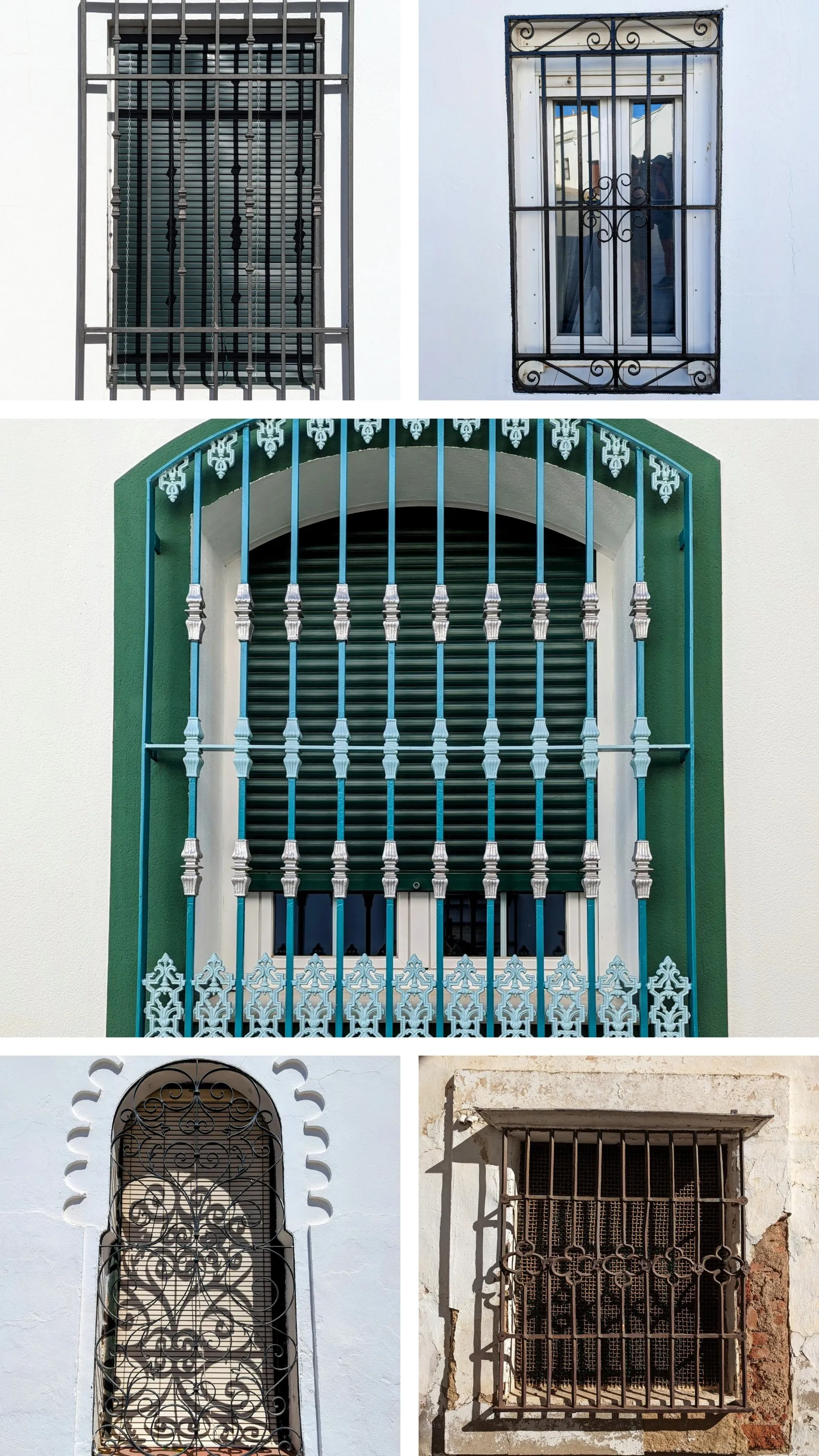
Although we would have liked to sleep an hour longer, our feet and legs are actually quite fit this morning after yesterday's 34 kilometers. Unbelievable how your body can recover if you are trained a bit. Today it's going to be even hotter than yesterday, so we'd better have walked the 24 kilometers to Cáceres before the worst of the heat. We walk across the village square with, for such a small village, a big church in the morning sun. Churches still make me think more of Christmas trees or even maypoles, but here two big, old palm trees are showing off in front of the structure. We walk past the little houses with black 'bars' in front of each window. At least, that's how we experienced it when we initially walked through Spanish villages and towns. All houses have metal bars in front of the windows on the ground floor, and more often on the first floor. We wondered if that would really be necessary to keep your house safe here. We're not used to it and it's a bit of a spooky idea when you're out and about from morning to night, and preferably spend the night in a tent. But even though it looks a bit strange, the reason is actually quite logical: most houses don't have a front garden and are therefore located directly on the street. Since it can get so hot here and it's pleasantly cool at night and in the early morning,the windows at the street side are opened wide as well, to air the house and cool them down a little.
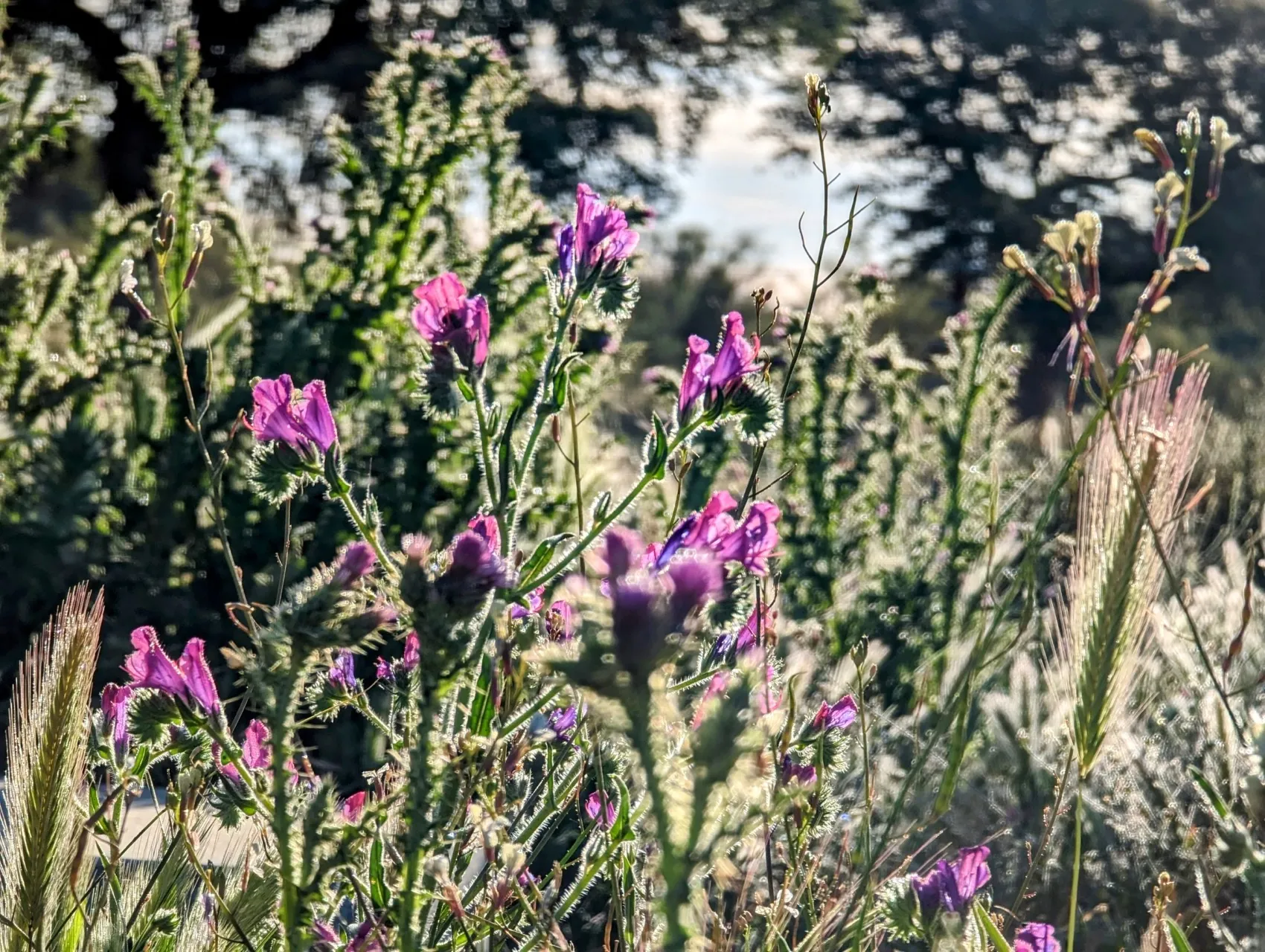
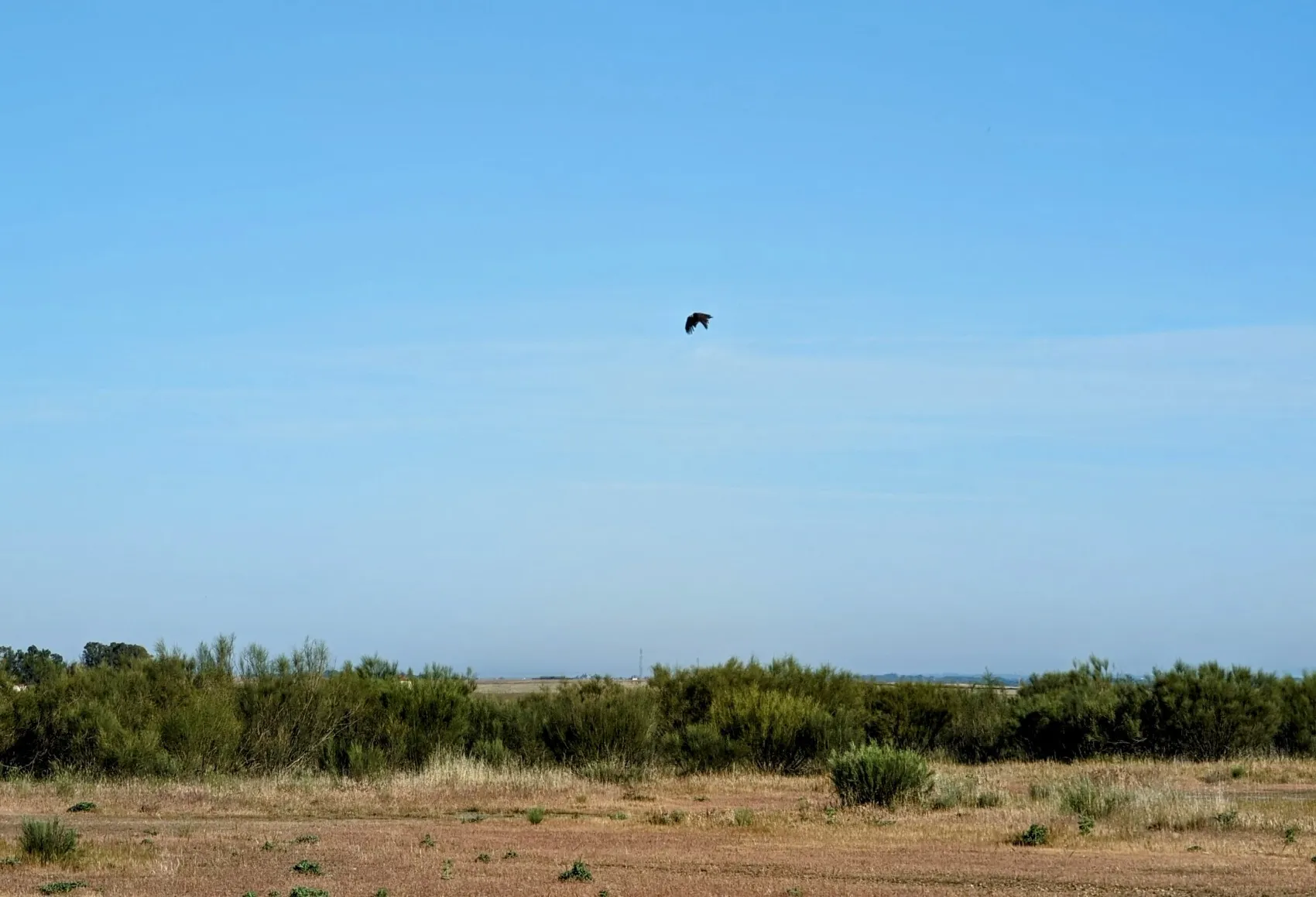
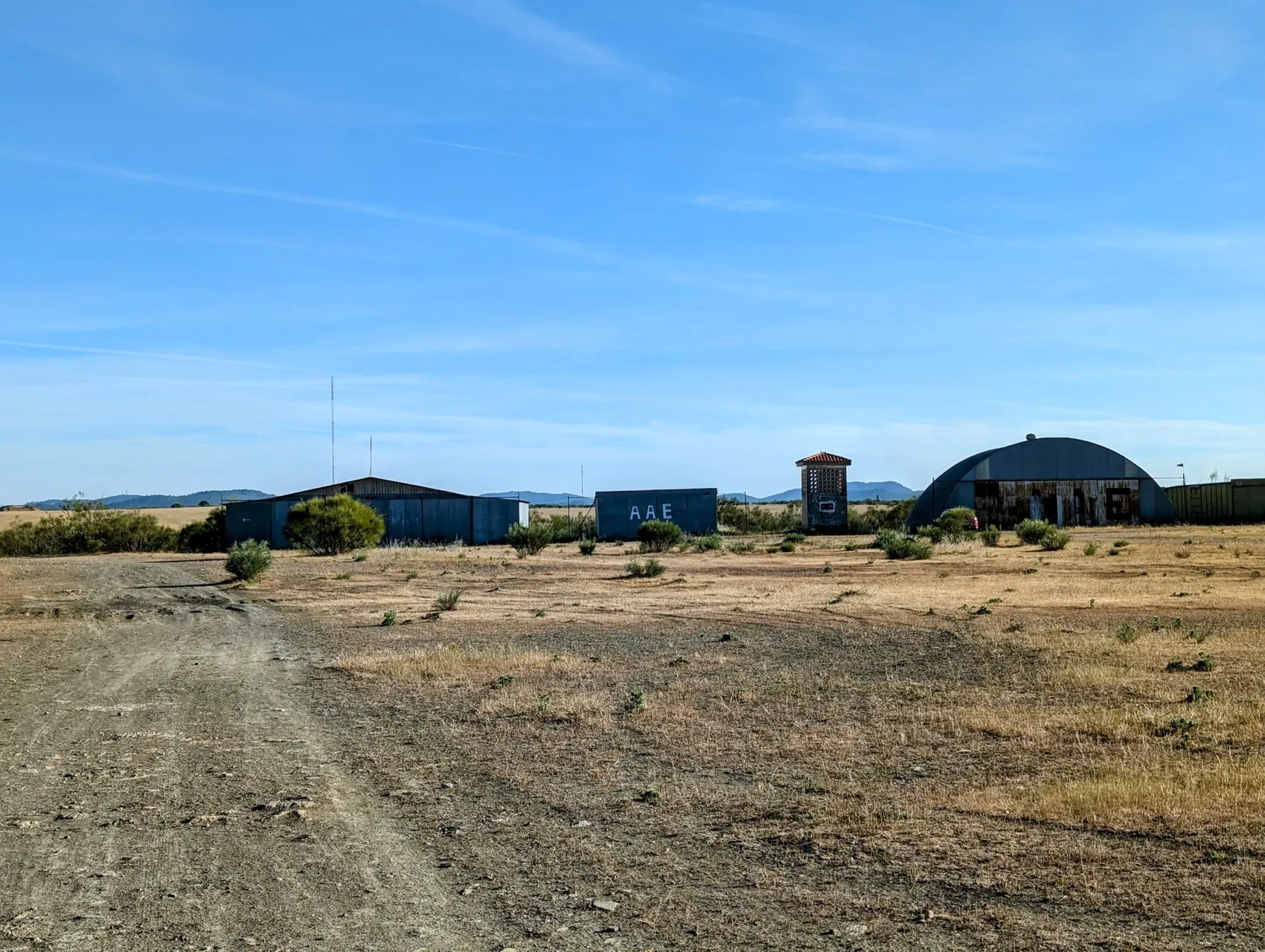
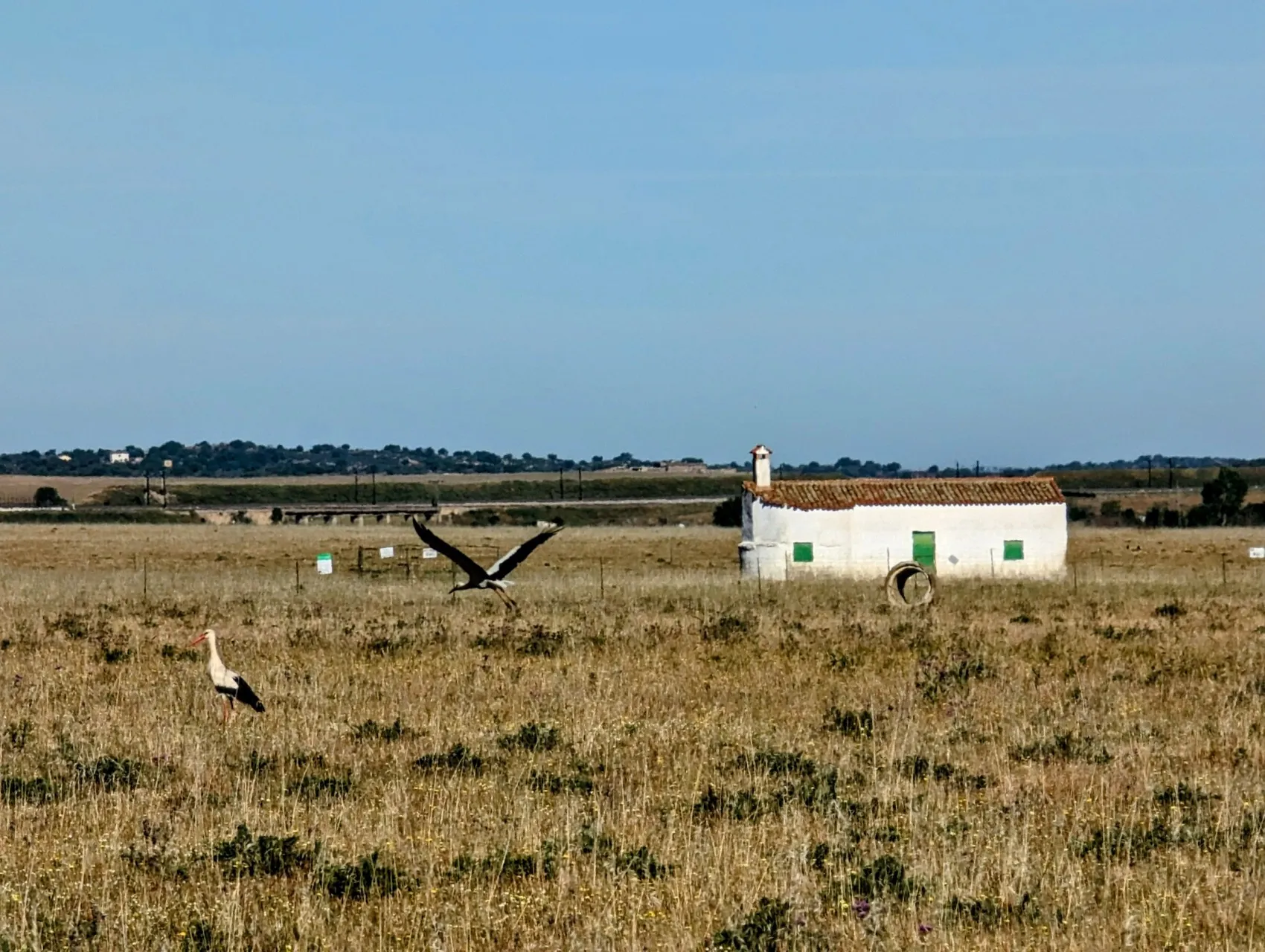
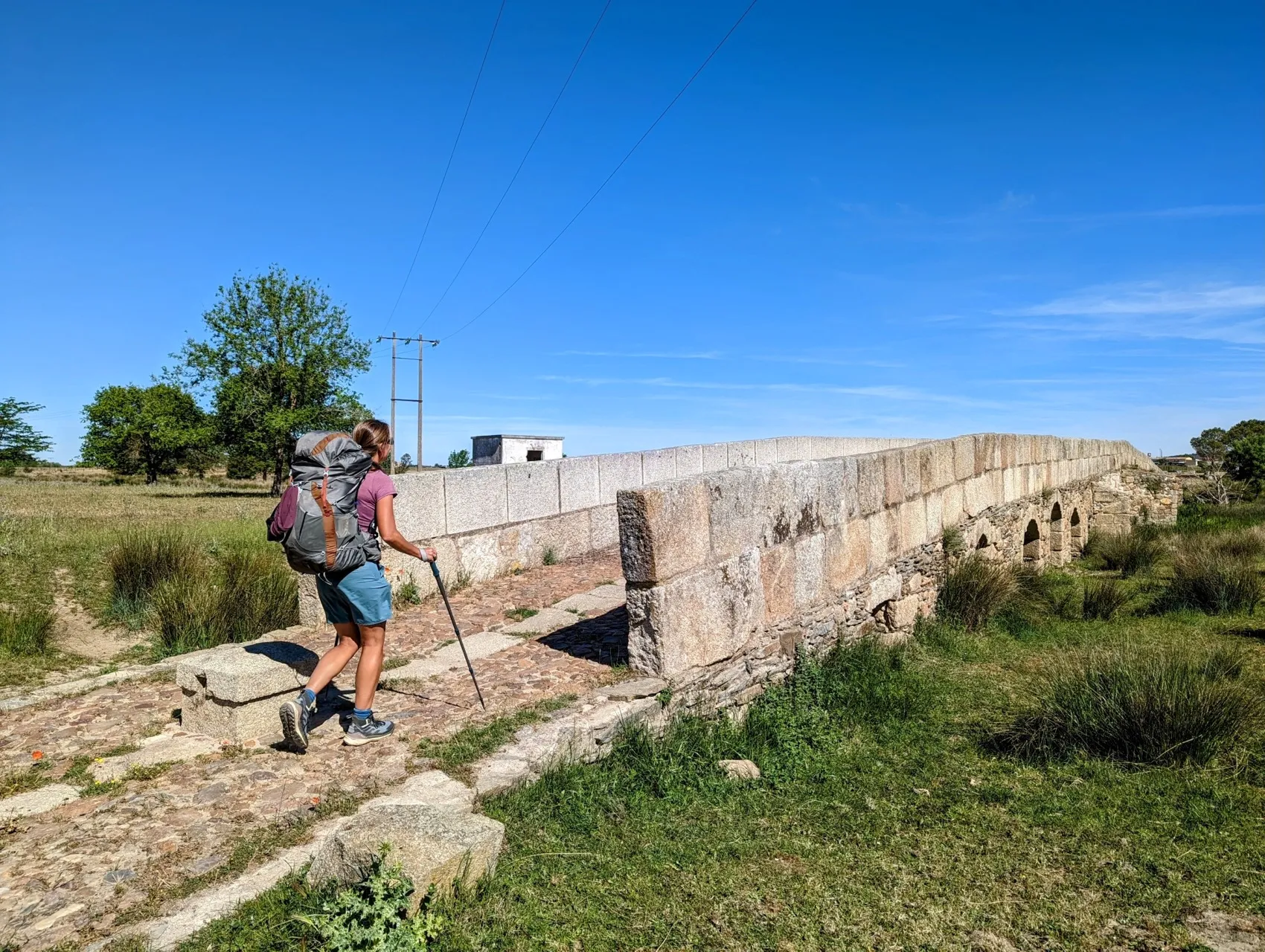
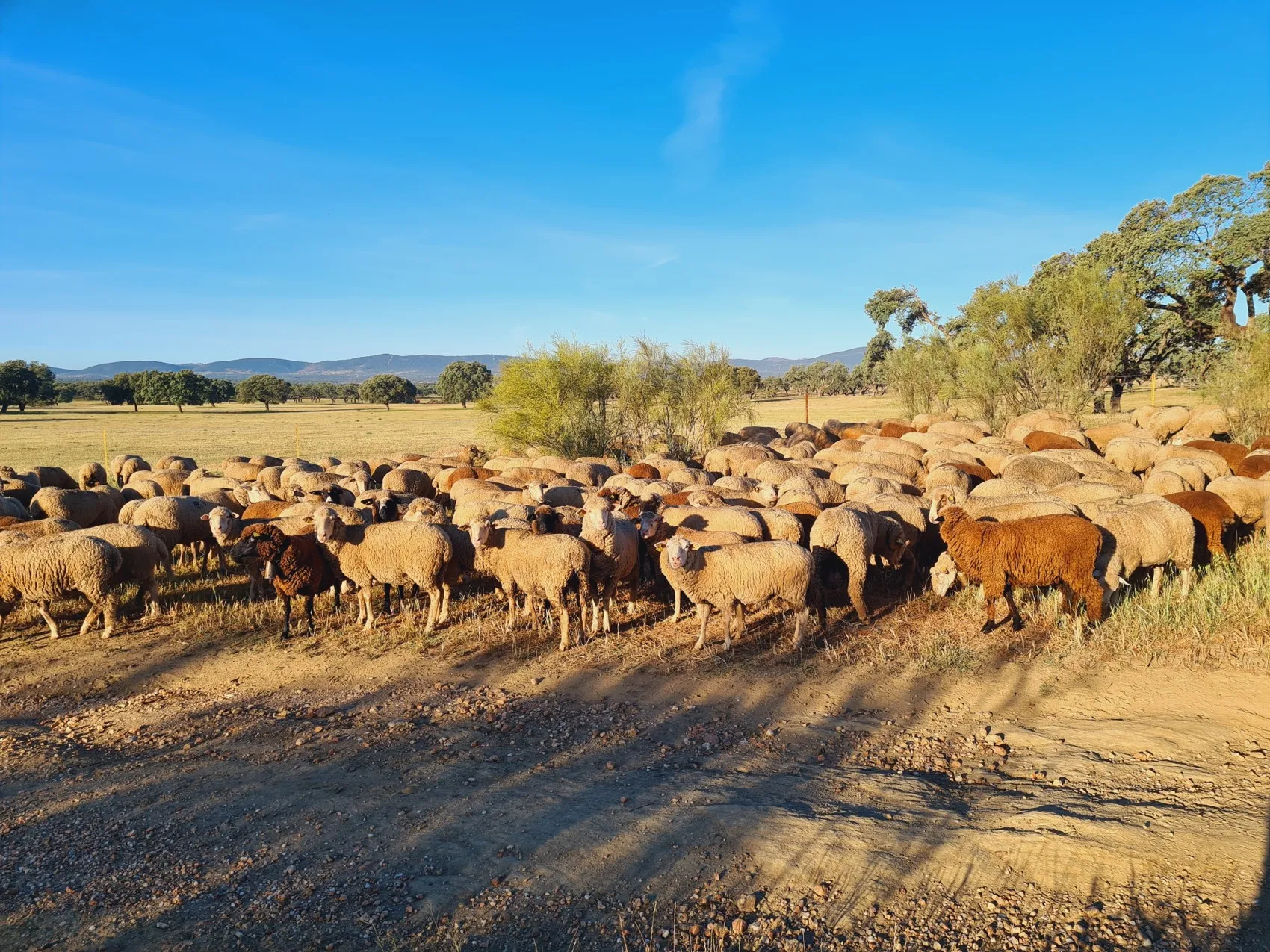
If the 'bars' were not there, anyone could just step inside. Besides, it's also mandatory with many insurance companies here in Spain. But as with so many things, once you understand it you start looking at it differently. One fence is not the other. Some have beautiful curls, others are boring again, there are straight and crooked bars, and bars with gorgeous flowers. Nice what they make of it, they make an art out of necessity. We walk the first 500 meters back to the Via de la Plata, turn right north and keep following this Roman road. Along the route are marble pillars that indicate with colours whether we are on the original Roman road and whether the paths are passable. Here we are on a passable, old Roman road, it can't be better! Between the yellow grass and the holm and cork oaks, streams and small pools of water flow. Many streams that you can jump over from stone to stone using large marble blocks are empty now, but you can see that in the right season this is a large wetland. Here, in winter, you can find large flocks of cranes fleeing the cold of northern Europe. These big birds have now left for the north again, but it's still teeming with little birds around us. From storks to goldfinches, hoopoes and blue magpies. And lots of species that I don't know the name of and are usually too fast to look up. We come across an old farmer with a flock of sheep and herding dog, who's walking along the path to the end of the meadow, only to slowly return from there with his grazing sheep. What a beautiful sight. We walk out of the meadows, into a more wooded area with beautiful flowers and lots of butterflies. The landscape is suddenly completely flat and, apart from some bushes, totally open. We see some sheds and houses standing here, in the middle of nowhere. We look at the map and see that we're at a small airport, the route goes straight over it. There are no aircraft in sight, but when we look up we see at least 10 giant vultures, flying over almost at eye level. They are griffon vultures with a wingspan of 2.3 to 2.8 meters. What gigantic birds!
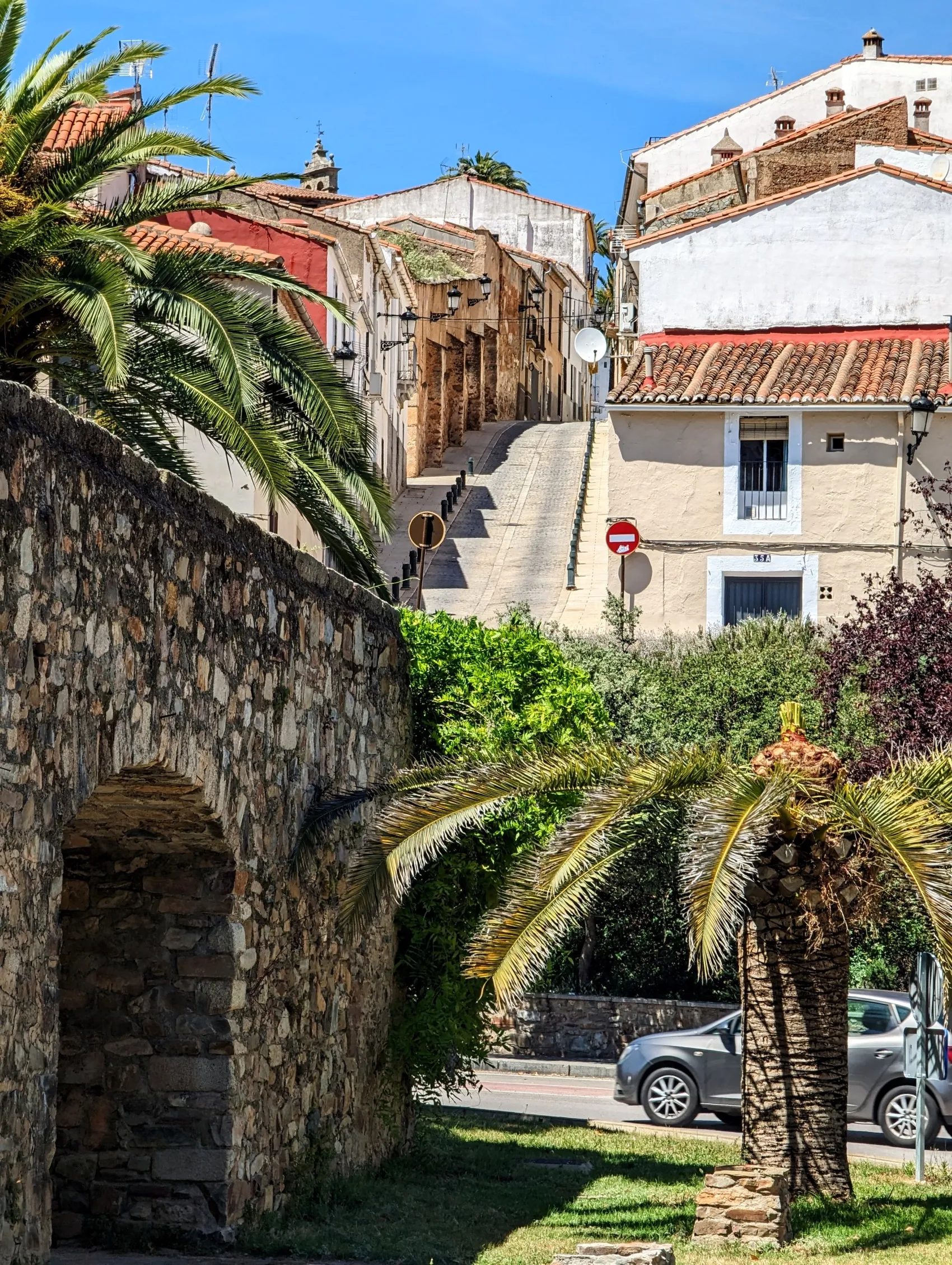
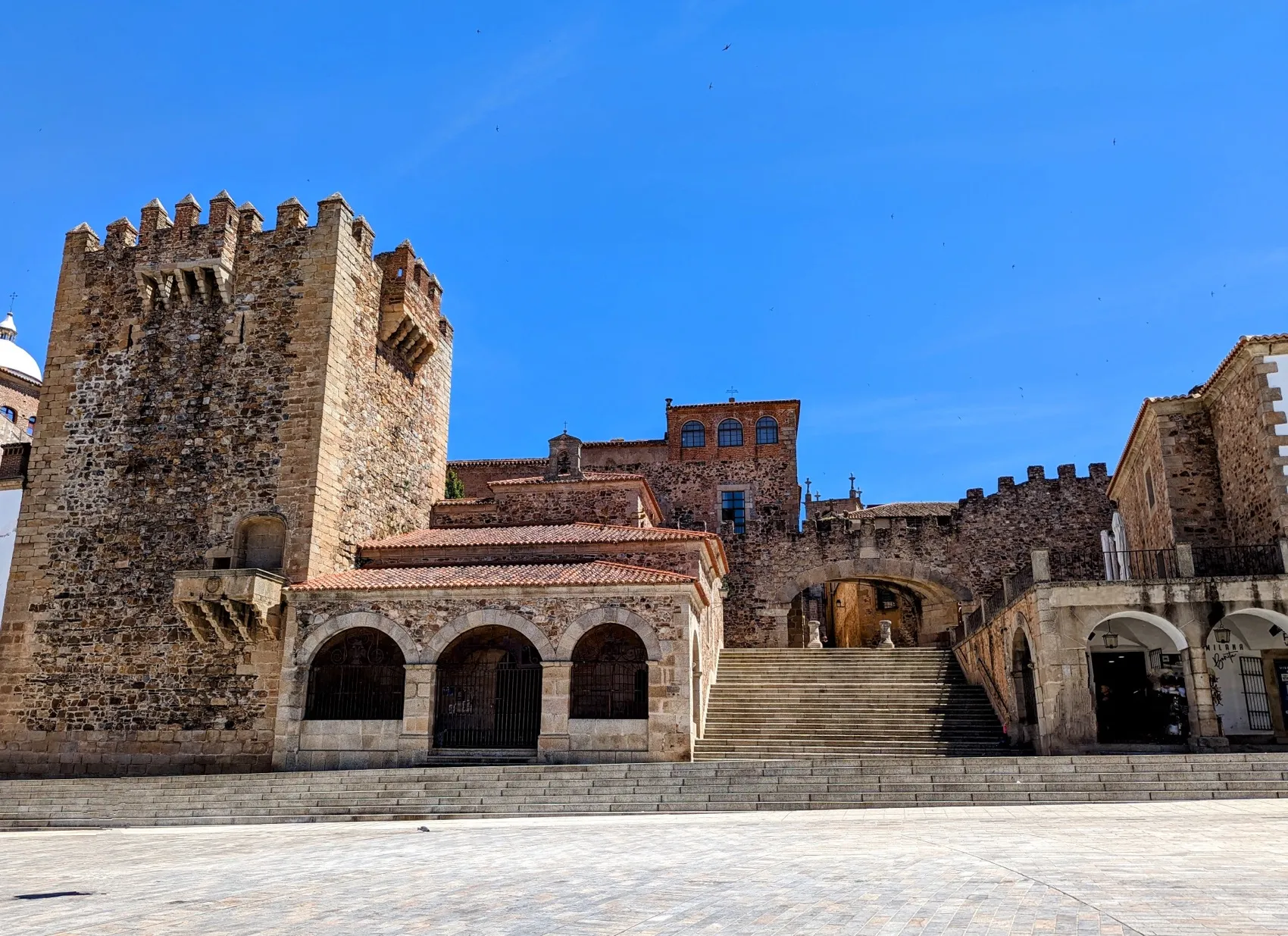
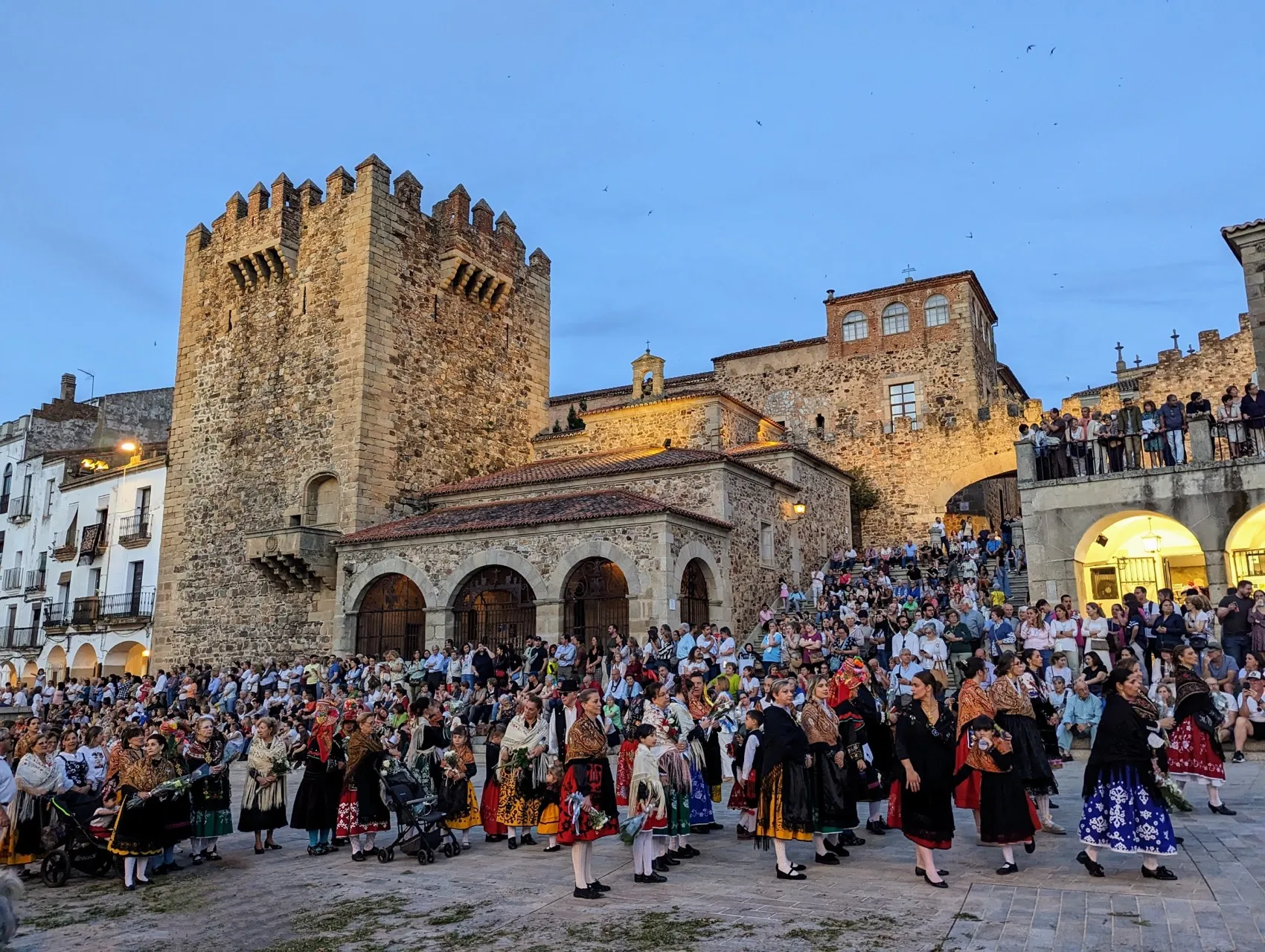
From here, the route descends slightly over grassland to the village of Valdesalor. It is, as they call it here in Spain, a real colony town. Small and orderly. It has everything a village needs: a school, a church, a market, a town hall and parks with playgrounds. It's clearly planned and therefore has very little charm. These villages are the result of an attempt in the middle of the last century to turn the gigantic plains of inland Spain, mainly in Extremadura but also in Andalusia, into more liveable farmland. Dams and canals were built to irrigate the land, roads were constructed and these villages were built. The land was obtained from large landowners who mainly ceded the least fertile land and made good money from it. Everyone who settled in such a village was given several acres of land and another piece for every child they got. But life remained tough in the countryside. As we have seen more often in recent days and weeks, the differences between one piece of land and another are huge. But the people, as difficult as it is to build anything here, remain delightfully Spanish-friendly again. We are greeted, even when people are talking to each other, they're waving and "Bon Camino!" is shouted across the street. On the other side of the village, the landscape becomes more hilly. The slopes aren't that high, but it's still a bit of a struggle in the hot sun. At the top, we can already see Cáceres. It's clearly no Pueblos Blancos from a distance. The construction is, like Mérida as you approach, a bit messier, but we can already see the towers of the old centre. The path from the hills is still long through completely barren fields. Once we reach the edge of the built-up area, we are glad to walk in the shade of the buildings and trees. It's still about 3.5 kilometers to the city centre, but the deeper we walk into the city, the more beautiful it becomes. Once off the main road, we walk through small streets with beautiful old facades, under balconies into the old centre. Even most of the front doors here are worth a photo. These wonderfully cool alleys lead us to the grand Plaza Mayor, where our hotel is situated near. This is a city where we'll definitely spend a day over and will surely reach our steps-goal tomorrow. On a hiking adventure like this, you only see the country, the towns and the villages in a bird's eye view. In a short time, we try to capture the feel of the places as best we can. Sometimes this takes a little longer, but we already get a feeling of this beautiful place even before we arrive at our hotel. Tomorrow is going to be a beautiful day!