After 45 days without rain (the last drops were in Barbate after stage 23), it finally rained a bit yesterday. It wasn't much, but for nature it was a gift. It didn't stop us from sightseeing Mérida properly. Besides a Roman theatre, a Roman temple and splendid Roman aqueducts, all preserved from the city's very beginnings, there are still SO many large and small monuments scattered around the streets and squares. For instance, opposite our hotel is an apartment building whose ground floor is a ruin. Not that it's in such a poor state, but it was built over Roman ruins, with large glass facades to display the antiquity. The city was founded a century BC by a colony of Roman veterans. Mérida's Latin name was therefore 'Emerita Augusta', the 'pensionados of Emperor Augustus', and for a long time it was the most important city of ancient Spain. Now it's still the capital of Extremadura and, amid the almost endless farmlands, small villages and dusty roads, has a great regional function. While Extremadura's population has hardly grown since the beginning of the last century, Mérida has increased sixfold in that same time and is still growing. It's visible that the city has grown rapidly in a relatively short time. A variety of architectural styles can be seen around the beautiful old city centre with lovely squares, pleasant shopping streets and parks. This makes the city's appearance completely different from the smaller Ronda and Olvera or the much larger Seville.
Just outside the centre, ahead of us on our way to Decathlon, it does show that we are in Spain's poorest region. Row after row of poorly maintained flats with no balconies and no views, with half-finished complexes sprayed with graffiti in between. It's impossible for many people in the countryside to find work. They have therefore moved to the city in the hope of finding work, but even here unemployment is sky-high, around 20%. And benefits in Spain are low, less than €500 a month for a single person.
It's a city with multiple sides. Fortunately, with the rapid construction last century, people have taken into account its magnificent antiquities and carefully built around and over them. So this morning, after leaving, we can enjoy the magnificent arches of the aqueduct in the morning sun. Storks have nested on almost every arch. They make the recognisable sound with their beaks. A beautiful sound that will forever remind us of Spain.
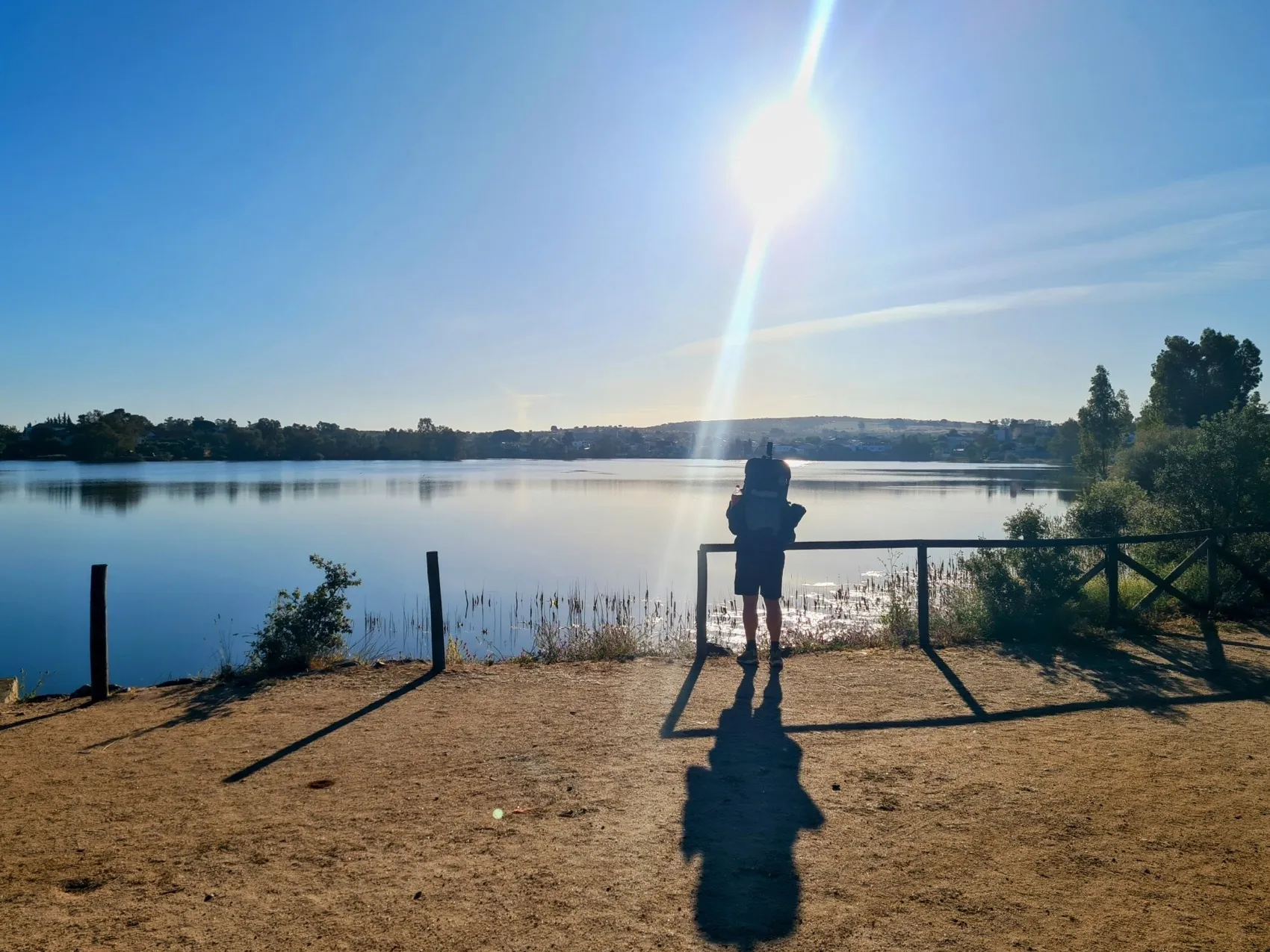
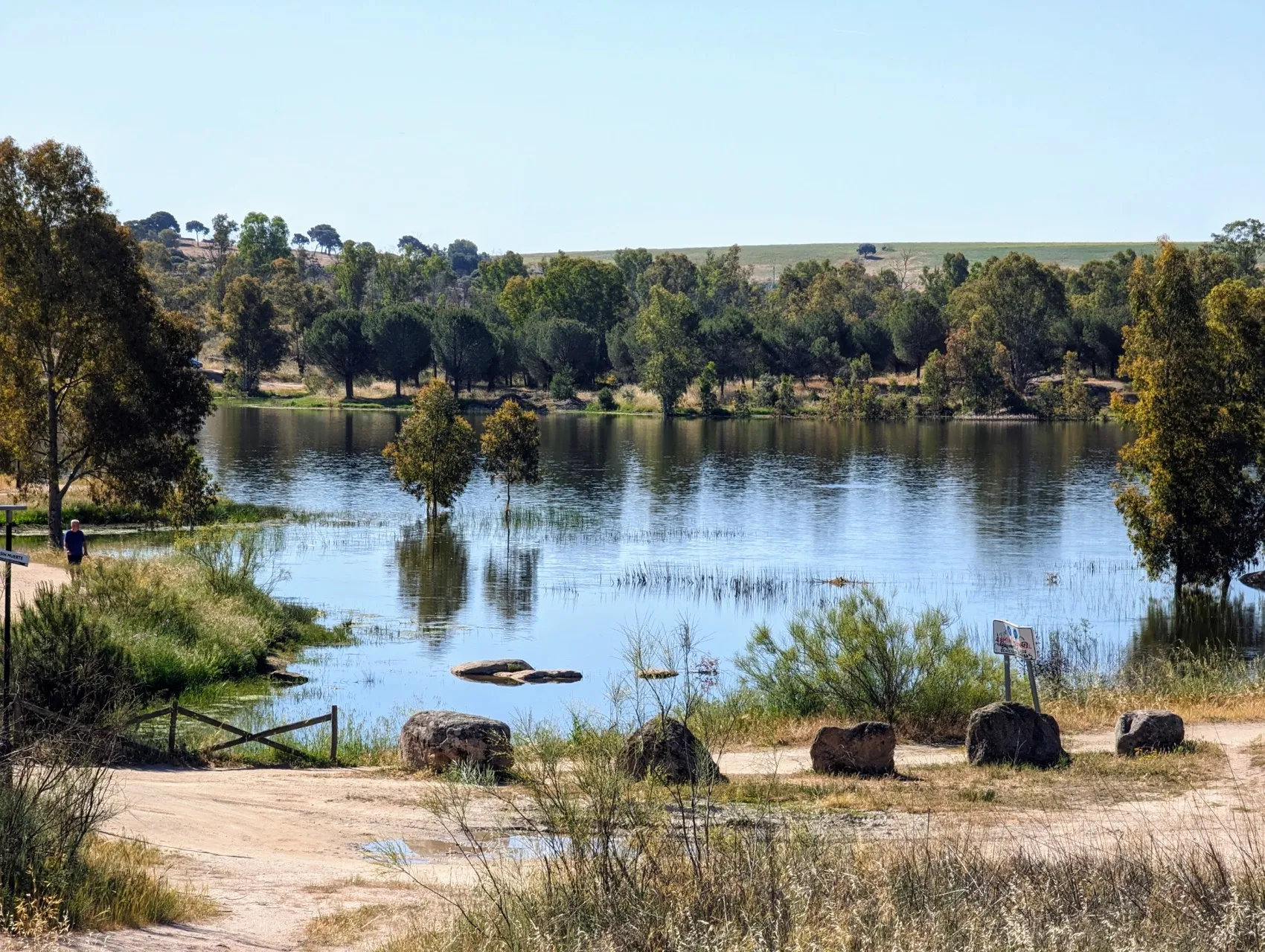
Today's stage, at over 17 kilometers, is another short one. The nearly 75 kilometers between Mérida and Cáceres is difficult to divide, as it passes through few villages with overnight accommodation. We managed to divide this stretch into three stages by spending the night in Aljucén today. Once out of the city, we follow a two-lane road for a while until we reach Embalse de Proserpina, a reservoir that supplies, and used to supply, Mérida with drinking water. Incredible but true, the dam built by the Romans in the 1st century AD is still in use. The Romans are rising in our esteem every kilometer! And how beautiful the lake is. We haven't had this sight for a while, it's truly an oasis. It's Sunday morning and at the edge families are fishing and motorhome owners sitting on their chairs in the shade enjoying the water. For us, it's also a nice spot for a cup of coffee, so we set up our chairs and take our time.
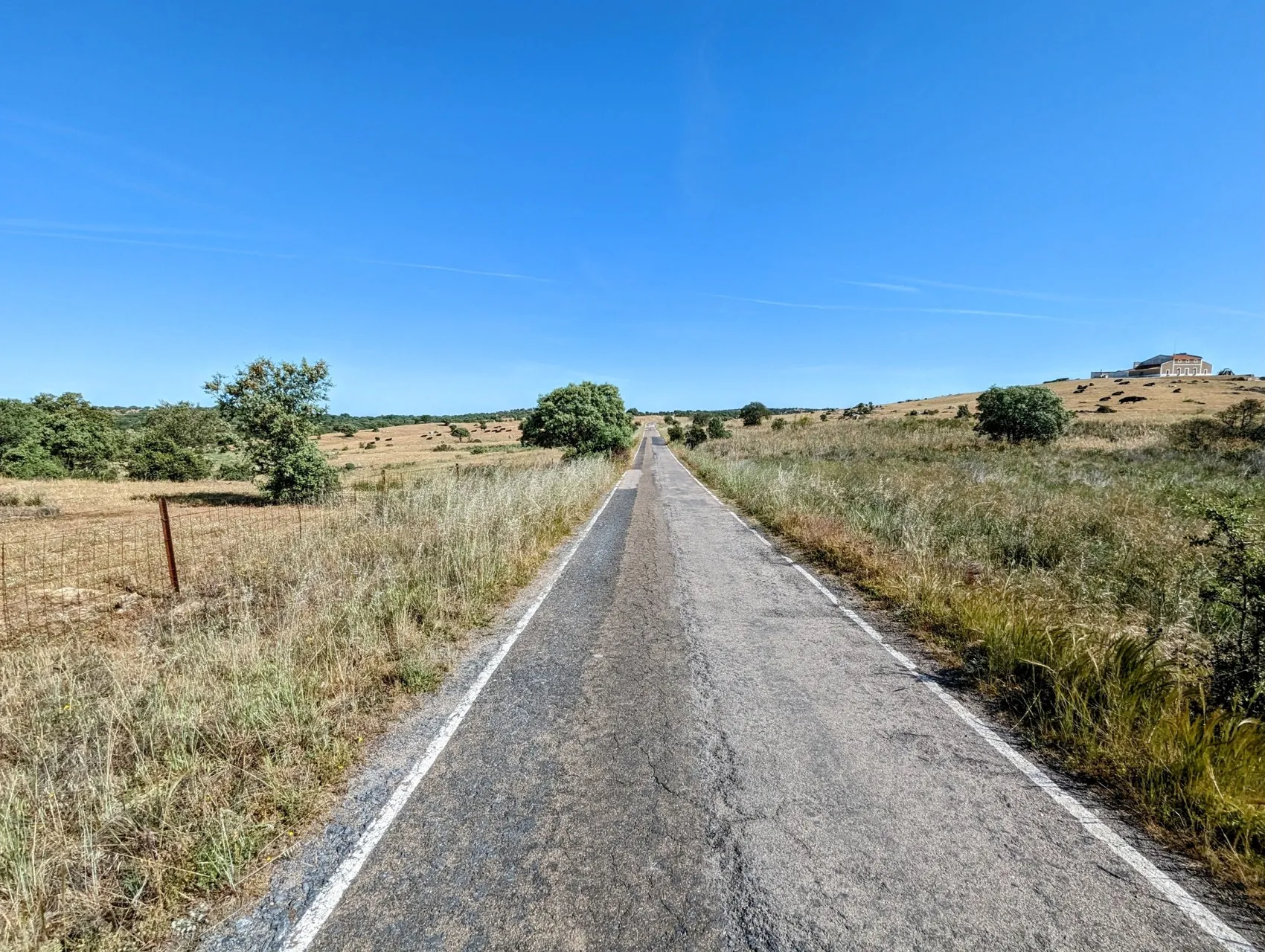
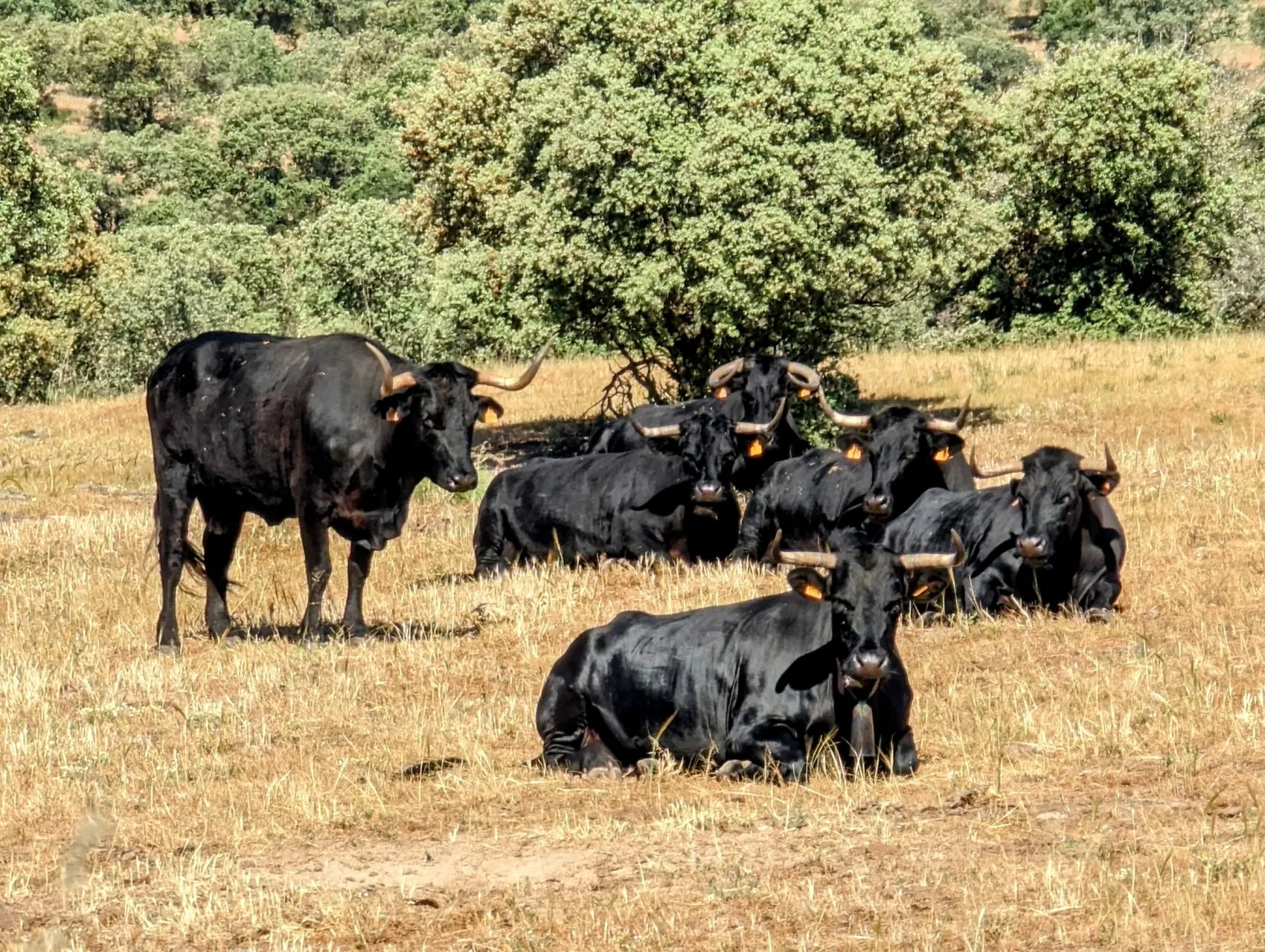
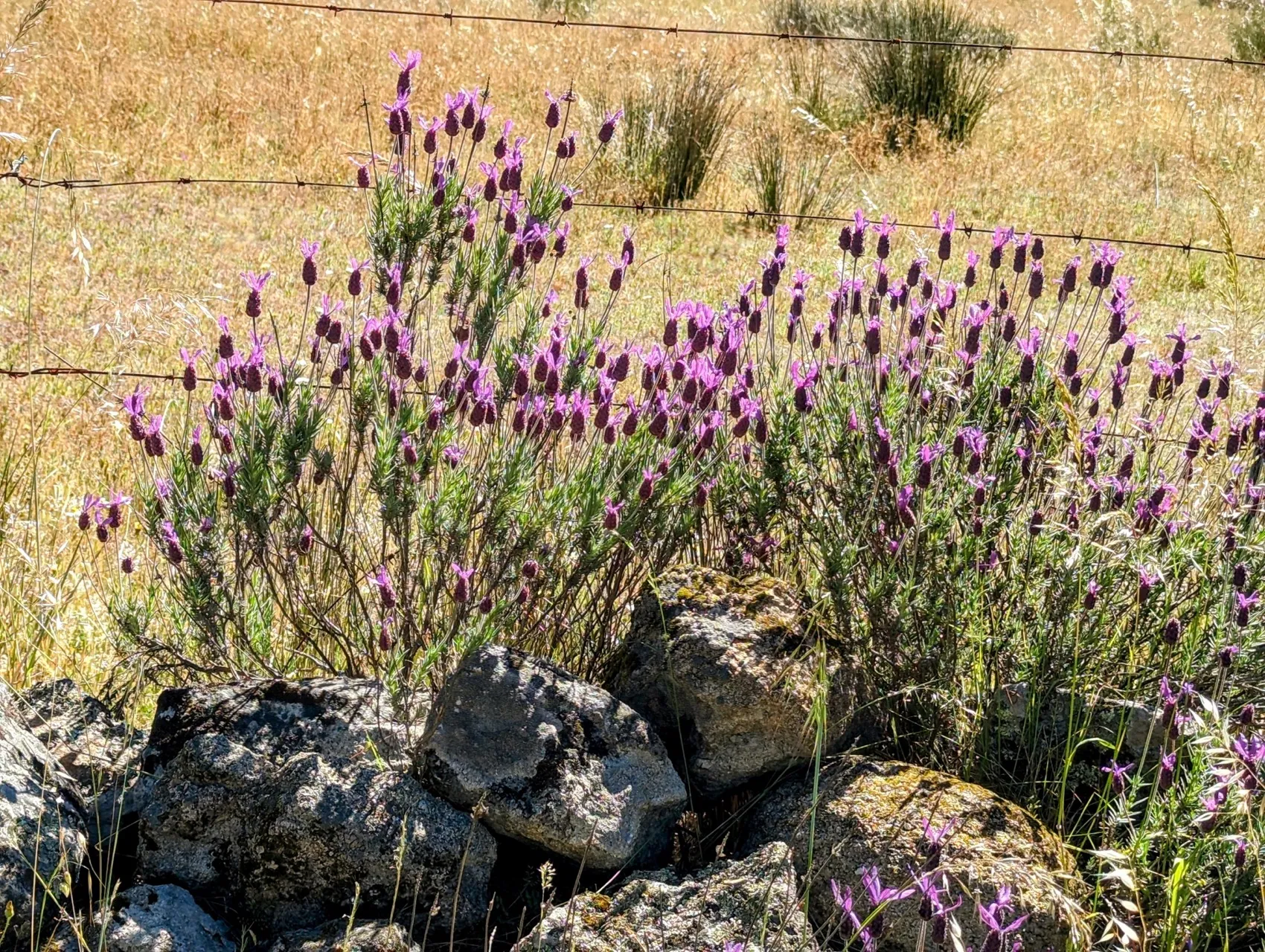
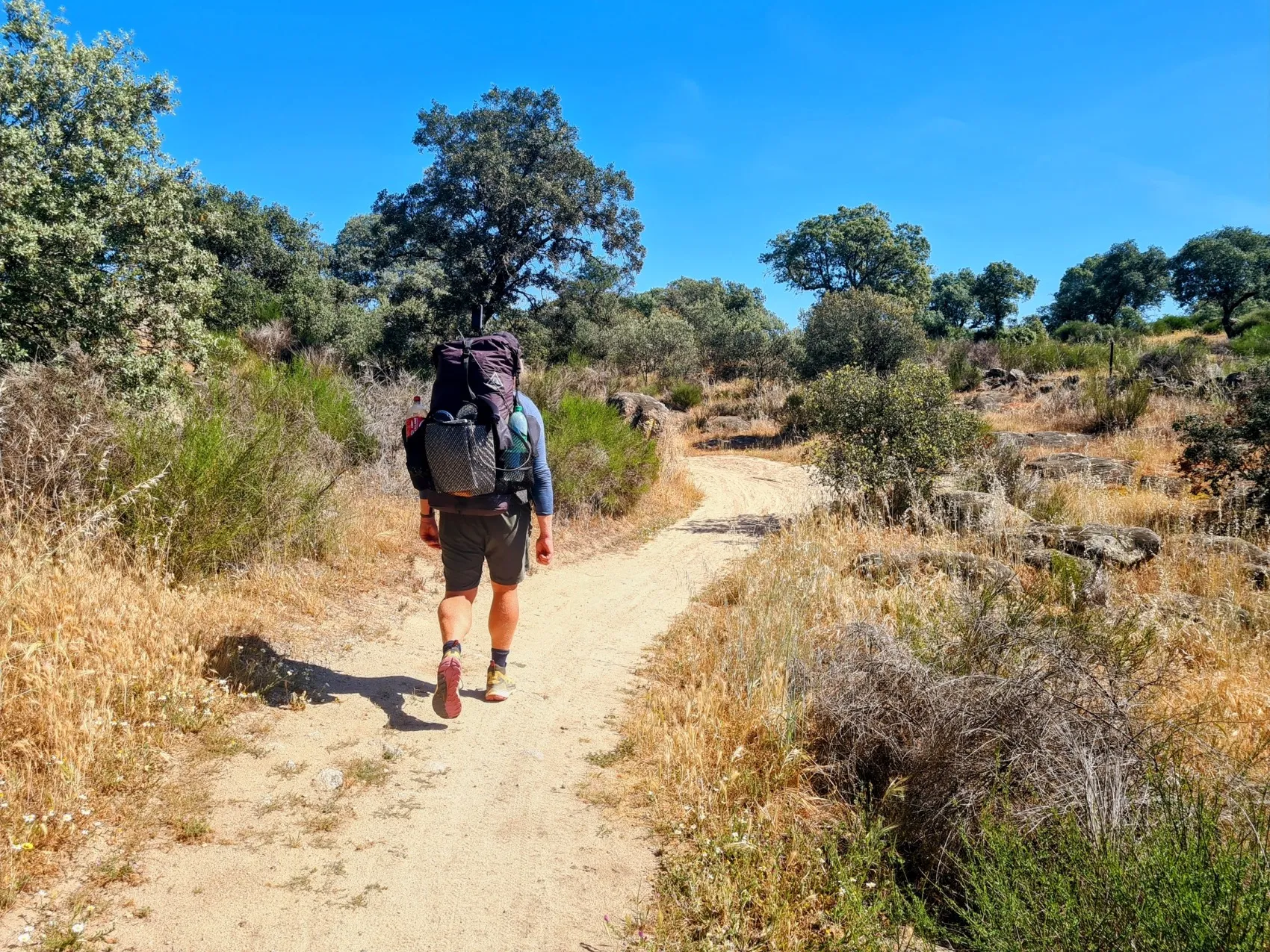
Continuing on, we follow a narrow tarmac road for a few more kilometers through beautiful hilly meadows. Yellow grass, with even more flowers among them than before because of the rain, big oaks and big cows. How beautiful rural Spain is! We turn off the road onto a dirt track and walk through a more wooded area. Judging by the deep gullies on the path, it could be raining a lot harder here than it did yesterday. But we won't be bothered by that for the next two weeks. There's not a drop of rain and temperatures stay around 30 degrees.
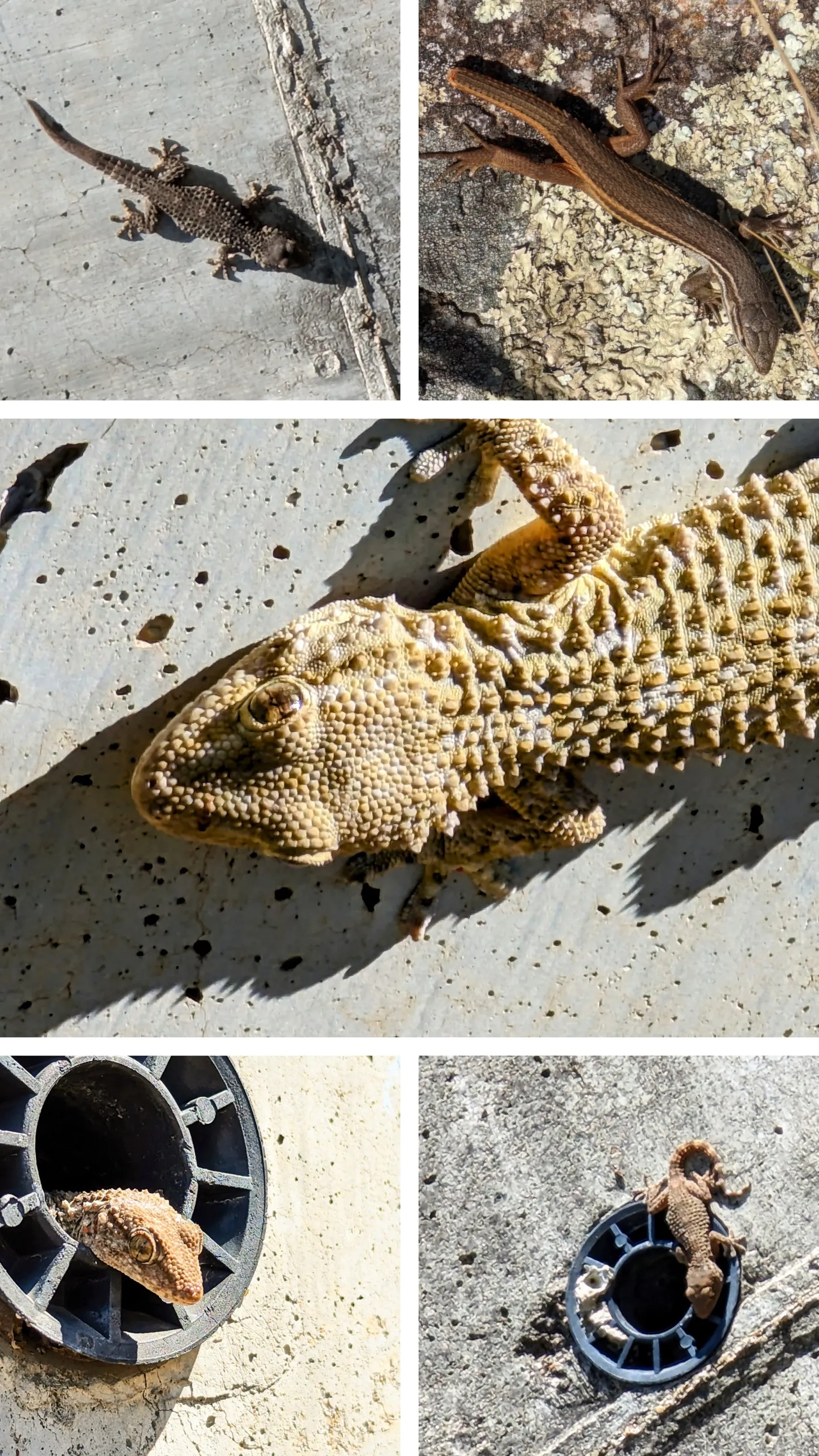
The route takes us through the hamlet of El Carrasca and towards the well-known motorway that we pass under. Against the concrete of the tunnel, lizards and geckos sit in the sun waiting for flies. Normally they run away quickly, but here they stay for a long time, so we can have a good look at them. Beautiful little creatures.The route takes us through the hamlet of El Carrasca and towards the well-known motorway that we pass under. Against the concrete of the tunnel, lizards and geckos sit in the sun waiting for flies. Normally they run away quickly, but here they stay for a long time, so we can have a good look at them. Beautiful little creatures.
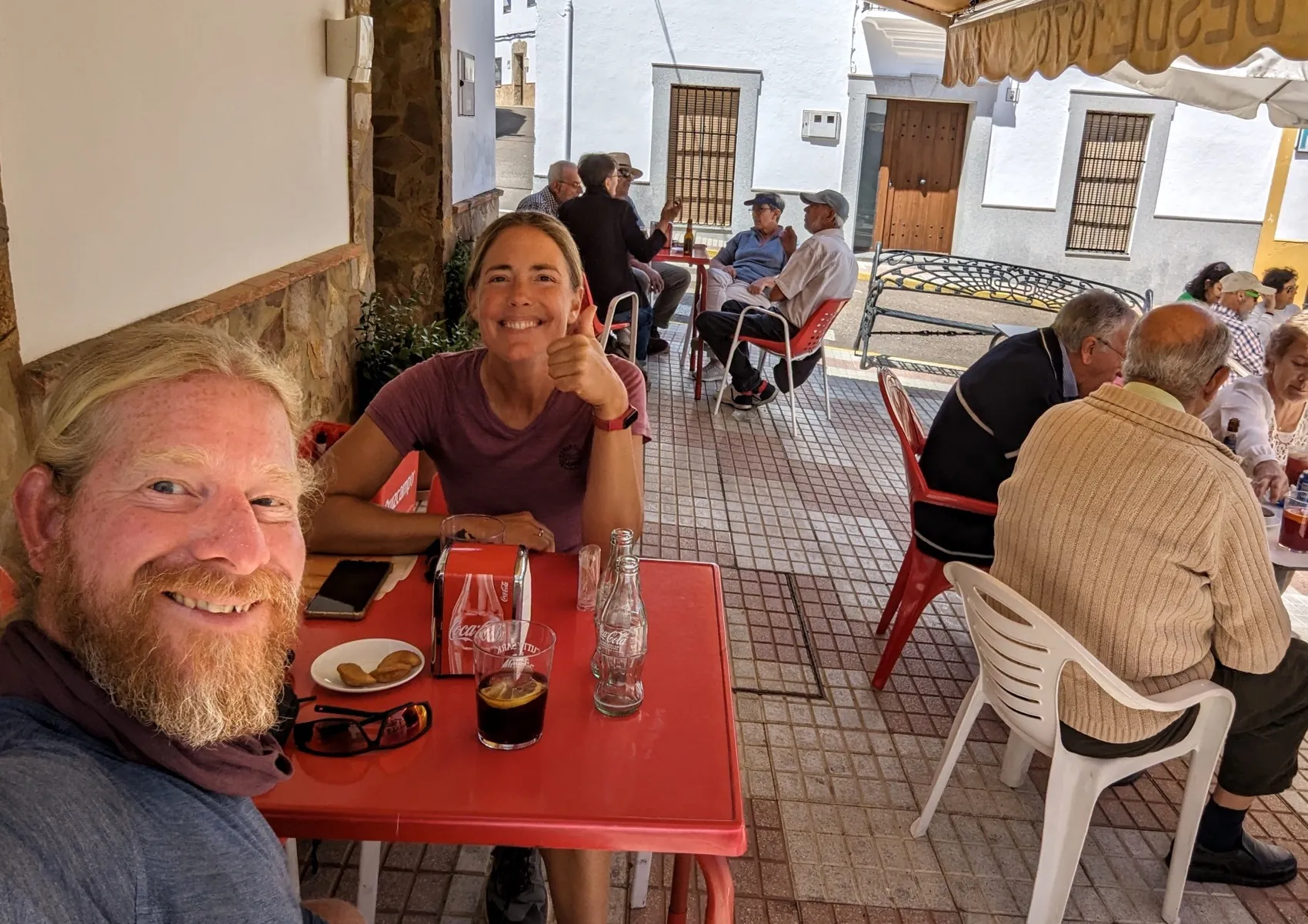
We are close to the village and it's almost half past one by now. Booking.com indicates that we can check-in from 1pm, but when we arrive, the owner is still busy with our room, so we have to wait for a while. Well, there are worse problems to have, because opposite this 'casa rural' is a terrace, so we have have no choice...;-). After a while, the lady comes to bring us the key and tells us all sorts of things in Spanish we don't understand. This is where the translation app comes in handy again. She speaks at the same fast pace, but fortunately we can make sense of it this way. It turns out she has no stamp. If you walk the route as a pilgrim, you have to have a booklet stamped. We have Wikiloc as proof for our hikes, and therefore don't need a stamp. After the explanation, she also sits down on the terrace, which fills up completely in no time. With the ordered drinks, we are served home-made tapas, so we are in no hurry. We take it easy this afternoon, tomorrow will be a long stage.