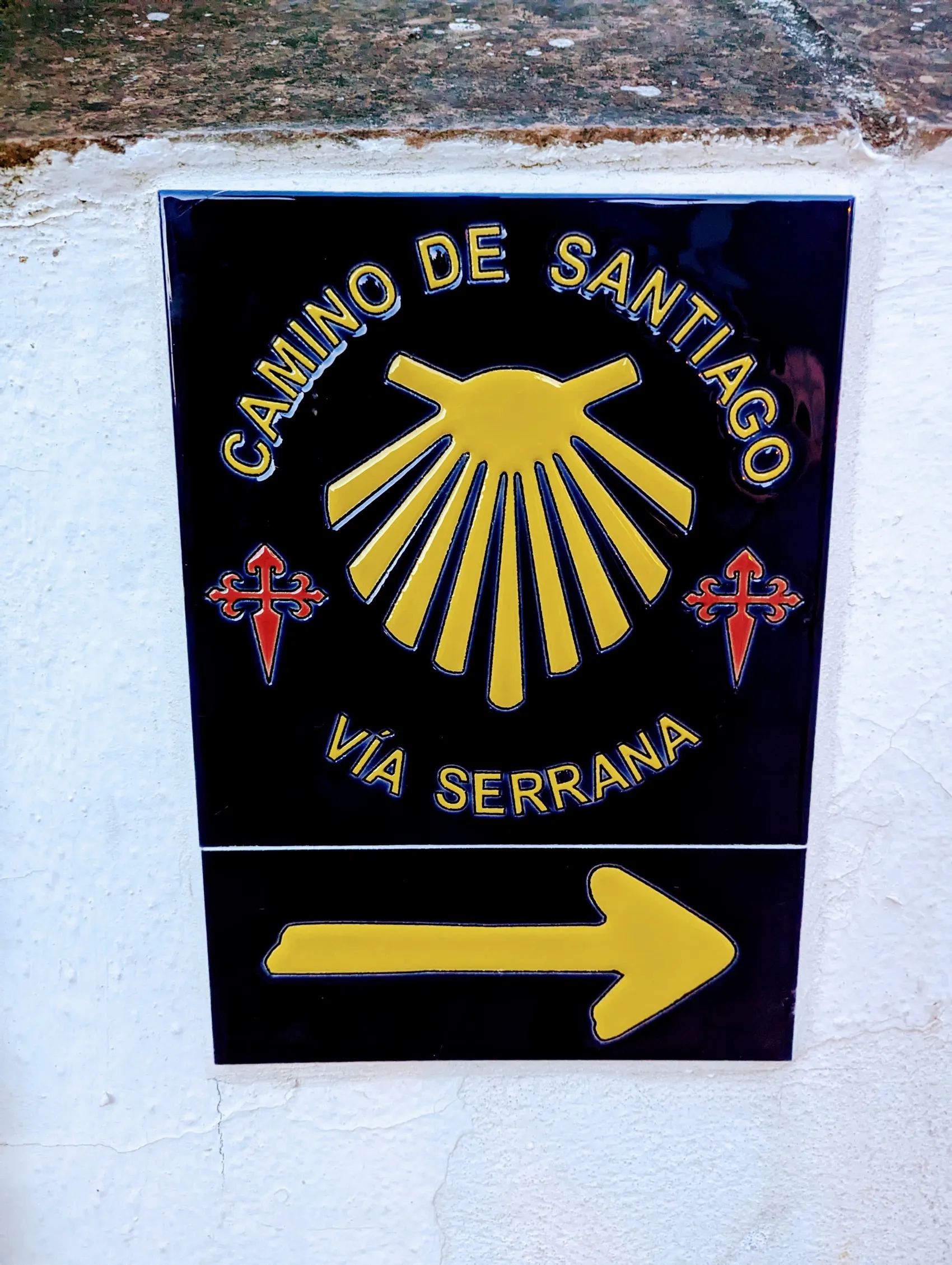
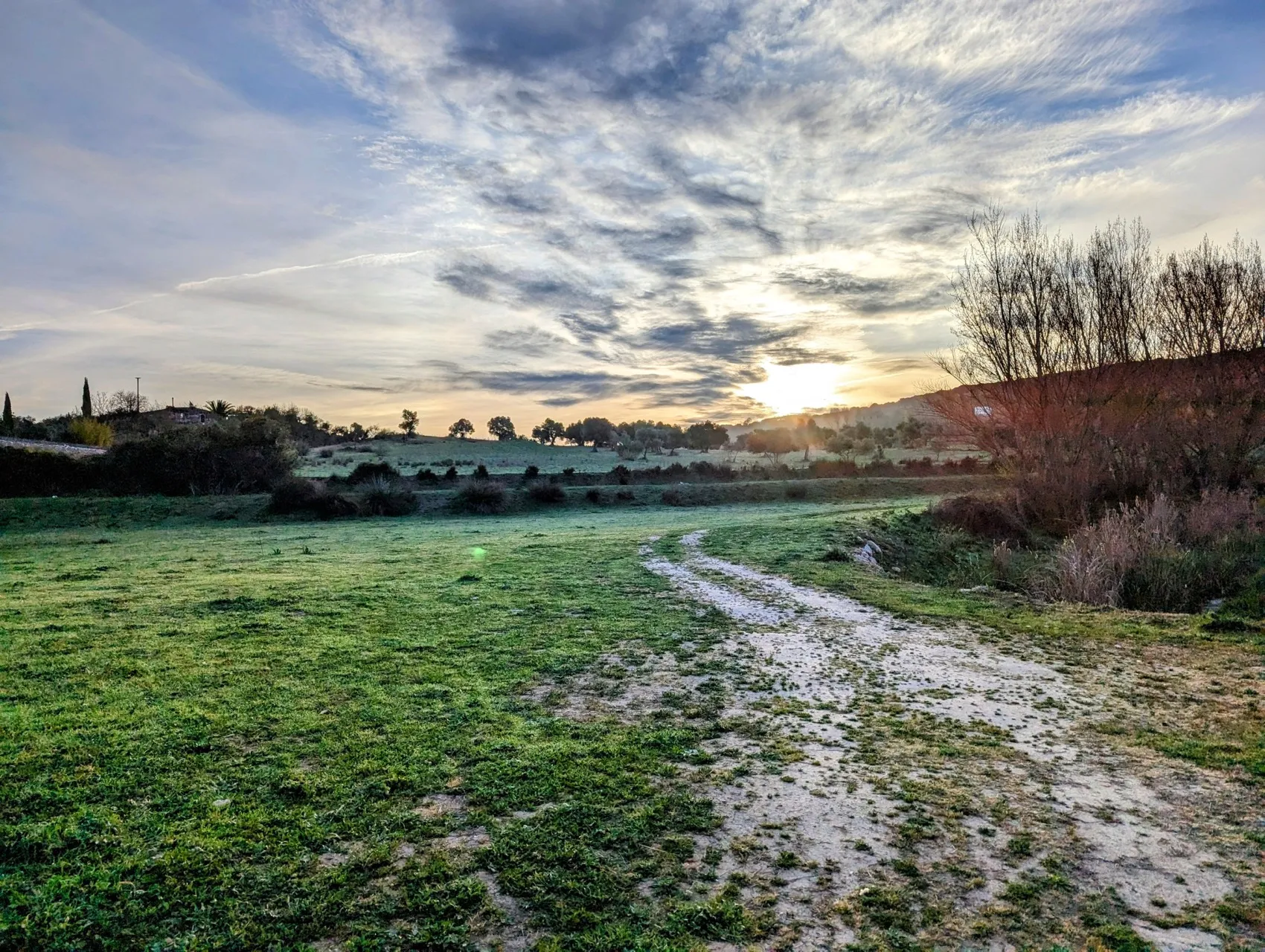
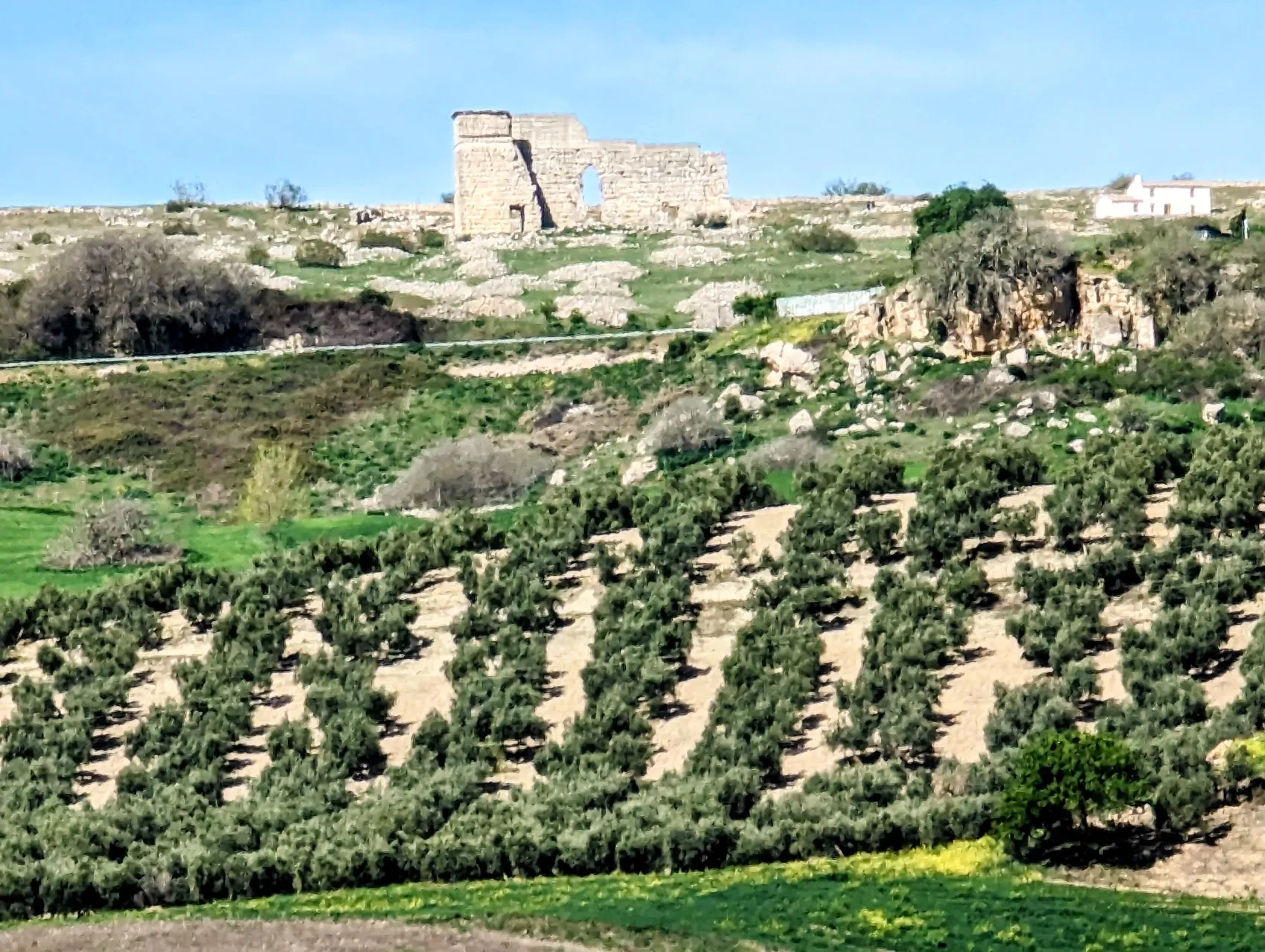
At a quarter to eight we are back on the road. Ronda, so bustling and busy yesterday afternoon, is now almost deserted. The sun just starts to rise when we leave the town via the opposite side of the one we entered Ronda yesterday. This side is clearly less picturesque, especially this early in the morning. It's a wide street with many industrial businesses on the side. If we'd entered Ronda via this road yesterday, we would've missed much of the city's charm. But this morning it runs just fine and we are quickly out of the built-up area. We'll follow a pilgrimage route, the ' Via Serrana', from Ronda to Seville. We soon see a beautiful sign indicating this Via, together with the recognisable shell. Further on, the route is mainly marked with a yellow arrow. We descend some 270 meters from Ronda and ascend it again on the other side of the valley. We walk past meadows, an occasional farm and a few small villages. Two large buildings that, given their construction, should have been hotels, now serve nicely as cow sheds. The advantage of walking this early is that it's still pretty cool. Which is nice, especially while climbing. The other side of the hill is a lot more quiet. Rolling fields with ruins of old stables, with on the peaks even older ruins of what were once castles or large country houses.
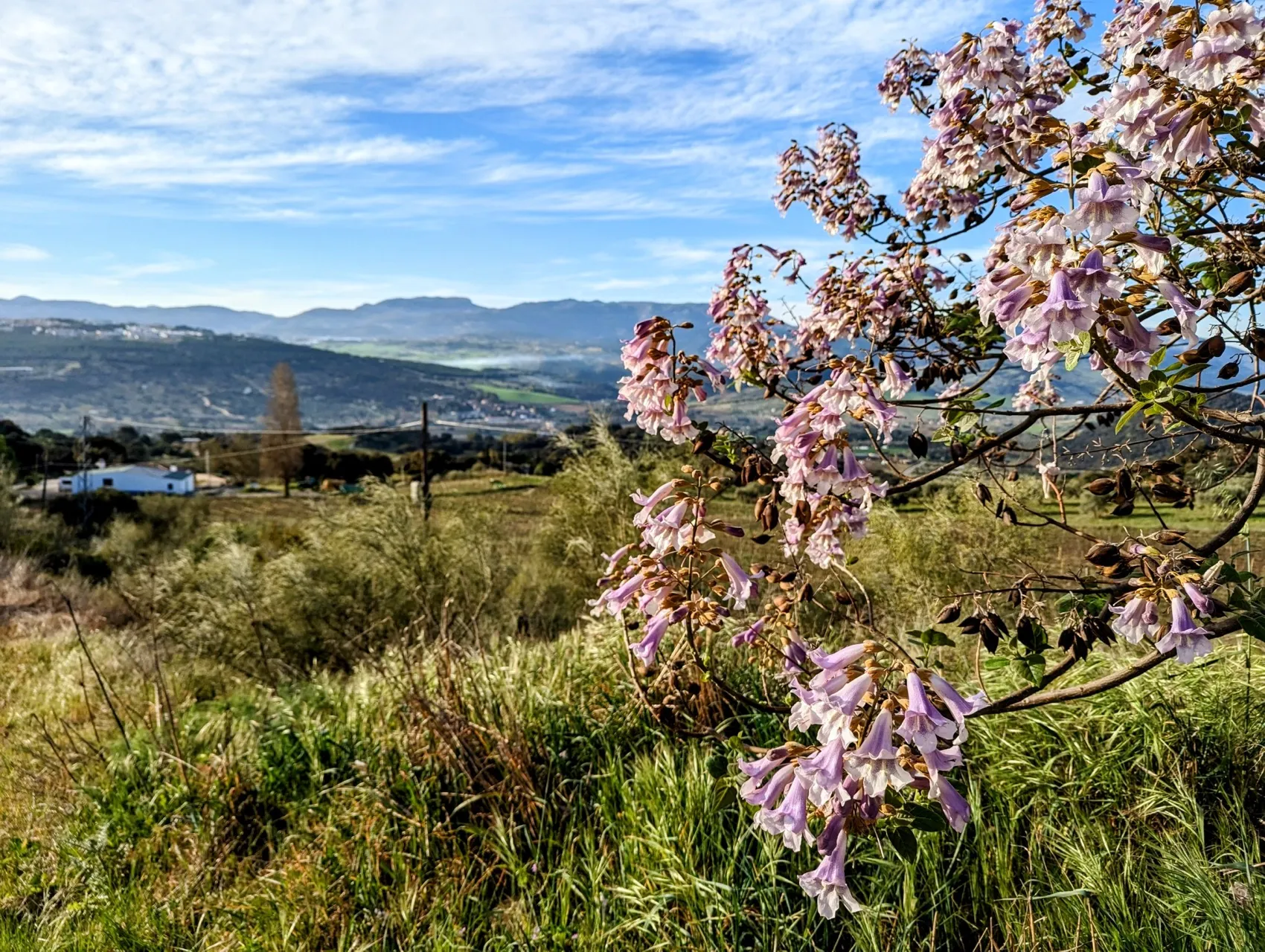
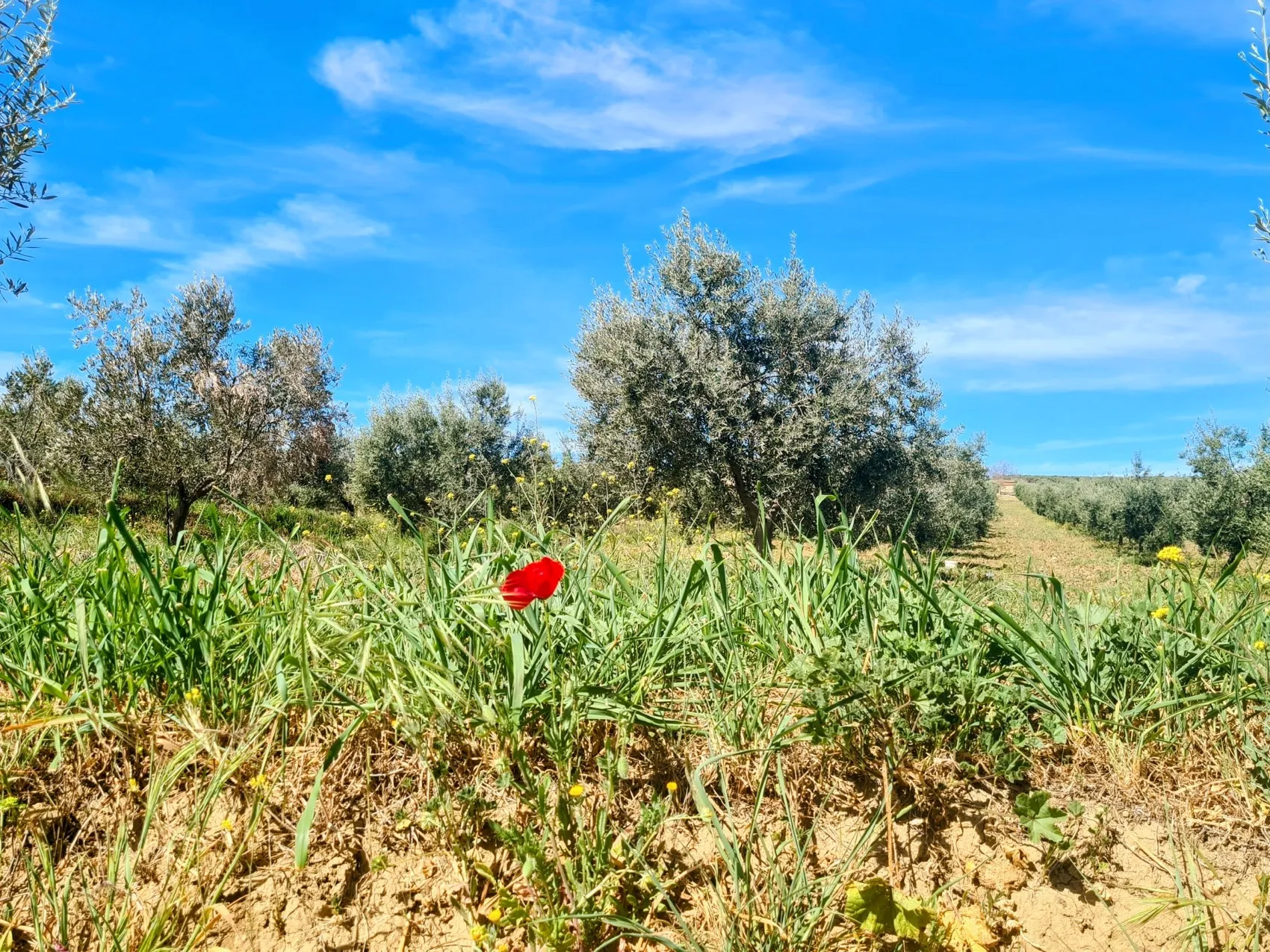
The fields are already coloured with poppies and we pass an avenue of the purple-blossoming Anna Paulowna tree. We can smell the blossom from afar. On the telephone wire along the road sit three bee-eaters. Unfortunately, these colourful little birds are very shy and fly away before we get a good picture of them.
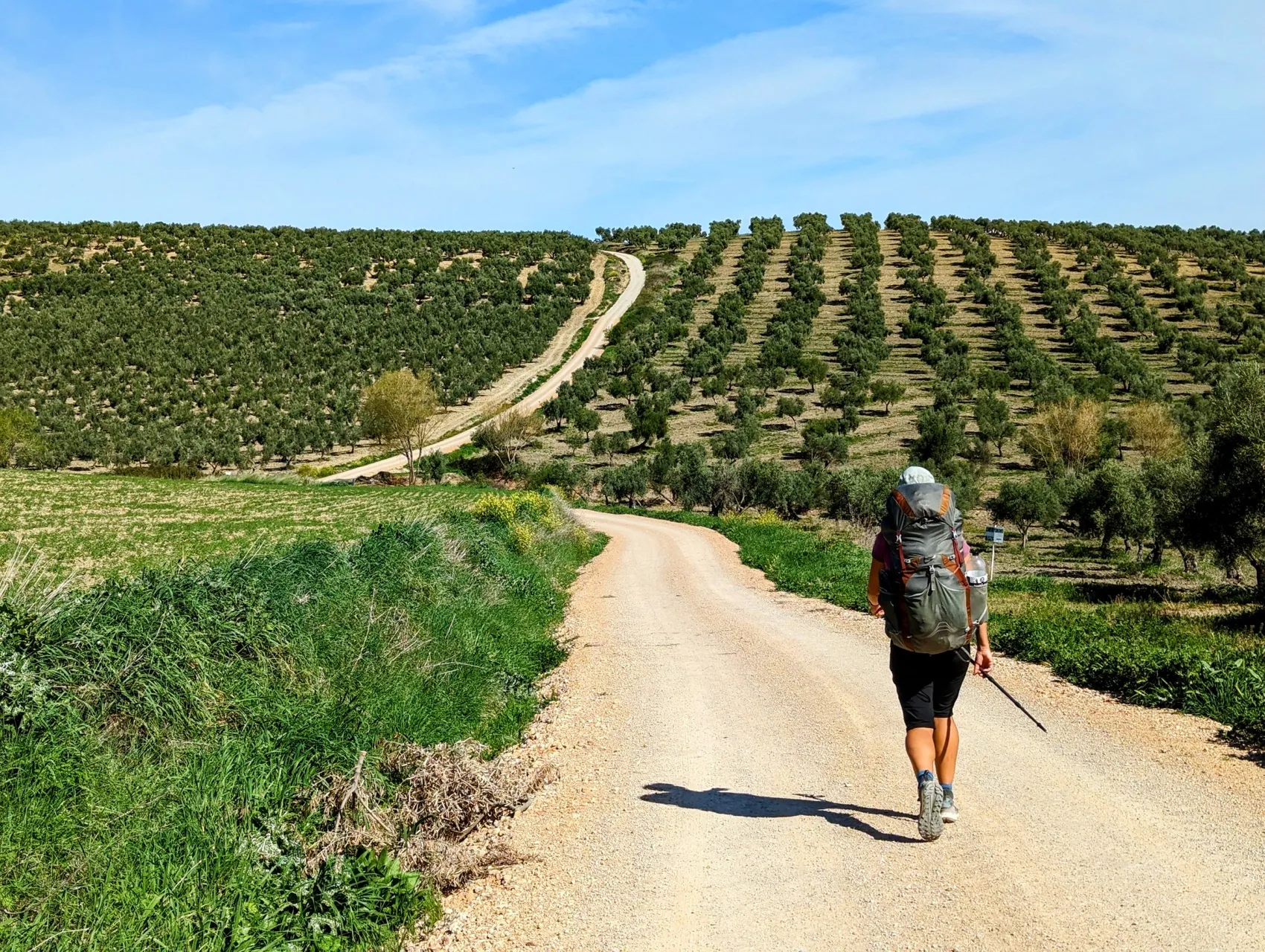
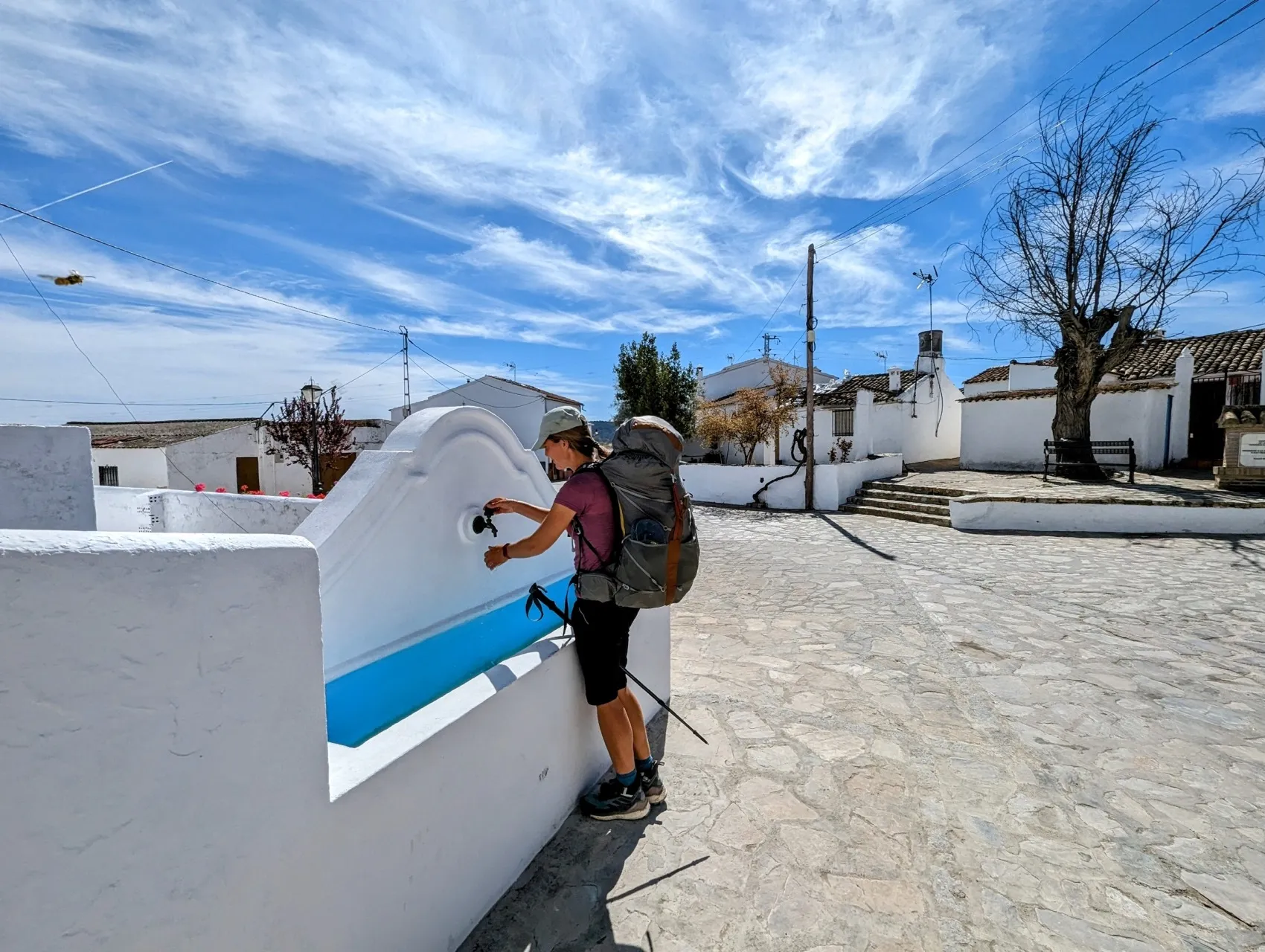
After 1 pm, it starts to get quite warm and the sun shines brightly. We walk along several kilometers of olive groves with patches of old, but also newly planted trees. A little further on, we pass a small village marked on the map as 'Venta de Leche'. A place called 'Sales of milk'. It's also indicated like this on the walking map in the village. Strange... We did not find a milk vendor, but the houses are brightly milk-white.
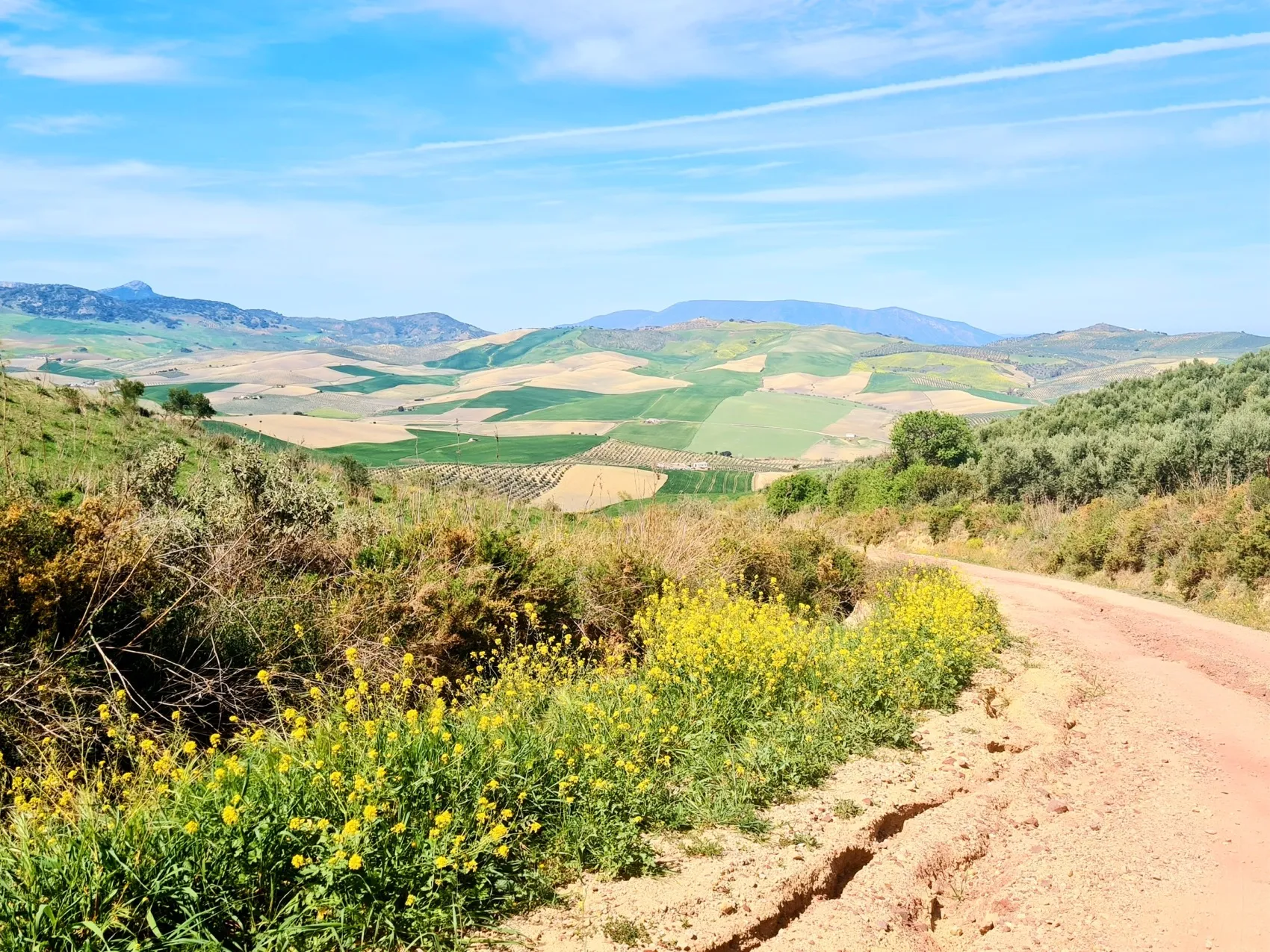
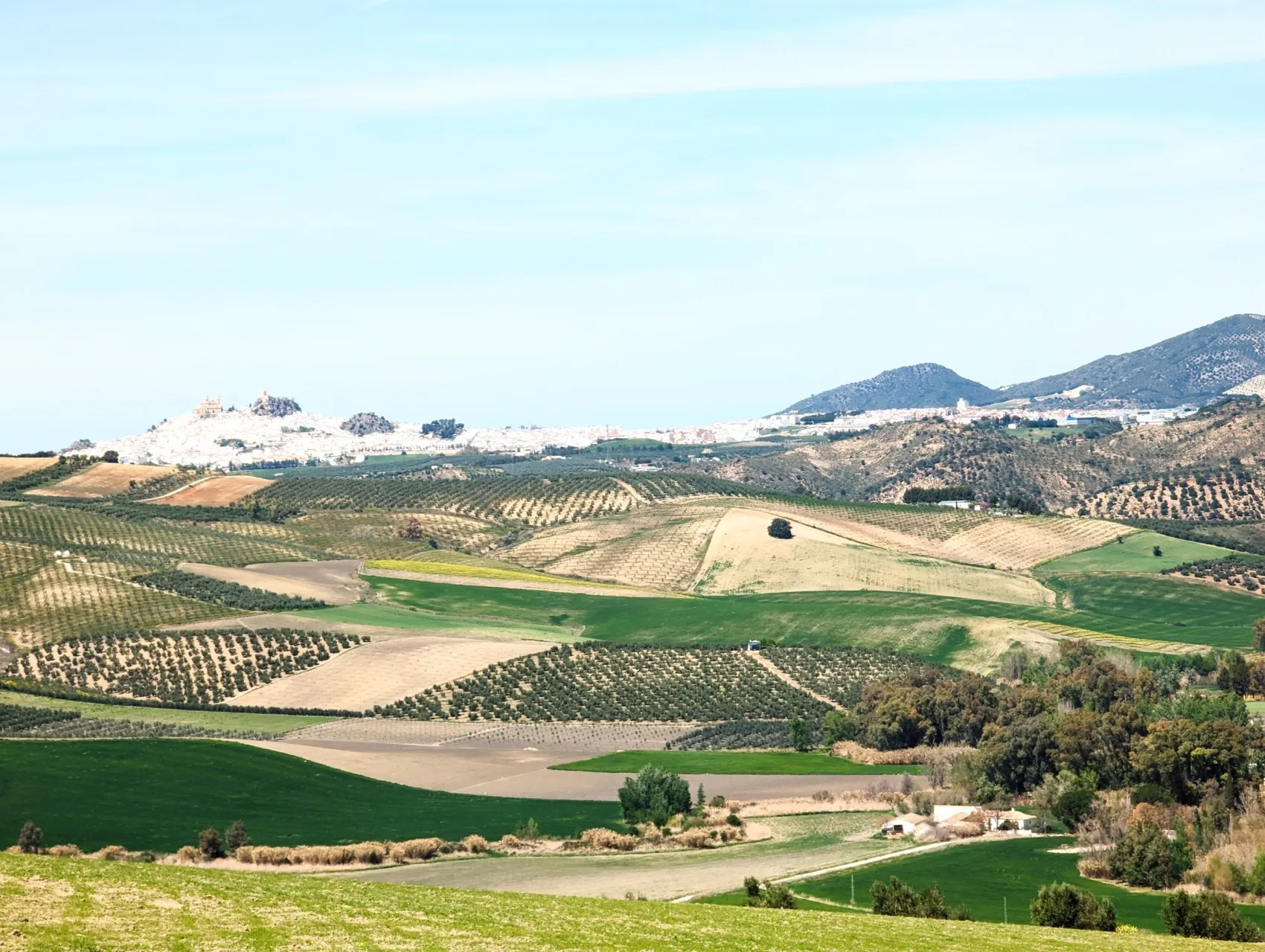
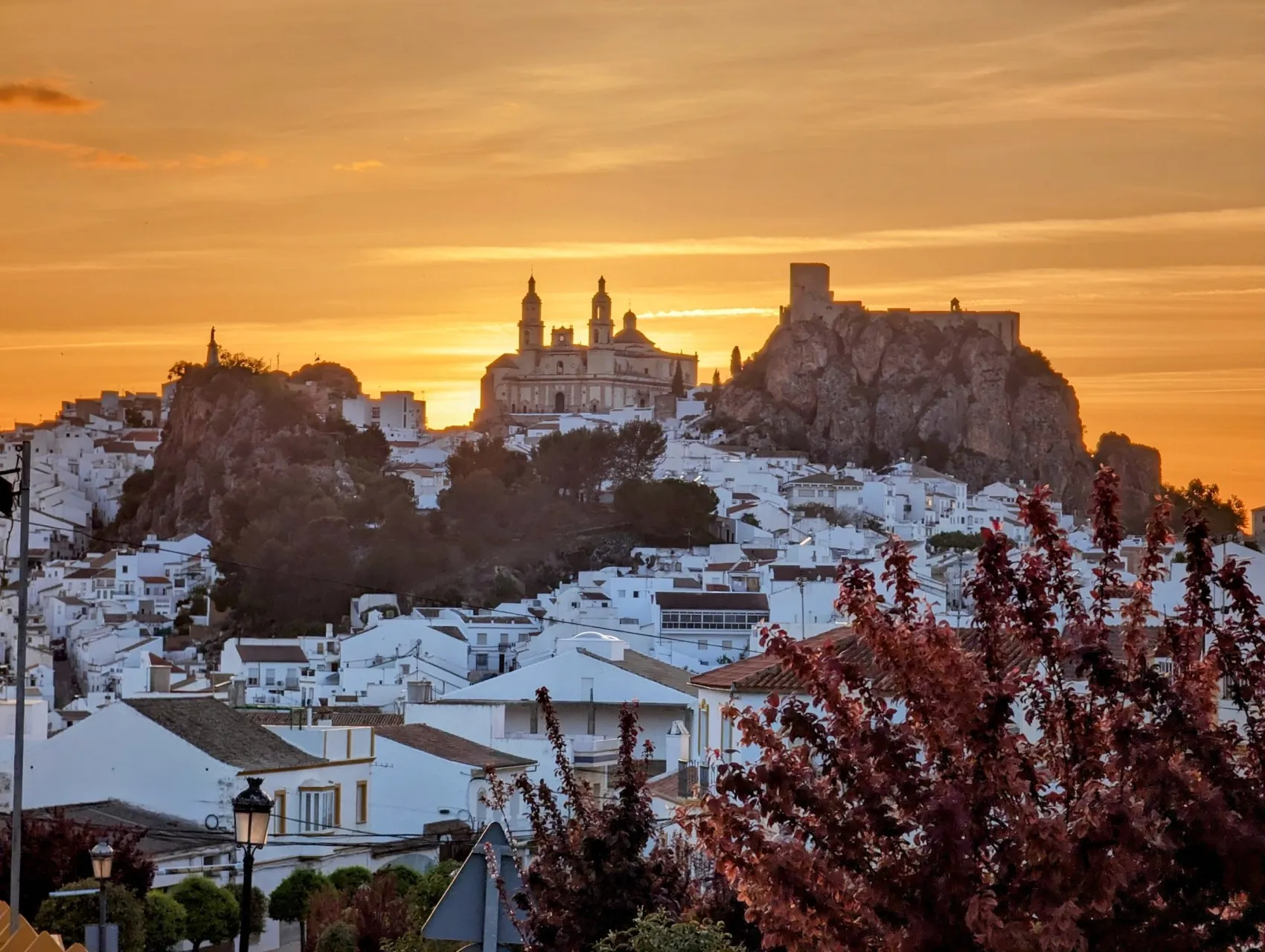
We follow a paved road for a while, which soon turns into a dirt road. Occasionally we come across a house where we're invariably greeted by dogs. It's already clear to us that dogs in Spain make a lot of noise, but are actually quite relaxed. Fortunately, we have already walked many kilometers this morning, as the burning sun and lack of shade slow us down a bit. After about 18 kilometers, we walk over the last hill and a magnificent valley lies before us. Rectangular fields in all shades of green, brown and sand colour undulate over the hills as far as you can see. It looks just like a giant bedspread, which were used over beds in the older days. Above the hills protrude the higher peaks of the Sierras where we have walked in recent days. On the other side, we see Olvera, with la Iglesia de Nuestra Señora de la Encarnación, or Church of Our Lady of the Incarnation, towering above the houses. Another beautiful white city. Hundreds of years ago, people must have come over this hill and had almost this same view....
From here, we descend to a river in the valley and begin today's final climb. We walk through the small but steep Torre Alháquime. The fourth white village today, but these pretty places never get boring. Then the last stretch to Olvera remains. The entrance to this town, which looks like a picture from a distance, is a bit like how we walked out of Ronda today. We pass businesses and high concrete buildings. By now we have walked 28 kilometers, so we're glad to arrive at our hotel a bit more further, but this is just where the beautiful part of the city begins. Tomorrow we'll take our time to look around, as we'll stay here for a day. For the city, and especially to celebrate Malou's birthday in this special place. A year ago we definitely didn't expect to celebrate this occasion, right here in Olvera!
1 reactie